

CASE STUDY
CJII: Strengthening Communities Through Investment
LOCATION
New York, NY
ACTIVE
2014-present
This project has built an innovative model for justice reinvestment, supporting grassroots initiatives that improve community safety and create a fair, efficient criminal legal system in New York City. This work also provides a framework for partnership and progress in other jurisdictions nationwide.
Challenge:
Over the past several years, New York City and the nation have confronted the crises of COVID-19, racial inequality, and gun violence. It’s clear that remedying the harm brought to communities by historical divestment and disparate law enforcement practices requires significant investment. Yet these challenges are nothing new; issues of fairness and efficiency in the criminal legal system—and how partnerships between the community and government could help repair them—have long been recognized as areas for growth.
In 2014, then-Manhattan District Attorney Cyrus R. Vance, Jr. wanted to advance innovation through the reinvestment of law enforcement dollars into strategic community projects that would improve community safety; develop broad crime prevention efforts; and promote a fair, efficient criminal legal system in New York City. To these ends, he established the Criminal Justice Investment Initiative (CJII) to invest approximately $250 million of criminal asset forfeiture funds. The DA’s Office chose CUNY ISLG through a competitive process to design the investment process and manage the Initiative’s funds and grantees.
Approach:
With the goals of CJII as a north star, CUNY ISLG created a blueprint for the initiative’s investment in community-based programming, guided by three principles: data-driven decision-making, sustainable investments, and collaboration across sectors. We began with a community audit and consultation process across New York City’s criminal legal and community infrastructure to identify gaps and opportunities in need of strategic investment. That process resulted in the creation of a Strategic Plan that provides a comprehensive, forward-looking approach to improving community safety for all New Yorkers, with investments across a continuum: crime prevention, supporting access to justice for survivors of crime, and increasing diversion and reentry options.
Those goals were supported by three coordinated portfolios of investment:
Supporting Youth and Families. Investments in this category include the Youth Opportunity Hubs initiative, a partnership with city youth-serving programs—CJII’s single largest investment; a foster youth-transitioning-to-adulthood program; and a pilot Community Navigators program that matched individuals with community and social service resources.
Supporting Survivors of Crime. Investments here include initiatives to increase survivor access to services; a Trauma-Informed Abusive Partner Intervention Program (TI-APIP); and a Center for Trauma Innovation.
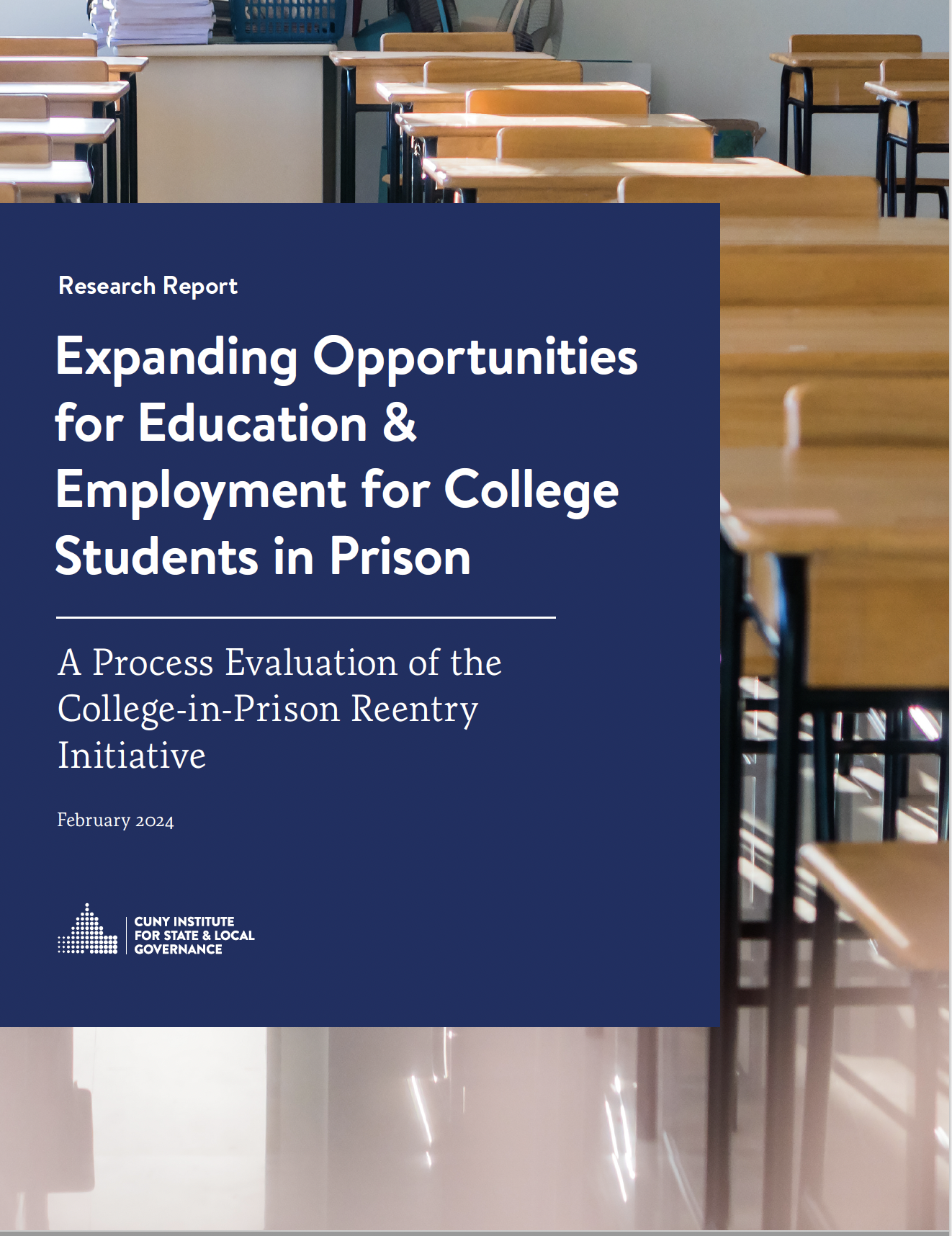
Diversion and Reentry Support. These investments span a range of reentry supports, services, and innovations such as the College-in-Prison Reentry Initiative, which supported five years of college programming and academic reentry services at 17 New York State prisons.
Providing end-to-end support across the initiative, we managed the solicitation and contracting process, provided guidance to award recipients, and offered capacity-building, oversight, and performance measurement. We also managed independent evaluations for 33 of the CJII grantees.
Progress:
As of 2026, most of the original $250 million has been spent down and most of the original CJII contracts have ended. But it is clear that CJII has made a huge impact—over 34,000 New Yorkers have received services as a result of CJII investments in transformative projects that strengthen and support the city’s youth, families, communities, and network of services. The CJII community has expanded to 65 grantees and 90+ subcontractor organizations, including nonprofits, social enterprises, hospitals, and colleges/universities. We have worked closely with all CJII programs to help sustain their work, including:
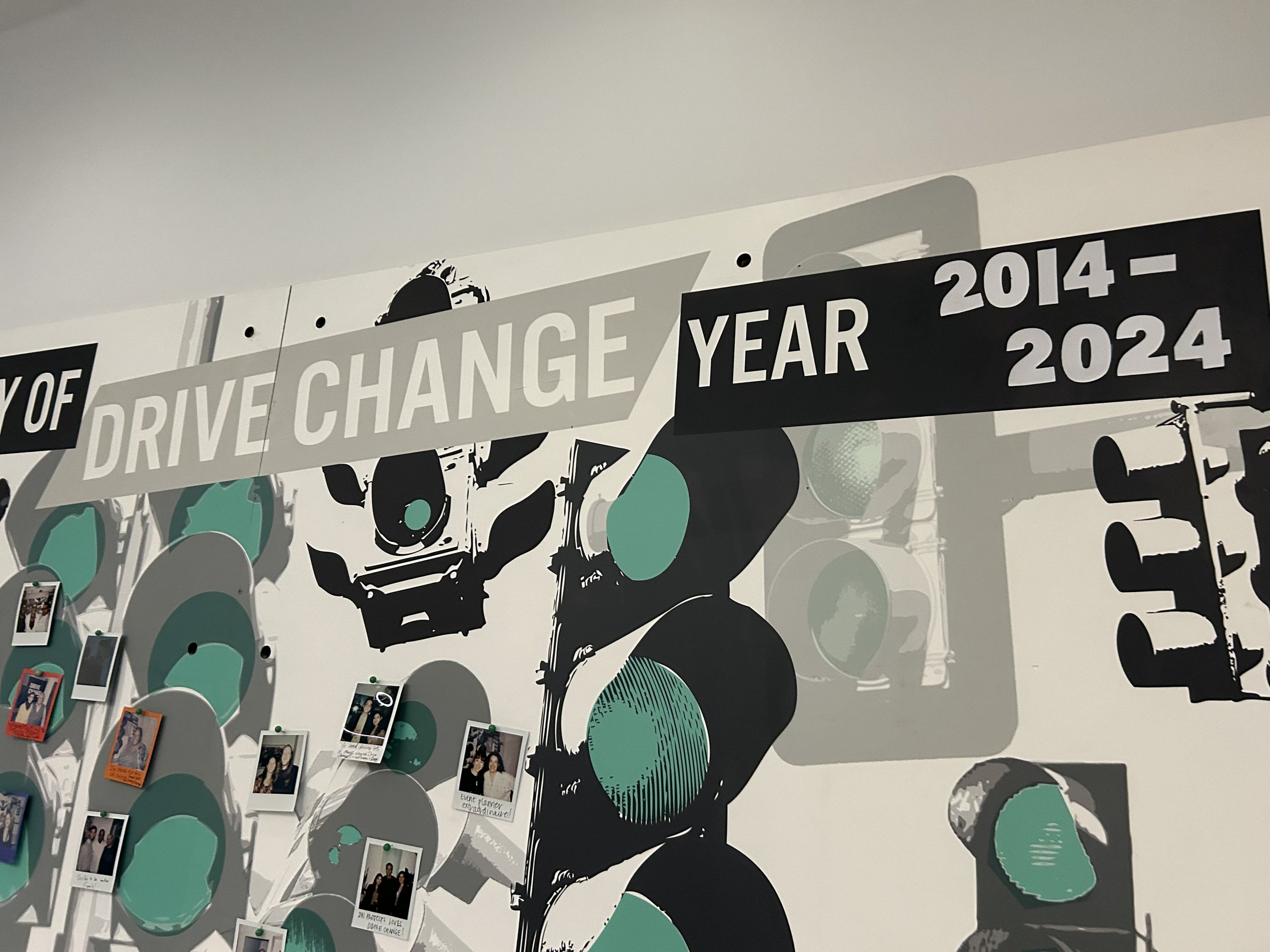
Helping CJII partners to continue these innovative program models with new external funding (as CJII partner Drive Change was able to do);
Using CJII programs and research as a springboard for larger systems change (the CJII College-in-Prison funding helped pave the way for a larger statewide expansion of higher education in prison funded by state and federal dollars); and
Ensuring that the lessons of CJII continued to inform policies and practices in the field (as the evaluation of the TI-APIP program continue to do).
Now in partnership with Manhattan DA Alvin Bragg, Jr., ISLG continues to work with the DA’s Office on additional public safety investments in areas including survivor supports and Alternatives to Incarceration programs – all this work continues to build on the lessons of CJII. CUNY ISLG has built organizational capacity within these organizations through training and technical assistance—including peer-driven group sessions and individualized consulting—to promote impactful services that can be sustainable long term. Learn more about our work through strategic lenses as well as more on the design and goals of the CJII model.
For more information, contact Patrick Hart at patrick.hart@islg.cuny.edu.
Latest Updates














Project Reports
![[From Our Partners] New York City Health Justice Network Recidivism Evaluation Study](https://images.squarespace-cdn.com/content/v1/5fcea962a1b4d771ad256fcc/4c7942d9-5c6a-4cd4-80d5-3bcee559f83f/Screenshot+%2847%29.png)
![[From Our Partners] The Impacts of College-in-Prison Participation on Safety and Employment in New York State](https://images.squarespace-cdn.com/content/v1/5fcea962a1b4d771ad256fcc/d4c52900-83ae-46dc-b1f3-3e540081bb4a/full+The+Impacts+of+College-in-Prison+Participation+on+Safety+andEmployment+in+New+York+State.png)

![[From Our Partners] A Community-Focused Approach to Addressing Trauma: Lessons Learned from the Center for Trauma Innovation](https://images.squarespace-cdn.com/content/v1/5fcea962a1b4d771ad256fcc/4d92b04e-7218-43d8-8576-feb0ba0379cf/Process+Report+Cover+Screenshot.png)
![[From Our Partners] Evaluation of the West Harlem Community Reentry and Restoration Project ](https://images.squarespace-cdn.com/content/v1/5fcea962a1b4d771ad256fcc/9bb14f13-b3d2-474b-9416-b5e2f2ff5ec2/full+-+Evaluation+of+the+West+Harlem+Community+Reentry+and+Restoration+Project.png)

![[From Our Partners] Build-Out of Student Services Report: Findings from the Process Evaluation](https://images.squarespace-cdn.com/content/v1/5fcea962a1b4d771ad256fcc/ba263fec-6abe-48c4-bee8-c25eb4a19844/Vera+Boss+process+evaluation+full+cover.png)
![[From Our Partners] Programs for Foster Youth Transitioning to Adulthood Evaluation](https://images.squarespace-cdn.com/content/v1/5fcea962a1b4d771ad256fcc/73c32228-3431-4ee6-b728-82e7bbf7166c/WHCRRP+mid-eval+full+cover.png)
![[From Our Partners] The NYC Health Justice Network Recidivism Evaluation Study](https://images.squarespace-cdn.com/content/v1/5fcea962a1b4d771ad256fcc/4d9294c0-a174-4547-b5a7-4bac858531b5/NYC+HJN+Evaluation+report+full+cover.png)
![[From Our Partners] FamilySafe Project Evaluation: Implementation and Outcomes of Family-Focused Counseling for Survivors of Gender-Based Violence ](https://images.squarespace-cdn.com/content/v1/5fcea962a1b4d771ad256fcc/98d9a429-34de-40f9-91bd-5634327ddb0f/Report+cover+of+FamilySafe+Project+Evaluation.png)
![[From Our Partners] Addressing Trauma Among School-Aged Children](https://images.squarespace-cdn.com/content/v1/5fcea962a1b4d771ad256fcc/d20aa296-5ce3-482e-bdad-912acc2c3e90/MP-City+Process+Eval+Report+Cover.png)
![[From Our Partners] Youth Opportunity Hubs: Fostering Collaboration. Building Resilience.](https://images.squarespace-cdn.com/content/v1/5fcea962a1b4d771ad256fcc/5d94a3aa-496a-431f-b2ff-b815bc6d7125/Youth+Opportunity+Hubs+Fostering+Collaboration.+Building+Resilience.+Policy+brief.png)
![[From Our Partners] An Evaluation of a Workforce Development Program for Domestic Violence Survivors in New York City](https://images.squarespace-cdn.com/content/v1/5fcea962a1b4d771ad256fcc/7543fe10-0203-4ccb-93ae-aaba563b4e85/SFF+CRTP+Eval+full+cover.png)
![[From Our Partners] An Evaluation of the Medical Legal Partnership](https://images.squarespace-cdn.com/content/v1/5fcea962a1b4d771ad256fcc/e612bc2f-01c6-4ef7-8d66-0ac5292c0ca7/Screenshot+2023-01-19+at+9.17.43+AM.png)
![[From Our Partners] Conducting Research with the Deaf Community](https://images.squarespace-cdn.com/content/v1/5fcea962a1b4d771ad256fcc/270b9bd7-04f6-4122-a800-46c6f7664d0e/BFL+final_full.png)
![[From Our Partners] Strengthening Domestic Violence Services for Deaf Survivors: An Evaluation of Barrier Free Living’s Deaf Services Program](https://images.squarespace-cdn.com/content/v1/5fcea962a1b4d771ad256fcc/0d149b6b-fc97-4bdb-b786-723b75cc1b48/BFL+eval+cover_full.png)
![[From Our Partners] Addressing Trauma Among School-Aged Children: Early Findings from the Implementation of the Margaret’s Place Program](https://images.squarespace-cdn.com/content/v1/5fcea962a1b4d771ad256fcc/e028e979-dc10-4926-9210-0128fedf839c/Addressing+Trauma+Among+School-Aged+Children+report+full+cover.png)
![[From Our Partners] An Evaluation of the Trauma-Informed Abusive Partner Intervention Program: Interim Results](https://images.squarespace-cdn.com/content/v1/5fcea962a1b4d771ad256fcc/1652295922257-MWJ66KAFZFSJQS1WDW4O/Screenshot+%28124%29.png)
![[From Our Partners] Peer-led Community Navigation in East Harlem: An evaluation of the Community Navigators Program at the Silberman School of Social Work at Hunter College](https://images.squarespace-cdn.com/content/v1/5fcea962a1b4d771ad256fcc/5561b442-958e-4924-adca-a4a7b26ee49a/Screenshot+%28121%29.jpg)
![[From Our Partners] An Evaluation of the Osborne Association’s Harlem FamilyWorks Program: Services Supporting Families Impacted by Incarceration](https://images.squarespace-cdn.com/content/v1/5fcea962a1b4d771ad256fcc/1649775931330-BEZR74Q0W12Y0Z19NOOC/Screenshot+%2863%29.png)
![[From Our Partners] An Evaluation of the Implementation of Project Reset: Interim Findings](https://images.squarespace-cdn.com/content/v1/5fcea962a1b4d771ad256fcc/1646674874593-759ZOBJPFNY0LLFIO6VO/Screenshot+%28104%29.png)

![[From Our Partners] Youth Opportunity Hubs: Mid-Evaluation Report](https://images.squarespace-cdn.com/content/v1/5fcea962a1b4d771ad256fcc/1642504172502-WU3303D0ZN0A6O45O0AZ/YOH_Mid-Evaluation_Report-2+cover.jpg)


For reentering individuals, the financial burden of pursuing and completing higher education programs begun in prison can be substantial and prohibitive. When surveyed, CIP students (N=114) identified several financial challenges that they anticipated would interfere with returning to school in the community.