
CASE STUDY
Public University Excellence: CUNY
LOCATION
New York, NY
ACTIVE
2018-present
This strategic partnership brings CUNY ISLG’s expertise in public sector operational improvement to bear on a large public university system, working to embed best practices and strengthen financial planning and resiliency.
Challenge:
Colleges across the country face financial uncertainty due to a complex array of factors: enrollment declines in the wake of the COVID-19 crisis, the ending of pandemic stimulus funds, the “enrollment cliff” that may reduce the number of high school graduates by a quarter over the next 15 years, and more. The 26 colleges in the City University of New York (CUNY) system, which rely on city, state and federal funding to provide their exceptionally affordable services to students, have long been subject to political and legislative uncertainty. Following an extensive administrative audit in 2016, CUNY partnered with ISLG to identify opportunities to enhance CUNY’s academic and administrative efficiency and effectiveness under the Efficiencies for Re-Investment and Innovation (ERI) initiative. More recently, CUNY ISLG launched the Financial Planning Fellowship for Higher Education for CUNY college finance and budget officers.
The “enrollment cliff” may reduce the number of high school graduates by a quarter over the next 15 years.
Approach:
The first phase of the CUNY ISLG’s work with the CUNY system was the ERI initiative, the goal of which was to unlock $75 million in cumulative savings. In 2018, CUNY selected CUNY ISLG as a strategic partner for its expertise in the operational challenges and opportunities of a large institution. We led a comprehensive assessment of processes within key CUNY functional areas—Human Resources, Information Technology, Procurement, Enrollment Management, Academics, and Finance—to identify opportunities for quality improvements, savings, and efficiency gains. From that assessment, we developed 12 initiatives to achieve savings in both productivity (through time savings from automating manual processes) and retention (via projects that increase university-wide enrollment). The initiatives fell into both administrative and academic operations categories.
Administrative projects included:
Modernization of manual processes in the Registrar’s Office through automation, where possible;
A strategic procurement plan that consolidated CUNY-wide purchases through an online marketplace and a contract management system, yielding $20 million in savings through volume discounts;
Implementation of a program to capture attrition and redeployment savings from productivity initiatives.
In the project’s second phase, development of and leadership of the Financial Planning Fellowship for Higher Education, a professional development program for CUNY college finance and budget officers to efficiently and effectively allocate resources and track performance and progress towards finance and budget goals.
Academic projects identified as opportunities include:
A roadmap for a streamlined transfer experience to and from CUNY—a key opportunity to make students’ transfer journeys successful, attract matriculating students, and retain tuition;
Strategies to automate the information system supporting adult and continuing education (ACE), with the goal of streamlining ACE programming and costs across the system and building efficiencies into this CUNY profit center;
Implementation of enrollment management and financial aid savings initiatives.
In 2018, CUNY leadership determined that a streamlined student transfer process was a top priority, so CUNY and CUNY ISLG worked to develop a transfer credit dashboard, now available on the CUNY website. The dashboard helps students evaluate their transfer options holistically by understanding how credits transfer within CUNY’s two- and four-year schools, which courses are most likely to transfer smoothly, and which colleges and universities accept the most credits. We strengthened the dashboard with the implementation of a Transfer Hub on CUNY’s website, which offers tips to guide transfer students smoothly through their transfer journey.
As a part of its work with CUNY, CUNY ISLG additionally helped CUNY work through its financial challenges of the past few years. We provided in-depth analysis of individual schools’ financial conditions, including financial risks, reserves, enrollment trends, and structural deficits. We also conducted staffing analyses and reviews of college savings policies and plans. This work helped enable CUNY to implement new policies and strategies to help colleges face future financial challenges.
We provided in-depth analysis of individual schools’ financial conditions, including financial risks, reserves, enrollment trends, and structural deficits.
Towards the end of 2024, we began working with CUNY to build out the next high-impact strategy we identified for increasing effectiveness and efficiency in financial planning: working directly with CUNY finance and budget leaders from individual CUNY colleges to understand their institutions’ financial challenges and generate a suite of options with which to address them. One aspect of this new set of priorities became the Financial Planning Fellowship for Higher Education, launched in 2024.
Progress:
Overall, from 2018 to 2025, ERI took on more than 12 cost-efficiency initiatives. Seven have been implemented and yielded improvements in operations and savings; five are currently in process. Projects implemented to date saved an estimated $37 million, eliminating hundreds of thousands of hours of manual labor and in some cases, such as FAFSA Verification, increasing retention by facilitating verifications. Our ERI work additionally included the development of strategic plans at CUNY, including working with CUNY Public Safety and Athletics to modernize and optimize the departments.
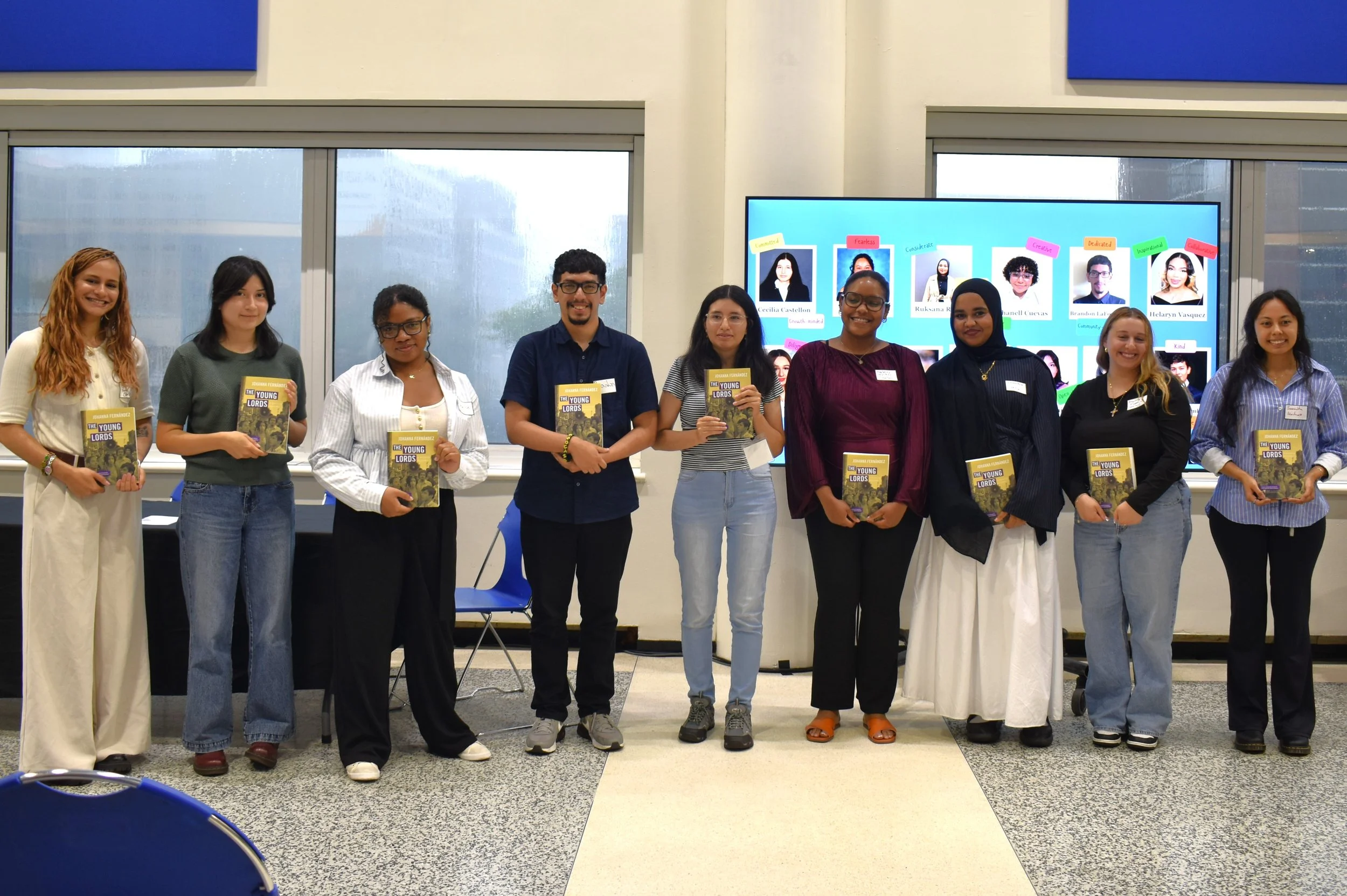
In the Financial Planning Fellowship’s first year, finance and budget officers from nine CUNY schools came together to work with CUNY ISLG staff on operational and strategic planning tailored to the needs of their specific student populations. Fellows developed strategies for tracking performance and progress, for allocating resources, and for building up their data processes to better understand how to cope with the headwinds facing higher education institutions across the country. In regular meetings facilitated by CUNY ISLG, the fellows gathered to connect about their challenges and best practices and to speak with CUNY leadership. The next cohort of the Fellowship, bringing together a new group of nine CUNY schools, will begin in fall 2026.
In the Financial Planning Fellowship’s first year, finance and budget officers from nine CUNY schools came together to work with CUNY ISLG staff on operational and strategic planning tailored to the needs of their specific student populations.
In parallel to stewarding the next fellowship cohort, the CUNY ISLG operations team is deepening its work with a selection of schools from the original cohort, supporting college leadership with econometric analysis, scenario planning, and further development of actionable steps for increasing savings and assessing long-term risks while maintaining the high-quality education and student supports that make CUNY a nationally recognized force for economic mobility.
For more information on the CUNY project, please contact Stephanie Rosoff at Stephanie.Rosoff@islg.cuny.edu.