
Taking Stock: A Decade of Knowledge
Since its inception in 2015, the Safety and Justice Challenge (SJC) has redefined how data and analysis can be used to transform criminal legal systems. Indeed, data has served as the foundation for change in more than 50 SJC cities and counties. It has informed the full cycle of policy and practice work, including unpacking who is in jail and why; identifying, implementing, and monitoring locally responsive solutions; adjusting strategies as needs and contexts change; and assessing impacts of these efforts to reduce unnecessary incarceration and increase equity.
The use of data in the SJC is not limited to advancing efforts in individual SJC cities and counties. Toward the goal of advancing fair, effective, and data-driven policy and practice on a national scale, data and trends across participating cities serve as the foundation for developing and sharing knowledge and lessons learned from the collective work under the initiative. As the SJC’s primary data and analytic partner, the Institute for State & Local Governance at the City University of New York (CUNY ISLG) has led the collection, management, and analysis of data across individual cities and counties, and the initiative as a whole. As part of this work, in 2019, CUNY ISLG launched a Research Consortium to support broader SJC knowledge development. Specifically, the Consortium was launched to advance rigorous action research work in six SJC priority topic areas that are core to the SJC mission (see Figure 1), through a group of pre-qualified research member organizations that apply for and carry out projects on these topics. In addition to research that comes out of the Consortium, CUNY ISLG and other SJC partners regularly produce a range of additional analytic work related to these and other priorities, including performance metrics, descriptive analyses, and dashboards.
As of October 2025, the portfolio of SJC research and analysis includes nearly 100 publications, holding hundreds of findings on critical criminal legal system policy and practice questions. Through this Research, Policy, and Practice Insight Hub, CUNY ISLG has synthesized learnings from SJC partners to identify key takeaways, themes, and gaps in knowledge to date in each of the six priority areas, with an eye toward unpacking learnings that will help practitioners and policymakers around the country innovate and improve the fairness and effectiveness of pretrial and jail-related decision-making and outcomes. Through this Hub, CUNY ISLG is also producing a series of microbriefs that offer deeper and more detailed findings in each of the priority areas.
Through this Research, Policy, and Practice Insight Hub, CUNY ISLG has synthesized learnings from SJC partners to identify key takeaways, themes, and gaps in knowledge to date.
All research findings here are derived from SJC-funded work, either through the SJC Research Consortium, through research coming out of CUNY ISLG as the main SJC research partner, or through studies funded directly by the John D. and Catherine T. MacArthur Foundation under the banner of the SJC. As analysis and research continue, check back for future publications that offer deeper findings in each area and highlight the legacy and impact of the SJC.
Effective Strategies for Safe Jail Population Reduction
Outside of broad and sweeping policy changes such as bail reform, a single change to practice or policy is unlikely to meaningfully reduce the misuse and overuse of jails alone. Pursuing a range of practices and policies (i.e., strategies) that collectively and complementarily impact the broader system and directly address drivers of local populations is the most promising path to safely reducing reliance on jails.
Individually, many of the programmatic and practice strategies pursued by SJC cities and counties led to positive outcomes for the people and communities they served. However, impacts on the overall jail population were often small given their typically narrow reach and, in the case of programmatic strategies, limited slots. This section describes strategies implemented in SJC cities and counties, along with available insights on impacts and lessons learned.
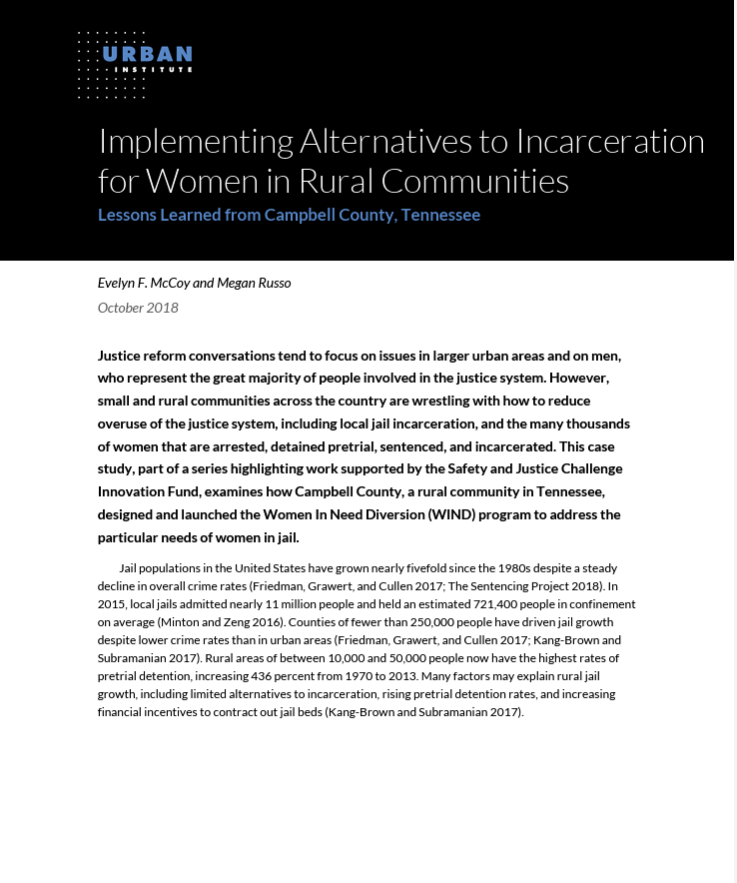
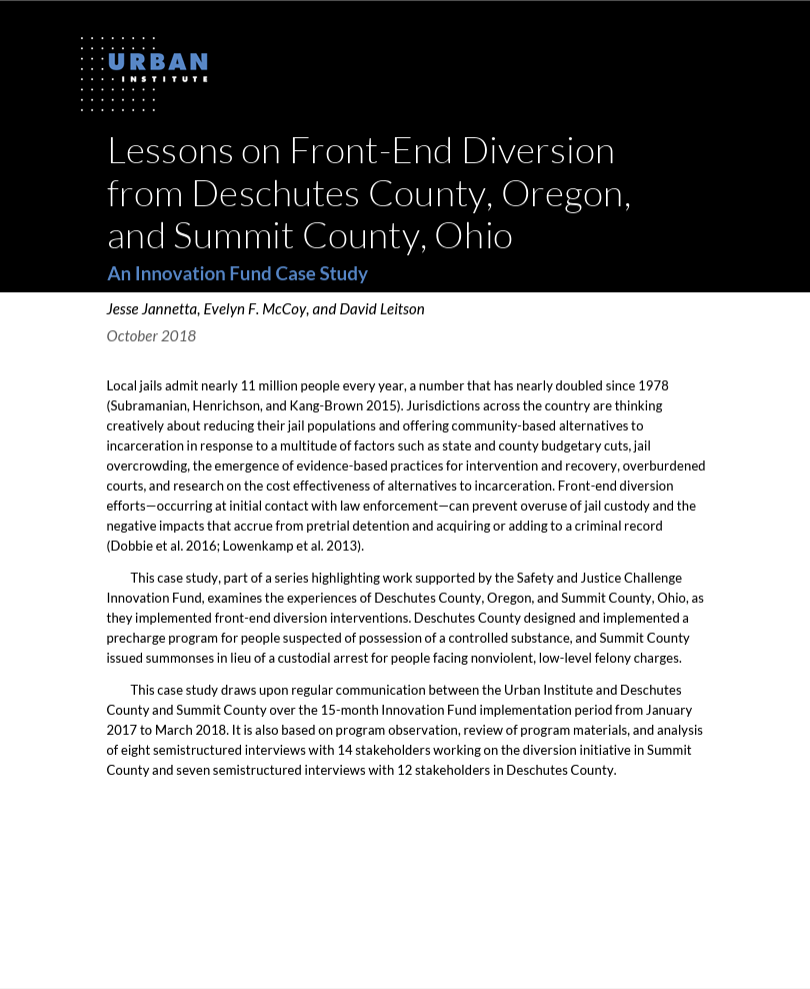
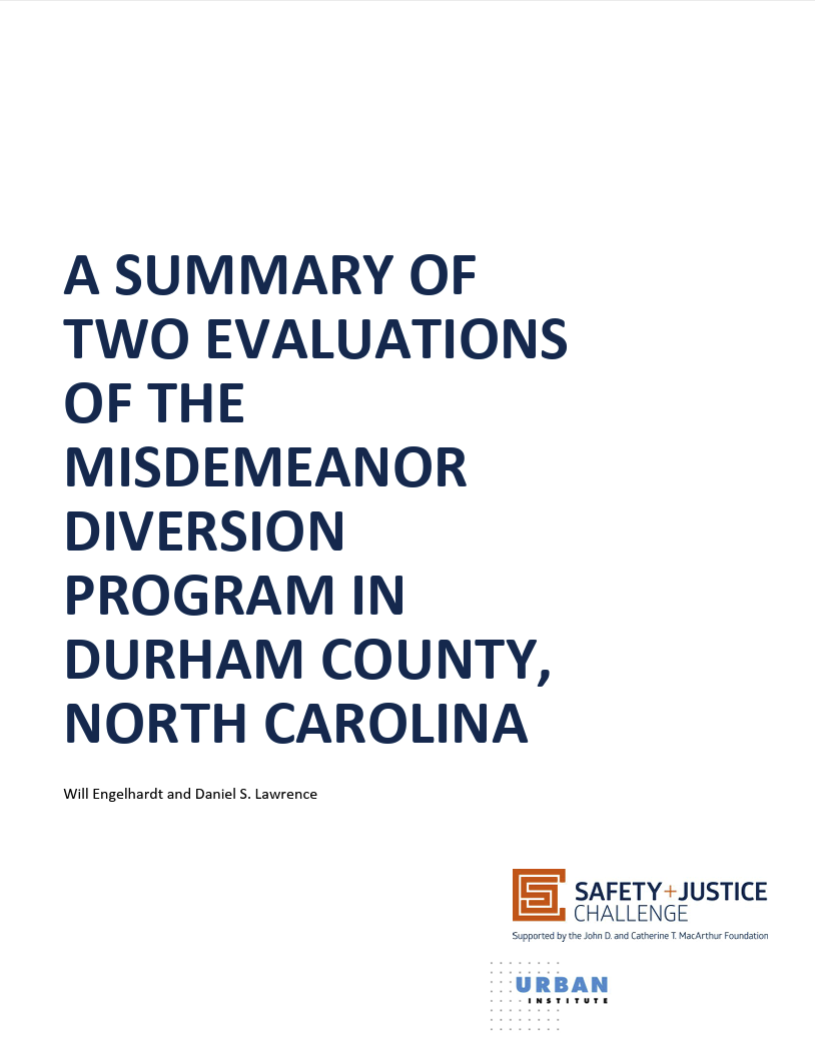
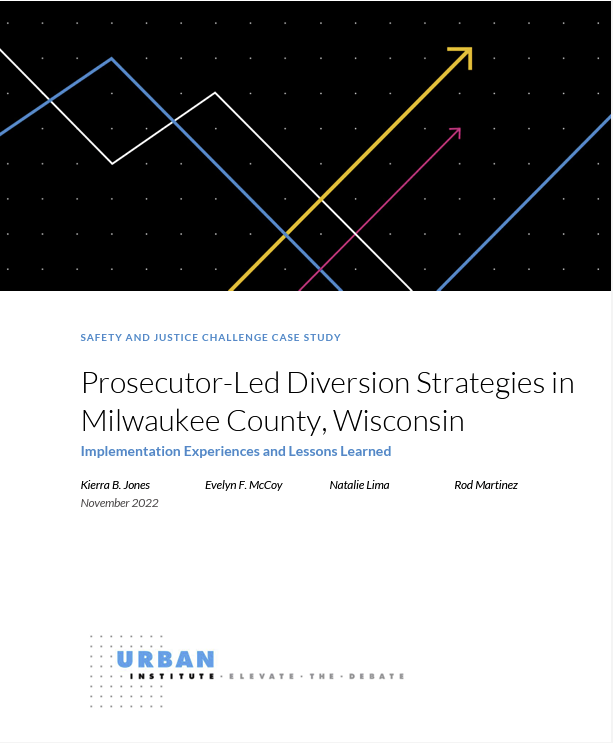
Diversion/Deflection: These strategies involve the establishment of alternatives to jail incarceration at the very front end of the criminal legal system and are often limited to individuals with lower-level charges and/or those assessed as low risk who typically stay in jail for shorter periods of time. Given this, it is not surprising that research shows these strategies on their own did not meaningfully reduce jail populations in SJC counties and cities. With that said, studies from the Urban Institute (2018-1, 2018-2, 2021, 2022) and Justice System Partners (2022) found that individuals who were offered a diversion/deflection opportunity were themselves positively impacted in a number of ways; this includes connection to essential community services, avoiding jail admission (a critical outcome, given that it is well-demonstrated that even limited time in jail can create negative impacts), and reducing subsequent criminal legal system involvement.
Jail Population Review Teams (JPR): The Center for Justice Innovation found that when using a collaborative cross-agency review process, JPRs helped expedite jail release for appropriately identified individuals (2022). This meant people who could safely await court appearances in the community did, supporting both population reduction and public safety goals. However, the time-consuming nature of the review process limited the impact on whether the strategy could meaningfully reduce reliance on jails (2022).
Court Reminders: These strategies have led to fewer missed court appearances in SJC cities and counties, especially when accompanied by other supports, such as referrals to services and transportation, according to studies by the Urban Institute and Policy Research Associates (2018, 2021, 2023). However, they have had little impact on the jail, given that very few individuals were booked into jail solely for failing to appear in court.
Pretrial Release via Risk Assessment: The use of risk assessment tools to guide release decisions–especially when used with expanded pretrial release supervision—has likely had the greatest overall impact on jail populations among practice-based strategies. However, more research is needed to examine how much they may have contributed to declining jail populations and jail composition, as research to date by the Urban Institute, Center for Court Innovation, and Loyola University-Chicago has largely focused on implementation, the role they play in judicial pretrial release decisions, and public safety (2022, 2022, 2020). Risk and release assessments are typically applied early and to a wide range of individuals charged with crimes, including those likely to be held on felony charges who tend to have longer lengths of stay in jail. Judges can use these tools to help inform their release decisions, particularly for individuals assessed at low risk of reoffending and/or missing court dates; this population is better served in the community while awaiting final case resolution.
Probation Violation Policies: Research by the Vera Institute of Justice (2021) found that the proportion of people in jail because of a probation violation varied substantially across jurisdictions, ranging from 5-50 percent across a sample of eight SJC cities and counties. The time spent in jail for these types of charges, however, was consistently much higher than for other types of bookings, and several sites had success lowering the overall jail population through strategies that reduced the average length of stay for those in jail solely on a violation of probation. In St. Louis, Missouri, a probation strategy aimed at reducing the time individuals spent in jail while awaiting violation hearings and release recommendations led to a drop in the jail population from 30 percent to 13 percent.
Bail/Bond Policies: Broader, more sweeping policy changes are one category of strategies that can substantially impact jail populations, and bail reform is a prime example. A study by Loyola University-Chicago (2020) found that in Cook County, Illinois, after General Order 18.8A went into effect eliminating the practice of setting unaffordable monetary bail, the county experienced an increase in the number and rate of pretrial releases, reduced bail amounts for defendants where bail was still ordered, and had no effect on new criminal activity or crime. Implementation of the order also coincided with a substantial decline in the average daily population (ADP) in the Cook County jail. The change in Cook County, along with other examples nationally, spurred Illinois to pass similar legislation. Studies of the legislation’s impact, in addition to a Consortium study focused on bail reforms in both New York and Illinois, is currently in progress.

TAKEN TOGETHER
SJC research suggests that using a tailored, data-driven combination of the strategies that combine both policy and practice changes and extend beyond interventions for those in jail on lower-level charges are more likely to have an impact on addressing the misuse and overuse of jails in safe and effective ways.
Reducing Racial and Ethnic Disparities in Jail Populations and Decision-Making
While the representation of all racial and ethnic groups in jail has declined since the SJC began, disparities—meaning unequal outcomes or experiences between similarly situated groups— have persisted or, in some cases, worsened. This is explained in part by sharper declines among white individuals in local jails relative to other groups after the introduction of SJC strategies. SJC research strongly reinforces the notion that equity in outcomes does not automatically follow from overall success in safely reducing jail populations. Instead, it requires applying an intentional racial equity lens throughout the planning and implementation of policy and practice strategies.
SJC strategies have reduced the often-unequal impacts the criminal legal system has had on Black, Indigenous, and People of Color (BIPOC) populations, primarily by safely reducing their numbers in jail along with other groups. Despite this progress, racial and ethnic disparities persist, meaning that these communities are still disproportionately represented in jails compared to white people even when they have comparable charges and case characteristics (2023, 2023, 2022). Research by the SJC and CUNY ISLG has not identified a single cause for this continued disparate impact but, broadly, it appears that strategies have benefitted white individuals more than BIPOC individuals (2025). This section provides learnings from SJC research on these disparities and future areas of focus to better understand and address these inequities moving forward.
Eligibility Criteria: Administrative and operational decisions such as eligibility criteria can play a significant role in creating opportunities for program participation across racial/ethnic groups. Indeed, research conducted by Justice System Partners (2022) shows that eligibility criteria have the potential to perpetuate disparities in arrest deflection and prosecutorial diversion programs as well as in cases reviewed by Jail Population Review (JPR) teams. They do so by way of participation fees and the exclusion of people with certain charges or more extensive/serious criminal histories regardless of future risk of re-offense or rearrest, according to research by the Prosecutorial Performance Indicators (PPI) (2021). The first micro brief in this synthesis series will delve deeper into the ways in which eligibility criteria and other administrative and operational parameters may perpetuate disparities.
Decision-Making Discretion: A study by the PPI team found that decision-making—and particularly discretion in decision-making—by key criminal legal system actors also contributes to disparate outcomes (2022). One study on prosecutorial decision-making found that Black individuals were more likely to receive harsher sentences than their white counterparts in cases that moved forward in the court process.
COVID-19: CUNY ISLG research (2022) found that racial and ethnic disparities persisted, and in some cases worsened, as a result of the pandemic. Bookings and population levels decreased across the board—by an average of 24 percent at the beginning of the pandemic—but they did not do so at the same rate for all racial and ethnic groups. White jail populations decreased more quickly and dramatically, with BIPOC individuals continuing to be overrepresented in jail throughout the pandemic. Additionally, jail population trends in some SJC cities and counties revealed that length of stay increased for some racial and ethnic groups more than others.
TAKEN TOGETHER
Programs and policies must consider racial equity implications at all stages of planning and implementation to ensure fairness in outcomes, while simultaneously centering community safety. Among the recommendations gleaned from SJC research:
It should not be assumed that a policy or practice strategy will advance racial equity just because it reduces the overall use of jail across groups.
Robust analyses by race/ethnicity should be conducted early in planning to explore how different policy and practice strategies will impact different racial and ethnic groups with similar case and charge characteristics.
Operational features of programming, specifically eligibility criteria and cultural responsivity, should always be considered through a racial lens.
When examining the impacts of policy and practice change on race/ethnicity, it is critical to define success broadly and with input from impacted communities. In particular, positive impacts for individuals, such as remaining at their jobs, with their families, and with communities rather than being incarcerated, should be counted as success. Additionally, positive interventions such as deflection or diversionary programs and services should be counted as assets that can help individuals succeed rather than returning to justice-involvement.
The SJC Racial Equity Cohort, launched by the SJC in 2022 and including four partner jurisdictions, may provide future insight into whether and how disparities were reduced through an intentionally designed racial equity planning approach and implementation of strategies.
CUNY ISLG Microbrief: From Policy to Practice: How Operational and Administrative Decisions Perpetuate Racial and Ethnic Disparities further explores SJC findings regarding racial and ethnic disparities, including looking to answer these questions:
How do operational decisions such as eligibility, referral and enrollment, and participation/completion of programs impact racial and ethnic disparities?
What types of approaches are promising in efforts to advance equity and safely reduce the footprint of jails?
What are the impacts of pretrial system change on community safety?
Measuring the Community Safety Impacts of Reducing Reliance on Jail
Across SJC counties and cities, there was no association between jail population changes and changes in crime rates; nor did more people return to jail for alleged criminal activity following the implementation of SJC criminal legal strategies.
The overarching goal of the SJC initiative is to safely reduce the misuse and overuse of jails across the country. To date, SJC research has repeatedly and consistently demonstrated that, when done strategically and driven by data and collaboration, criminal legal system reform can be done without jeopardizing community safety.
Pretrial Release: A CUNY ISLG analysis (2023) of people released from jail before and after implementation of the SJC found that people released after the implementation of pretrial policy and practice strategies under the initiative were no more likely to return to jail overall or for a violent charge than individuals released before the SJC began.
Rebooking rates overall (which include rebookings for administrative reasons such as missing a court hearing or failing a drug test while on community supervision) have remained at about 25 percent since 2015, with no increase during the SJC or the COVID-19 pandemic. Rebookings for violent crime also remained steady and low at two percent across all time periods; and rebookings for homicides were consistent and extremely rare as well.
Bail Reform: A Loyola University-Chicago study (2020) examining the efforts of bail reform in Cook County, Illinois similarly found that implementation was not associated with any change in new criminal activity, violent or otherwise, despite increasing releases with no bail from jail.
Community Engagement: Both the University of Missouri-St. Louis (UMSL) (2023) and Urban Institute’s (2022) research examined community strategies to address public safety and found that bringing the community into safety plans helped build trust and collaboration. Research also emphasized the importance of a localized approach to understanding what safety means, and there was general agreement across studies on the need to expand safety metrics beyond crime to include themes such as social connections, community resources, and physical environments.
Studies by the Urban Institute (2021) and Justice System Partners (JSP) (2022) found that diverting/deflecting individuals with low level charges did not lead to increases in subsequent arrests.
TAKEN TOGETHER
SJC research to date has demonstrated that people released from jail during the years that SJC reforms were implemented were no more likely to return to jail with new criminal charges while back in the community than individuals released before these systems changes were in place. Future efforts to reduce the reliance of jails must continue to make safety a priority to ensure that those who do demonstrate a clear risk to the public remain in jail, while the rest are provided pathways to return to their communities that do not rely on ability to pay bail and bond. Additionally, system changes that implicate public safety should involve genuine collaboration, beginning at the planning stage, with community members and leaders to create more effective and holistic solutions.
Understanding Case Processing and its Impact on Jail Populations
While many jail population reduction efforts aim to limit who enters jail, long lengths of stay (LOS) among those who do get booked are often an even bigger driver of population size. Case processing delays, which directly impact LOS, have been an issue of increasing focus throughout the SJC. Analyses confirm the complex interplay of factors that contribute to how long criminal cases take to resolve, including issues with case management systems, widespread use of continuances and other operational and procedural delays, overwhelming case volumes, and backlogs created by the COVID-19 pandemic.
A pending 2025 foundational analysis of court processing trends by CUNY ISLG shows that case processing times in most SJC cities and counties—which were already lengthy at the start of the initiative—have increased, particularly during the COVID-19 pandemic when most courts significantly reduced their operations. As of early 2023, they remained above pre-pandemic levels. A PPI study (2024) highlights how the pandemic worsened existing challenges in felony case processing, in particular; backlogs and resource strain affected every stage from filing to disposition. Additionally, a JFA Institute study (2023) found that the LOS in jail for those booked on violent felonies, increased from 79 days pre-pandemic to 91 days in 2021, demonstrating the impact of the pandemic on case processing times.
Increased Case Processing Time/Time to Disposition: CUNY ISLG’s forthcoming research brief on case processing in 10 SJC cities and counties found that the average time from case filing to disposition for felony cases increased in all 10 cities and counties, from an average of 251 days pre-pandemic to 400 days during the pandemic and decreasing slightly to 385 days post-pandemic. Case processing times for misdemeanors followed a similar trend, increasing in 9 of the 10 sites, but increased more than felonies from before the pandemic to early 2023 (200 days pre-pandemic; 343 during the pandemic; 436 post-pandemic).[1] One possible cause of the greater increase in misdemeanor case processing times post-pandemic is court prioritization of custodial cases, especially during the pandemic, which tended to be felonies.
Interestingly, a pending study on case processing times and their impact on case outcomes by Loyola University-Chicago found a somewhat opposite trend in two of three study sites- felonies saw a greater increase in time to disposition between 2017 and 2024 than misdemeanors did.[2]
Procedural Inefficiencies: PPI’s case processing study (2024) identified systemic/procedural inefficiencies as a key driver of delays in felony cases, citing disjointed communication between criminal legal actors, inadequate case management systems, delays in court hearings, number of continuances ordered, and delays in evidence delivery as major contributors.
Loyola University-Chicago's pending study reflects this trend: researchers found that while case volume did not appear to be correlated with increases in time to disposition, nearly all counties across all three states studied saw increases in both average number of hearings per case and average number of days between hearings, suggesting the influence of administrative factors in processing delays.
Disparities in Case Processing and Sentencing: Research also found racial disparities in case processing times. The same PPI study found that Black defendants experienced longer processing times for felony cases compared to other racial groups with similar case characteristics (2024). Longer processing times were also linked to harsher sentencing outcomes, suggesting that these disparities may result in more punitive consequences for Black defendants.
TAKEN TOGETHER
SJC research indicates that on average, case processing times have increased over time, with the pandemic exacerbating an already overburdened system. Further, in some studies, time to disposition for misdemeanors has increased substantially and even more than felony cases. While this may be due to prioritizing cases where individuals are detained in jail, all criminal cases require attendance at court hearings, disrupting work, family, and community obligations and place mental and emotional burdens on individuals as they await their case outcomes. Finding ways to minimize the time to resolve cases benefits both individuals and the criminal legal system at large. The SJC research here highlights some recommendations to reduce case processing times including creating specialized units to handle backlogs, setting office-specific targets, streamlining evidence delivery, reducing continuances, and conducting regular organizational reviews to ensure new policies are not resulting in unintended adverse consequences (2024).
Long-Term Implications of COVID-19 Jail Reduction Efforts
Emergency COVID-19 strategies led to rapid and significant jail population reductions in SJC counties and cities, as they did in cities and counties around the country. In the case of SJC-affiliated areas, these impacts pushed jail populations down even further than the reductions that were achieved through pre-pandemic reform efforts under the initiative, though they did not reduce racial and ethnic disparities in jails.
SJC counties and cities were generally better positioned to respond to the crisis given the foundational work they had already established as part of their participation in the initiative including more holistic cross-system collaboration structures, access to data and dashboards, and other operational infrastructure. Among the most impactful of these pandemic-era measures were more comprehensive policy changes, such as the suspension of arrests for certain non-violent charges, and reducing the reliance on monetary bail for pretrial release.
In SJC cities and counties, jail bookings were already on the decline prior to the pandemic as a result of the initiative, but these declines became even steeper during the peak of COVID-19, when the larger universe of cities and counties around the country introduced an array of emergency measures to minimize the number of people in jail. While populations began to rise again in 2021 as criminal legal system operations resumed, booking rates across SJC-affiliated areas remained well below 2019 levels, as of 2025 data from CUNY ISLG’s Measuring Progress tool.
Strategies Pursued During the COVID-19 Pandemic: CUNY ISLG (2022) found that during the peak of the pandemic, SJC cities and counties implemented or expanded upon a variety of practices that helped further reduce jail populations, including:
Introducing broader changes to arrest policies and practices that expanded the scope of “cite and release,” and/or limited or suspended arrests for low-level, non-violent offenses like traffic violations and misdemeanor warrants.
Reducing the use of bail and increasing the use of non-financial release options, particularly for those charged with low-level offenses.
Changing court policies and practices to consider early release for individuals who had already served a percentage of their sentence.
Utilizing Existing Infrastructure: Because of their recent experience implementing a range of policy and practice strategies for reducing jail populations, SJC-affiliated areas were better equipped to adapt to the challenges of COVID-19. In Multnomah County, Oregon for example, a JSP study (2024) found that stakeholders needed only to adjust or expand strategies already in place to broaden their scope—a much quicker process than building and funding a new infrastructure or operational process.
Racial and Ethnic Disparities: As described in the earlier section on racial and ethnic disparities, the pandemic reinforced and sometimes exacerbated racial and ethnic disparities in the criminal legal system. Although booking rates and jail populations saw decreases in general, reductions for white individuals outpaced reductions for BIPOC individuals, and length of stay increased for BIPOC individuals more than for white individuals. According to CUNY ISLG research (2022), BIPOC individuals continued to be overrepresented in jails throughout the pandemic.
COVID-19 and Crime: Increases in violent crime occurred during the pandemic, both in jurisdictions that had implemented reforms and in those that had not. Despite unfounded claims that policies and practices aimed at reducing jail populations caused the uptick, research from JFA Institute and CUNY ISLG (2021 & 2023) makes it clear that this was not the cause, and was instead likely a result of the complex socioeconomic impacts of worldwide physical and financial lockdowns.
Changes in violent crime varied across cities and counties, a CUNY ISLG analysis (2023) found, and larger decreases in jail populations were not always associated with increases in violence. Further, people released after SJC jail population reduction strategies were implemented were no more likely to return to jail or to return for a violent crime than individuals released before changes to policy and practice began in SJC cities and counties.
TAKEN TOGETHER
SJC research has demonstrated that the deep collaboration that developed between system agencies and partners through the SJC initiative prior to the pandemic created an invaluable infrastructure that can be leveraged in times of emergency. During COVID-19, it allowed for quick responses to challenges, as cooperation and trust had already been established. Building these formal cross-agency and system collaborations in non-urgent times is an important step to be able to more swiftly, safely, and effectively respond to emergencies in real time.
Understanding Criminal Legal System Decision-Making
SJC research to date has focused primarily on prosecutorial decision-making, uncovering more about the nature of prosecutors’ influence on decision-making and how office culture and leadership can impact it. More recently, SJC research is delving into the role of public defenders, which suggests that giving them a more active role during and prior to initial court appearance leads to positive outcomes for individuals.
Early-stage decisions in the criminal legal process—made by law enforcement, prosecutors, and public defenders—have a significant impact on case outcomes and equity. Research in SJC sites by the Vera Institute of Justice, Urban Institute, Loyola University-Chicago, and University of Missouri, St. Louis confirms that these decisions are shaped by a combination of formal policies, institutional priorities, and individual discretion, and that decision-making processes may perpetuate racial disparities (2019 & 2022). Workplace culture is a key factor in shaping decisions among law enforcement and prosecutors. Supervisors often set the tone for enforcement priorities, and informal performance metrics—such as the value placed on arrest or conviction rates—can reinforce decision-making patterns that disadvantage BIPOC communities.
Prosecutors: Prosecutorial discretion plays a critical role in shaping case trajectories. Traditionally, success has been measured by conviction rates, but some offices have begun to include metrics that focus on other important points in the process as well, such as the number of individuals diverted, number of individuals served in the community through alternative options, and more effective triaging of serious cases. Prosecutors have largely welcomed the inclusion of these additional metrics and feel that they are much more reflective of the goals they work towards in their professional capacities, according to research by PPI (2021).
An Urban Institute study (2022) on plea bargaining in Philadelphia and a joint study by Loyola and University of Missouri, St. Louis (2022) on plea bargaining in Milwaukee and St. Louis County both found that beyond culture and behavior within prosecutor’s offices, prosecutorial decisions are shaped by the behaviors or anticipated behaviors of other criminal legal actors. For example, a prosecutor may decide how to charge a case—or whether to proceed at all—based on their perception of how likely a judge is to advance the case. Additionally, prosecutors may dismiss cases brought to them by law enforcement that they feel are insufficiently supported by the evidence.
Equity-focused research highlights persistent racial disparities in prosecutorial practices. Several studies by PPI, the Urban Institute, Loyola University-Chicago, and University of Missouri, St. Louis (2021, 2022, 2022-1) found that Black individuals were less likely to receive favorable plea offers, more likely to be excluded from diversion opportunities, and more frequently sentenced to incarceration despite similar case characteristics when compared to other racial groups.
Public Defenders: Recent innovations led by public defenders have shown promise in shifting the front-end of the system toward more equitable outcomes. A Justice System Partners study (2025) found that when judges receive more contextual and holistic information about defendants at initial appearances, they make more informed and fairer decisions; and these things happen more often when public defenders are able to engage with their clients earlier in the process, and in more meaningful ways.
In Multnomah County, Oregon, for example, a shift in practice that allowed defenders to meet with their clients before first appearance and designated a more private location for meetings in custody led to fewer bail orders and fewer orders of judicial conditions upon release. Importantly, these reforms in Multnomah improved pretrial release outcomes across different racial and ethnic groups. In Lucas County, Ohio, case managers collected more information about the individual that had been arrested after the first appearance, but before their second appearance; these changes led to Black men and women experiencing the greatest increases in release on recognizance (ROR). Like Multnomah, in Cook County, Illinois, individuals that had been arrested had access to council prior to first appearance, and case managers worked with council to collect more information that could be presented at the initial hearing. As a response to these changes, ROR rates rose across all racial groups.
Law enforcement: Law enforcement officers typically draw on training, situational dynamics, and agency priorities to inform their decisions, according to research by the Vera Institute of Justice (2019). Moreover, a Justice System Partners study (2022) on deflection practices in Pima, Arizona, and Charleston, South Carolina, found that officer decisions to deflect arrest were influenced by factors such as an individual's willingness to seek treatment, the wishes of victims, program eligibility criteria, and if officer buy-in was secured prior to program implementation.
A recently released study by Arizona State University and University of Missouri, St. Louis (2025) found that officer decision-making can be influenced even before they arrive to a scene. When relaying information to law enforcement about calls for service, Public Safety Communications Personnel (PSCP) can prime law enforcement’s thinking about the incident they are responding to.

TAKEN TOGETHER
Research on the various decision-makers in the criminal legal system highlights that decisions are weighted on both formal and informal policies and practices in addition to the influence that decision-makers can have on each other. Future work should delve deeper into how decision-makers are influenced in their real-time decision-making, and how decisions made by under-explored criminal legal actors such as law enforcement and judges impact justice-involved people.
Where do we go next?
This Hub provides a critical foundation of knowledge from SJC cities and counties for the broader research field in efforts to advance a safer, fairer, and more just criminal legal system. As new research projects are completed and published, CUNY ISLG will continue to add to this legacy of learnings and build on them, including with new microbriefs.