
BLOG
Institute Intelligence
Insights, case studies, news, and updates from ISLG’s good governance research and action.

The Medical-Legal Partnership: Cross-Sector Collaboration Improves Youth and Family Outcomes
Many families, in New York City and elsewhere, face challenges obtaining educational support for children struggling with learning and developmental disabilities and/or mental health needs. This is particularly true for families that live at or near the poverty threshold. An innovative effort by a hospital and a legal services provider in Manhattan is working to change that.

20 Chiefs of Staff Selected for the Kriegel Fellowship for Public Service Leaders
Today, we announced the second cohort of the Kriegel Fellowship for Public Service Leaders. The Kriegel Fellowship is a leadership and professional development program for chiefs of staff of city and state legislators serving the New York City area.

Paying Young People to Achieve Their Goals and Support Their Communities Pays Off
Manhattan’s five Youth Opportunity Hubs have recognized the importance of financial security and work experience as protective factors for young people from their outset. Over the past four years, they have deepened their investment in cash supports for young people and developed thoughtful approaches to meeting participants’ immediate financial needs. From the start, all the Hubs have included at least some type of paid internship or job program that is available to young people.

Service Provider Strategies for Shifting Into—and Out of—the COVID-19 Pandemic
The COVID-19 pandemic forced New York City’s social service providers to transition their work almost overnight. Many shifted their approaches in previously unimagined ways, as longstanding ways of conducting outreach and engagement were no longer viable.

When Jail Populations Decline, Crime Rates Remain Stable
The primary purpose of a jail is to detain those who are waiting for court proceedings and are considered a flight risk or public safety threat. However, many people admitted to jail are there because they cannot afford to post bail. As a result, they may remain behind bars for weeks, awaiting trial or a case resolution. This overreliance on jails has negative consequences not only for those who are incarcerated, but also for their families and their communities, particularly communities of color. Findings from our new analysis suggest that decarceration strategies—approaches to keep people OUT of jail—can be crafted and implemented responsibly, without compromising public safety.

New Reports from 10 Nationwide Sites Highlight Key Factors that Drive Probation Violations and Revocations and Guidance for Reform
Nearly 25% of prison admissions are due to technical violations of probation/parole—often due to minor offenses such as missed curfews, or failed drug tests. To change this, 10 jurisdictions across the country have been working to understand what drives probation revocations and potential solutions to reduce them.

Addressing Trauma May Help Prevent Domestic Violence
Domestic violence—and intimate partner violence (IPV), in particular—is a long-standing public health crisis that has persisted despite earnest political and programmatic efforts to curb it. Although Abusive Partner Intervention Programs (APIPs) emerged in the late 1970s to reduce domestic violence, many traditional APIP models have not been found to promote long-term behavior change. Intervention programs that work with abusive partners and use trauma-informed approaches can help successfully prevent future intimate partner violence.

How Should Prosecutors Define Success: The Race for Manhattan District Attorney
The new Manhattan DA will be responsible for advancing justice on a broad scale. We outline a core set of principles related to fairness, trust, and community safety that can help the next DA get there.
A Time for Change
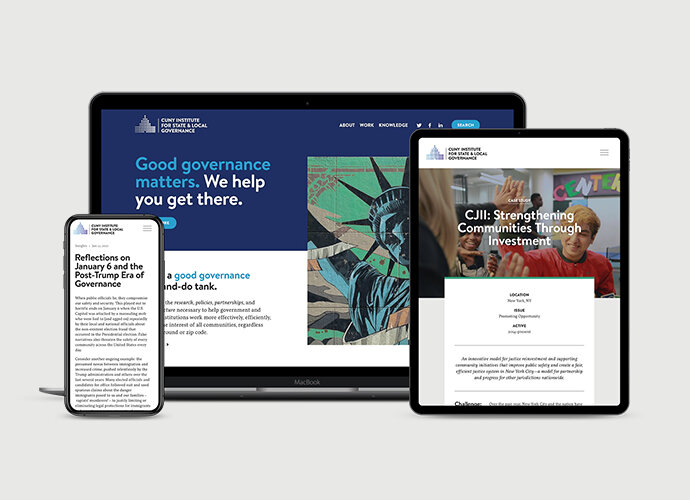
The past year has confirmed how much good governance truly matters. Our sleeves remain rolled up—our work to help optimize institutions and leaders continues. This new blog, Institute Intelligence, is inaugurated with that in mind.

11 NYC Electeds Selected for ISLG’s Lindsay Fellowship in Government Leadership and Practice
The Lindsay Fellowship recognizes promising New York City leaders who have been elected to the city and state legislative bodies in the past four years and introduces these leaders to experts across a variety of policy areas and provides a space for ongoing dialogue and learning.

ISLG Releases New Brief on Jail Population Trends in Safety and Justice Challenge Sites During COVID-19
As the extensive impacts of the COVID-19 pandemic became clear, many municipalities—including those participating in the John D. and Catherine T. MacArthur Foundation’s Safety and Justice Challenge (SJC) — implemented emergency measures to reduce their jail populations. This brief describes how those measures influenced jail populations in SJC sites between February and October 2020—and how jail populations and racial and ethnic disparities changed during the pandemic’s early months.

MacArthur Foundation Awards $18 Million in Grants to Rethink Local Justice Systems and Advance Racial Equity
Building on significant momentum for evidence-based reforms to local justice systems, the John D. and Catherine T. MacArthur Foundation provided $18 million in grants as part of its Safety and Justice Challenge, a national initiative to reduce over-incarceration by changing the way America thinks about and uses jails. In this report, we measure and describe the effectiveness of strategies to reduce jail populations over the first three years of the initiative.