
BLOG
Institute Intelligence
Insights, case studies, news, and updates from ISLG’s good governance research and action.

New City of Toledo Prosecutor’s Office Dashboard highlights Success of Domestic Violence Unit
Data and transparency can be a key tool for prosecutors’ offices looking to show policymakers and the public the impact of their work. The City of Toledo Prosecutor’s Office partnered with our Prosecutorial Data Collaborative to do this and has launched a public dashboard.

Defining the Legacy and Ongoing Impact of the Safety and Justice Challenge
Over a decade, the Safety and Justice Challenge helped more than 60 cities and counties safely reduce jail use. CUNY ISLG served as data partner and intermediary throughout. Now, with MacArthur, ISLG is supporting the SJC's next phase by building on this legacy through new avenues of work.

Do New York City’s elected officials deserve a raise?
For the first time in 10 years, elected officials in New York City voted to give themselves a raise—an 18.2 percent increase. That number came as a recommendation from the Quadrennial Commission, for which CUNY ISLG conducted an independent analysis of affordability, comparable wages, and other cities to make sure the recommendations were rooted in data, not politics.
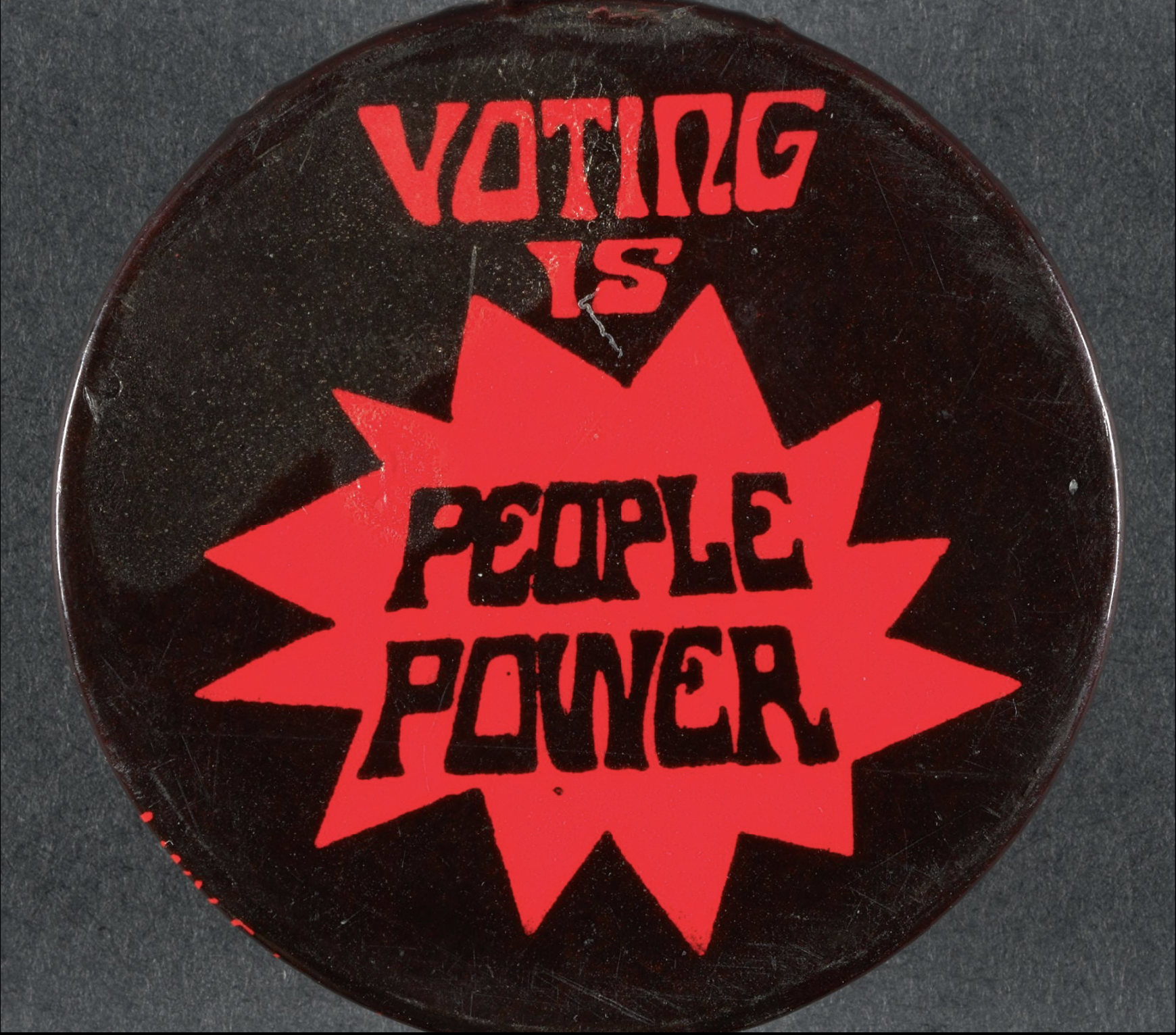
Why Some Young People Don’t Want to Vote Anymore
Why do students feel apathetic about voting, and what can be done? This post, by Civic Engagement Fellow Stephanie Frias, is the first in our series “Field Notes: Civic Engagement Fellow Voices on Democracy.”

The Complex Reality Behind Women’s Rising Jail Populations
After decades of rapid increase, cities and counties across the country were starting to reduce the numbers of women held in jails. But those numbers have started to climb again. A new analysis from CUNY looks at why women are being booked, how long they’re staying, and how it compares across demographics and to men.

Facing Political and Demographic Shifts, CUNY Financial Leaders are Strengthening Financial Practices
The CUNY system educates hundreds of thousands of New Yorkers a year and serving as a major social economic engine for the city. Managing the budgets of its 26 colleges is, thus, complex. ISLG’s Financial Planning Fellowship for Higher Education gives CUNY college leaders to the tools to balance budgets while advancing academic innovation.
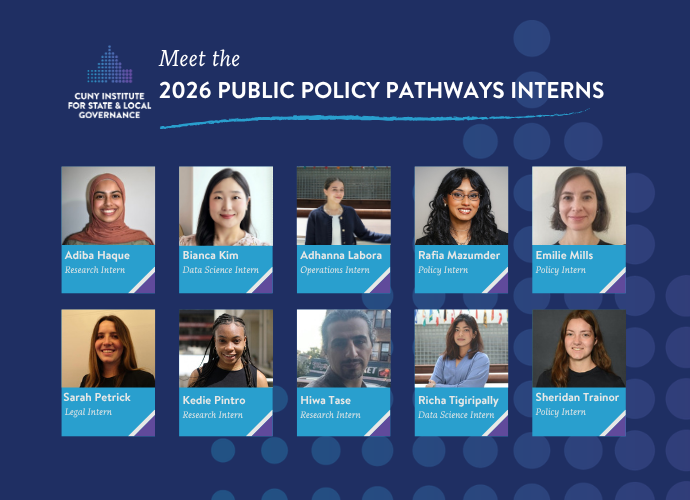
Introducing CUNY ISLG’s 2026 Public Policy Pathways Interns
Our Public Policy Pathways Internship gives CUNY students hands-on experience in the public sector, developing career pathways into research, policy, data science, and government operations, as well as professional development. Meet the latest cohort.

In Times of Crisis, Support or Capacity Building is Key
Grassroots community organizations are increasingly becoming the lifeline for those facing immigration proceedings, particularly for minors who, unlike Liam, do not have immediate family members with them. In New York City, the Immigrant Children Advocates’ Relief Effort (ICARE) has connected unaccompanied minors with legal representation and other services since 2014.
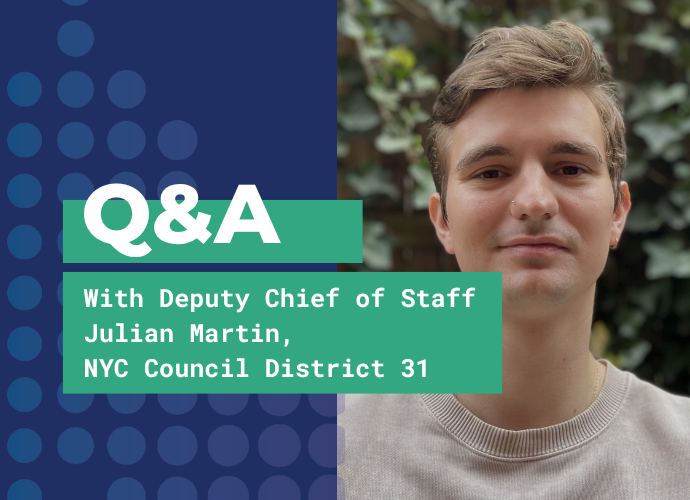
“A Swiss Army knife for our district.” Q&A with NYC Council Deputy Chief of Staff Julian Martin
“Though there is still a lot to build, local government has shown to be the level where there is the most trust, and I think the reason for that is a tighter feedback loop between the work that we do and the response we get from the community.”

Responsible AI for the Public Good: CUNY ISLG Joins Two New Initiatives
In theory, AI has incredible potential to help government and nonprofit entities improve the efficiency and quality of services. In practice, it also comes with questions and risks. CUNY ISLG is committed to understanding and using these tools responsibly and effectively, and has joined two initiatives to strengthen our ability to do so.
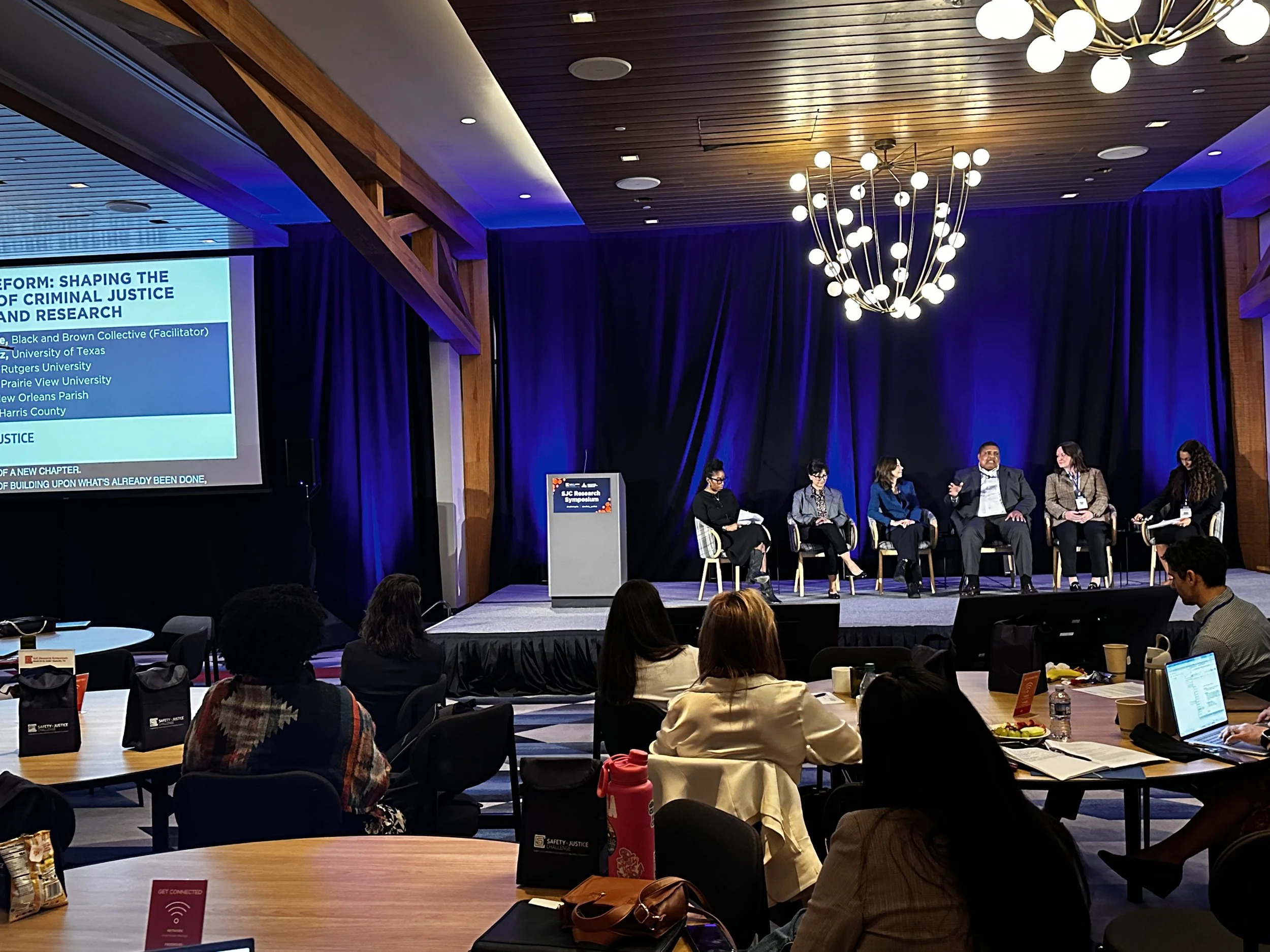
RECAP: Building a Legacy of Research for Action
The 2026 Safety and Justice Challenge Research Symposium was an opportunity to reflect on the meaningful efforts and results of participating cities and counties, and dug into the expansive knowledge of what worked, what didn’t, and what should come next.
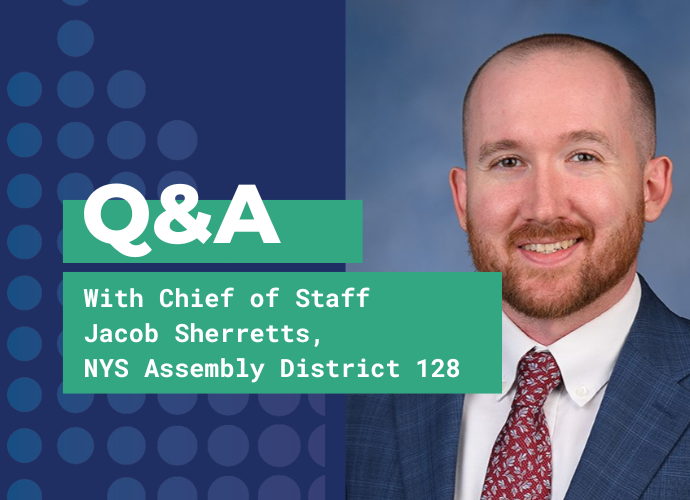
“I serve as a focal point.” Q&A with NYS Assembly Chief of Staff Jacob Sherretts
“I serve as a focal point, because everybody else on the team is specializing. The chief of staff is the one that needs to bring that all together and make sure it's heading in the right direction..”