
By Molly Dektar, Senior Communications Associate
This post, by Civic Engagement Fellow Stephanie Frias, is the first in our series “Field Notes: Civic Engagement Fellow Voices on Democracy.” In this series, Civic Engagement Fellows will take you inside their work embedding in community organizations in the Bronx and supporting Bronx residents in making their voices heard in local elections.Read more about this work, funded by New York City’s Campaign Finance Board, here.
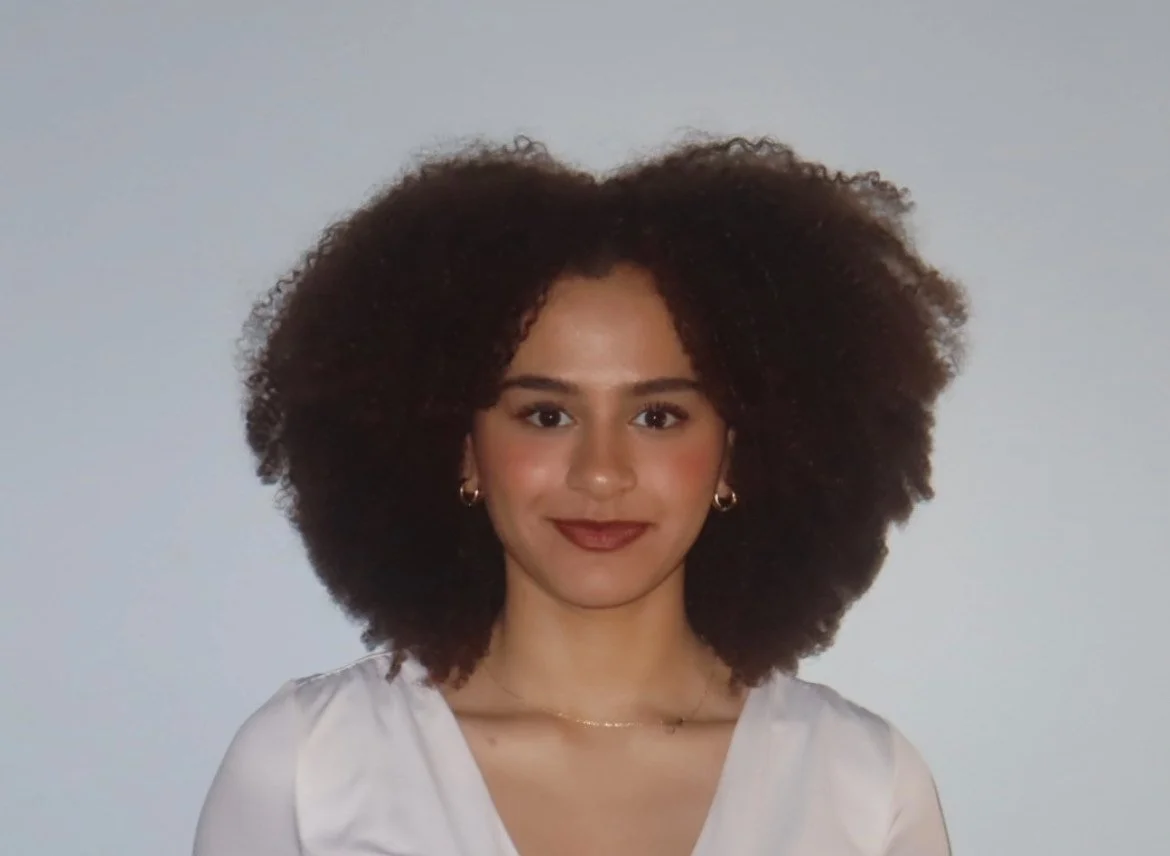
Civic Engagement Fellow Stephanie Frias
In the lead-up to the New York City Mayoral elections in November 2025, I noticed an apathy amongst my classmates at my old college, Baruch. These elections were unique for a variety of reasons: we had a young Muslim democratic socialist, an establishment politician, and a red-beret-wearing evergreen candidate all vying to lead one of the most influential cities in America. Though many people my age were tuned in, many others were unfortunately uninterested in the idea of voting in yet another election.
As a Civic Engagement Fellow with CUNY ISLG and the New York City Campaign Finance Board, the first few weeks of October were dedicated to doing voter registration with the student government at my school. While passing out materials, I noticed many of my classmates flat-out refused to vote or walked right by me without any concern. It got me thinking about the feelings that young people have towards voting. Even when talking with students now, many of them expressed feeling like “there is no point” and that “the system is broken anyway.”
I attribute most of this apathy to a few factors. One is the fact that the mayoral elections directly succeeded in the 2024 Presidential election, in what felt like one of the most stressful election nights since 2016. For many individuals in my age group there were myriad feelings that night: sadness, confusion, disappointment, and hope.
As a young person, I believe another major cause of the disillusionment around voting comes from youth growing up in increasingly concerning times. Political turmoil and corruption, AI causing job insecurity, international crisis after crisis, and domestic economic instability have pushed some youth to feel pessimistic about their own futures. When high-quality healthcare, jobs, and education are no longer achievable to a continuously growing population, the idea that your individual vote matters feel like a myth. The problems of the government feel too large for one person to solve.
At my current host organization, Urban Youth Alliance International, I specifically work with our alternatives to incarceration program BronxConnect. When discussing the importance of voting with my students from the South Bronx, they sometimes are disengaged, bored, and disinterested. This is not because they do not care; this is because the barrage of issues they are currently facing in the South Bronx (over policing, being justice-impacted, lack of community resources) feels like a much more prominent concern that cannot be addressed by their vote. For kids who have been continuously failed by systems that are supposed to serve them, it is not fair to expect them to immediately trust the voting system.
For kids who have been continuously failed by systems that are supposed to serve them, it is not fair to expect them to immediately trust the voting system.
A third reason voter apathy amongst young people has become so prevalent is that their priorities have changed. When you must focus on getting a high-paying job, finishing school, and dealing with other personal issues, it can feel impossible to care about the civic state of the world simultaneously. People do not feel like participating in voting and other democratic processes because they lack a belief that anything will come of it. The interests of young people are wildly underrepresented by most politicians because many politicians are fearful of facing financial backlash or being voted out by an older, more conservative demographic. When politicians prioritize Super PAC groups over the priorities of Gen Z, who will ultimately have to live with their decisions for years, a lack of trust is unavoidable. Young adults are inheriting a plethora of issues from an aging generation: climate change, less job security, a deteriorating housing market, and armed conflicts across the world.
While it is not our fault, it is our responsibility to try to undo these efforts, though that has become increasingly difficult within a government structure that prioritizes popularity over policy.
However, by creating a more transparent relationship between politicians and constituents and holding them accountable for their promises, young adults can start having faith that their representatives in government have their best interests in mind.
Also, by funding voter education programs and supporting younger generations, particularly teenagers and college students, everyday people can begin to take a real interest in how voting shapes democratic institutions. Initiatives such as Civics for All exist in New York City public schools, where students are truly taught the foundations of federal and national government and why it’s imperative to create a generation of education leaders. Funding more programs like this and streamlining the process for students to become educated on civic engagement initiatives is important. Also encouraging youth to get involved with townhalls, local mutual aid organizations, and community boards are also prime ways for them to be involved in their community.
Towards these ends, working as a Civic Engagement Fellow at CUNY ISLG and being able to aid civic engagement efforts in the South Bronx alongside my host site, BronxConnect, has helped fulfill my goal in community building and engagement. In the last eleven months I have helped students identify their state assembly members and senators, understand how bills get passed, become aware of the importance of mutual aid, and see how their individual voices matter in the grander scheme of things.
One of the initiatives I have been most excited about during my time at BronxConnect is being able to connect one-on-one with youth during our weekly “Youth Council” sessions. This Youth Council is comprised of around twenty young people who have been identified as high risk for future justice involvement, or who have already been impacted by the justice system. Every week, along with my colleagues, I have had the opportunity to engage with many of these students by discussing foreign policy and current events, teaching them how to canvass, and engaging with them about the numerous decarceration campaigns BronxConnect is a part of. I have also been helping students at my nonprofit apply to college, so we can create another generation of educated, civically engaged individuals.
The Youth Council is comprised of around twenty young people who have been identified as high risk for future justice involvement, or who have already been impacted by the justice system. Every week, along with my colleagues, I have had the opportunity to engage with many of these students by discussing foreign policy and current events, teaching them how to canvass, and engaging with them about the numerous decarceration campaigns BronxConnect is a part of.
More than anything, I am trying to reshape the way they think of civic engagement; it is not just going to the polls but is instead comprised of different activities that involve grounding yourself within the community around you. I want students to have a more nuanced take on voting; yes, while one vote can't undo decades of systemic corruption, through community engagement, change can happen.
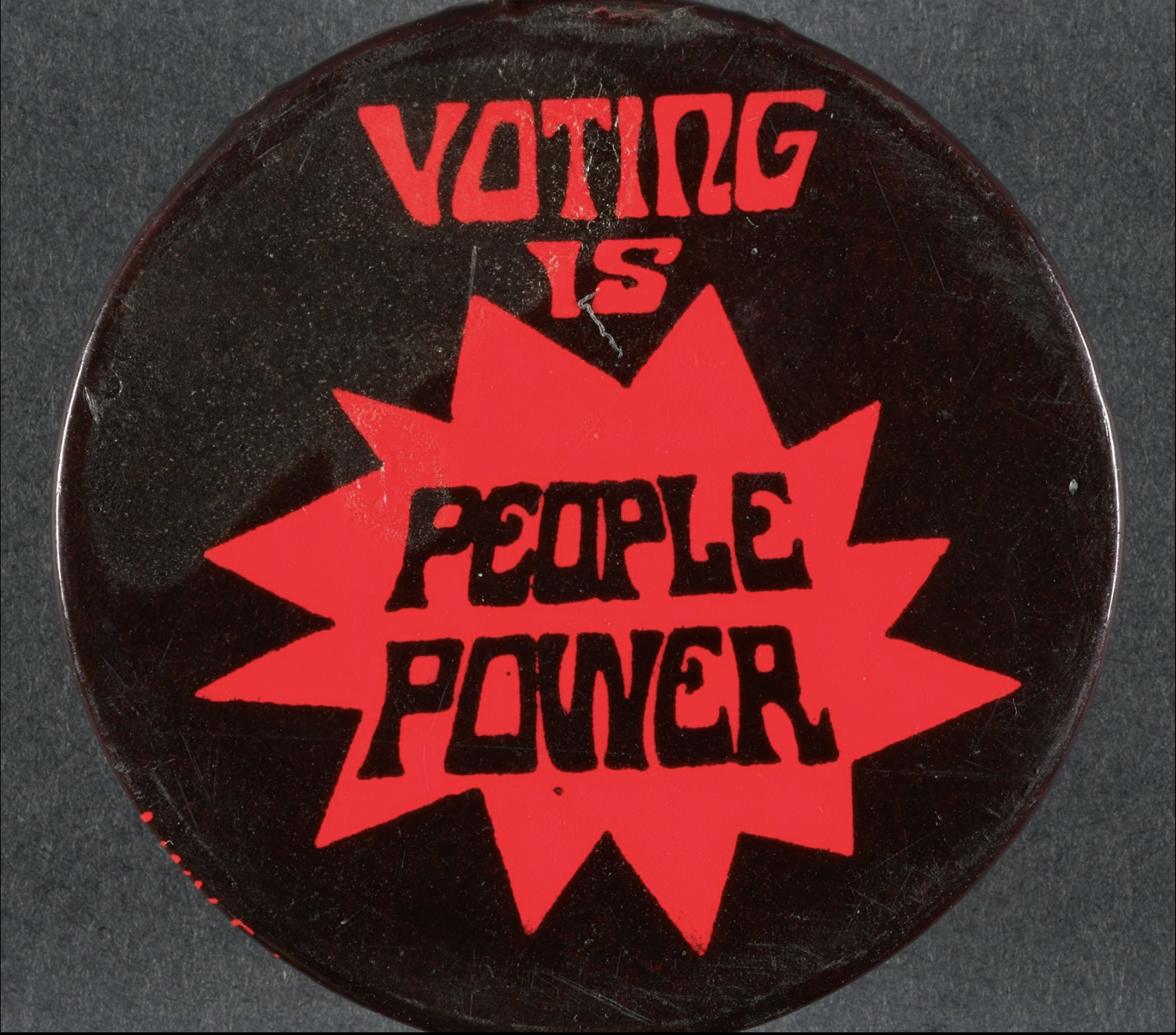
Image: Button from the League of Women Voters Education Fund, approx 1972. Schomburg Center for Research in Black Culture, Art and Artifacts Division, The New York Public Library.