Institute Intelligence, June 2026: Smart budgeting for a stronger CUNY; Restorative justice for community safety
By Carla Sinclair, Communications Project Director

It’s hot. Here in New York, temperatures are expected to be higher than they’ve been in a decade. Pair that with World Cup logistics, America 250 celebrations, and general summer-in-the-city energy, there’s a lot for our leaders to make sure run smoothly.
Of course, challenges persist year-round. The public systems that help us through heat waves, cold snaps, and the countless other potential crises require thought and skill, whether it involves coordinating with the community organizations that provide critical services in the moment, balancing budgets to fund emergency preparedness, or collecting data to track impact and learn from our experiences.
This past month, we wrote about our small role in helping state, local, and municipal leaders do just that—read on to learn about how we’re helping CUNY financial leaders navigate budget season, how we’re working with the NYC Mayor’s Office of Criminal Justice to promote safety through restorative justice, and much more.
Want to stay in touch? Follow us on Bluesky, LinkedIn, and Facebook for the latest on our research, policy, events, and funding announcements.
Facing political and demographic shifts, CUNY financial leaders are strengthening financial practices to build strong schools.
The CUNY system is an economic mobility powerhouse for its students and the city at large. Its 26 colleges—which offer a “best value” education for a fraction of the cost of private institutions—serve more than 240,000 students each year, helping six times more low-income students rise into and beyond the middle class than all Ivy League schools combined.
Keeping costs low means tuition makes up just 20 percent of CUNY’s revenue, so the system relies heavily on funding from the State and City for its operations. Managing this blend of funding is no small feat. Budget and finance leaders at CUNY colleges face an array of challenges: pandemic-induced enrollment declines, expiration of COVID stimulus funds, and the impending “enrollment cliff” that estimates there will be 27 percent fewer college graduates in New York by 2041. This compounds with uncertainty in the legislative process, given that funding levels can vary year to year depending on State and City budgets.
To face these challenges, CUNY finance and budget leaders need to think both big and small—to conceptualize CUNY within a larger city and state budgeting landscape and, at the same time, focus on the particular fiscal context and academic goals of their colleges. In 2018, CUNY and ISLG partnered to launch the Financial Planning Fellowship for Higher Education, a professional development program aimed at helping CUNY college finance and budget officers meet these needs.
What comes before safety? Accountability, connection, stability. For many, that begins with restorative justice.
In America, at least for the past few decades, the answer to crime has been to punish those deemed to make us less safe. On a basic level, this may make sense short-term: the person is no longer among the general public. But does this form of punishment address the root cause that led to the incident, repair the harm that was committed, or just show negligible impacts on safety? And at a larger scale, how do public systems and services prevent crimes from happening? How do they ensure responses to crime hold people accountable, yet don’t add to cycles of violence and incarceration
Restorative justice (RJ) has been used to find these answers. Though there are many different definitions, RJ can be described as a framework—often in the shape of expert-facilitated conversations—used “both reactively in response to conflict and/or harm, and proactively to strengthen community by fostering communication and empathy.”
In 2024, the NYC Mayor’s Office of Criminal Justice (MOCJ) partnered with CUNY ISLG to launch the Community-Based Restorative Justice Initiative (CBRJ). Since, CBRJ has invested over $10M in 16 community organizations across the city to incorporate RJ into their services, as well as to build up their operational, strategic, and programmatic capacity. These organizations have many different scopes, from youth and education programming to health and wellbeing support to court-mandated services. But on a fundamental level, they seek to make their communities safer. We profiled some of the community organizations doing this work on the ground.
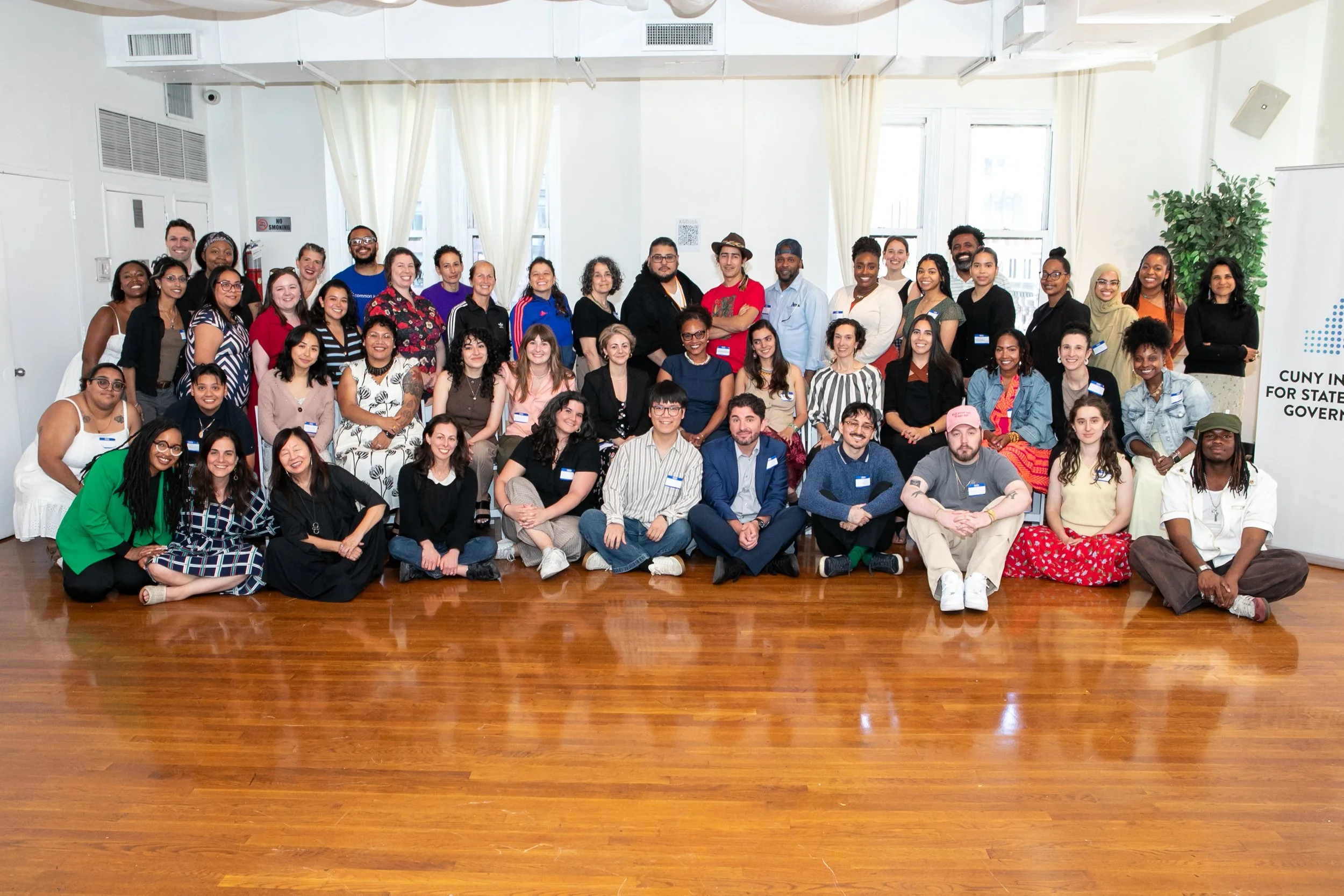
The Community-Based Restorative Justice grantees and CUNY ISLG staff gather together for their second year-end celebration.
“You help that one young person start to be more stable at home, and it improves quality of life for their whole network.
I have one kid who is doing better and making more money, so he’s fighting less with his family. That impacts the parents, the siblings, and brings the temperature down for everyone around them. There are thousands of stories like that.”
- Yenia Vasquez, Vice President of Community Programs, GOSO
Funding Survivor-Led Organizations Supporting Survivors of Domestic Violence
In June, we teamed up with Manhattan District Attorney Alvin Bragg, Jr., to seek proposals from survivor-led grassroots organizations to provide support to people impacted by domestic and intimate partner violence (DV-IPV) in Manhattan.
Services provided by these organizations may include addressing immediate needs that help survivors remain safe and engaged in existing services, such as food, transportation, childcare, translation or language access or other targeted supports. Funding may also support short-term or emerging approaches that allow organizations to meet survivor needs in new or more responsive ways. This could include piloting small-scale initiatives, hosting survivor-centered events that distribute resources or elevate community voices or building the capacity to provide certain services directly.
Applications for the 2026 Kriegel Fellowship cohort are now open!
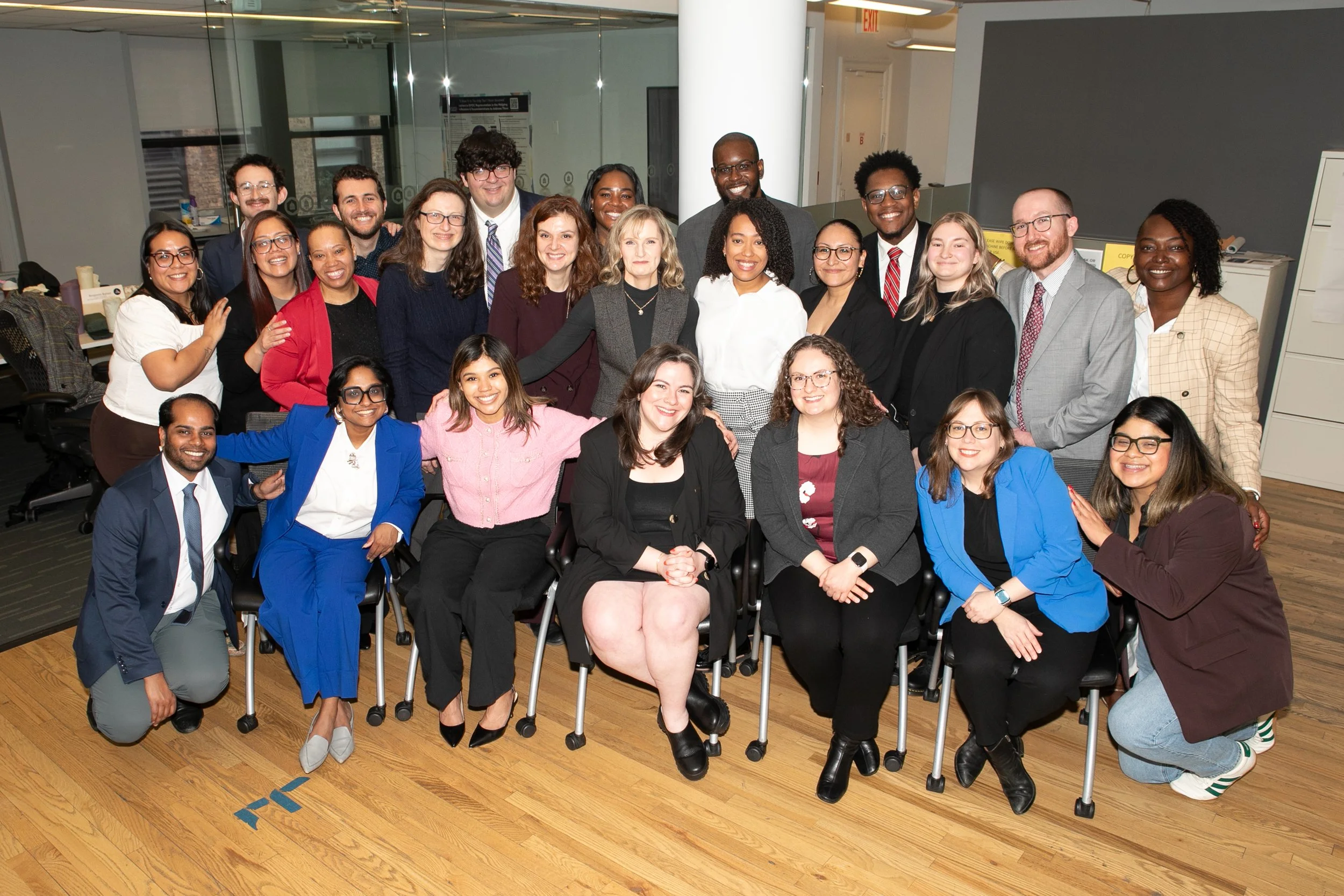
The Kriegel Fellowship is a professional development program designed to support the unique needs, demands, and responsibilities encountered by staff of legislators and other political leaders who represent New York City and State communities. Since its launch in 2019, we’ve hosted dozens of public servants from across the state, from New York City to North Country. Read about the most recent cohort on our blog.
We’re now accepting applications for the 2026 cohort. Chiefs of Staff, Deputy Chiefs of Staff, Deputy Chiefs of Staff, and other senior staff in in New York state, local, and borough political offices are eligible to apply. Applications will be reviewed on a rolling basis until we reach capacity, which we expect to happen by mid July. We encourage folks to get their applications in early.
To apply, please fill out this application or reach out to Siobhán Carney, Policy Director, at Siobhan.Carney@islg.cuny.edu.
Stay in touch - sign up for our newsletter to get all the latest updates.