
How Cities and States can use Vacant Property Taxes to Spur Housing Development
By Nick Kilby, Senior Policy Associate
Affordable housing is a priority issue for state and local governments across the country. One unique method these policymakers have to incentivize the creation of more housing is strategic property tax policies that target vacant or underutilized properties, which can both encourage owners to create housing and fund affordable housing initiatives. This brief presents some of these methods and case studies on what has—or has not—worked.
The shortage of affordable housing is a top policy concern for governments nationwide. According to the Bipartisan Policy Center, “nearly 3 in 4 adults feel lack of affordable homes is a significant U.S. problem.” The Joint Center for Housing Studies at Harvard University found that “the U.S. median existing single family home price hit a new high of $412,500 in 2024, […] a shocking five times the median household income, and significantly above the price-to income ratio of 3 that has traditionally been considered affordable.” The same report concludes that “unlocking new housing supply remains critical for alleviating affordability pressures and stimulating economic growth.”
State and local governments have a unique toolbox to combat this issue by incentivizing the creation of more housing. CUNY ISLG has worked with policymakers and agencies across the country to better understand and use this toolbox, solving the unique challenges that affect each jurisdiction.
This policy brief examines how some state and local governments are using property tax incentives to spur development of vacant and underutilized properties, focusing on three program models aimed at increasing housing supply through strategic tax policy.
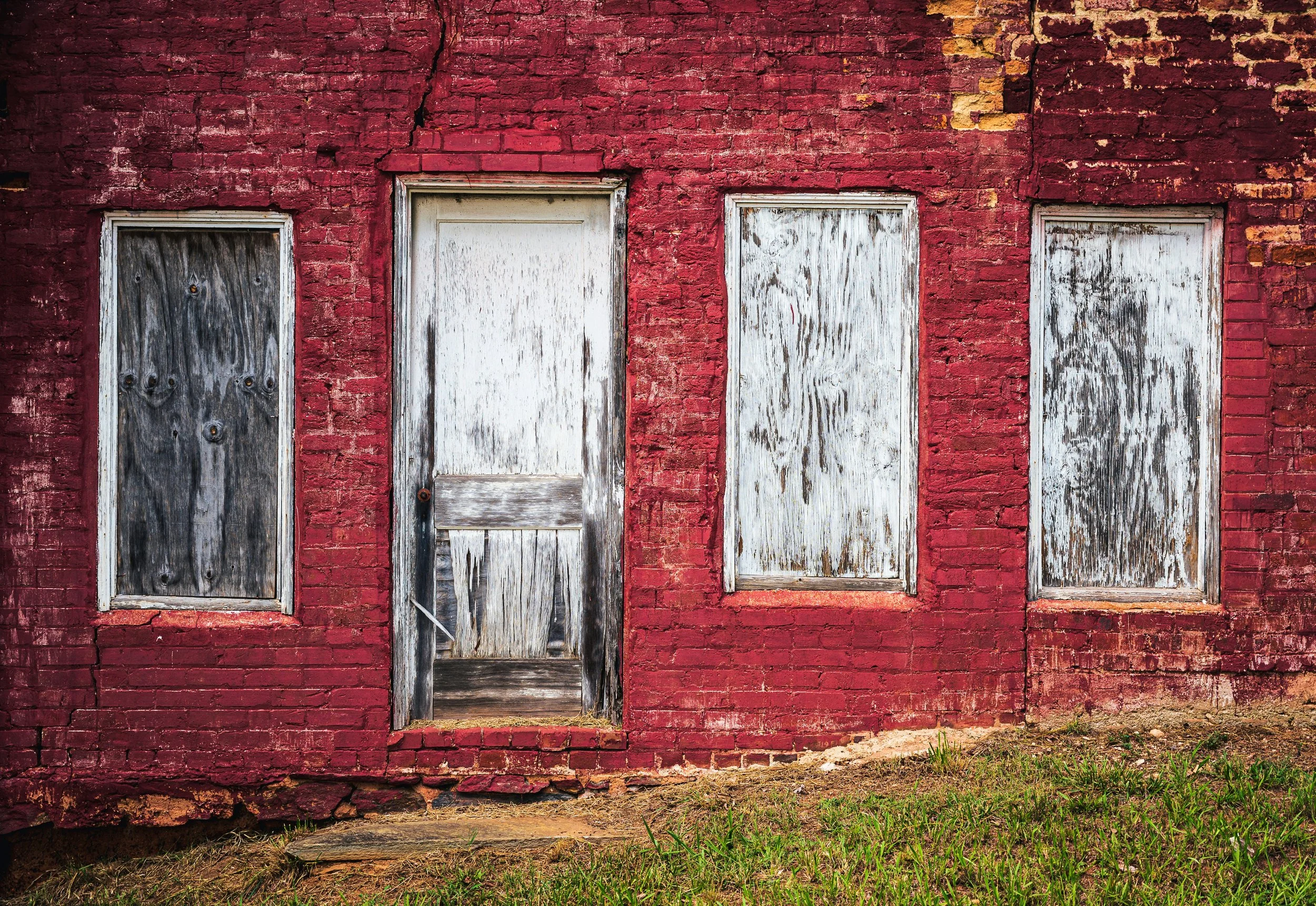
Vacant and Blighted Property Taxes
Higher tax rates for vacant and blighted properties.
With examples in legacy industrial cities.

Empty Home Taxes
Fees assessed on residential property that is not a primary residence, i.e. vacation homes or pieds-à-terre.
With examples from western and sunbelt cities.
Land Value Taxes
Higher tax rates on land with lower taxes rates on property improvements.
Less common, with examples in Pennsylvania and Detroit.
Because the type of underutilized property prevalent in cities varies, the programs also vary to address the unique problems a city faces. However, the programs typically have two core elements:
Increase property tax rates or surcharges on vacant or underutilized property to incentivize those property owners to rehabilitate, convert, or sell the property.
Apply the taxes collected by the program to fund affordable housing initiatives.
Through case studies of programs in US cities and states, the following sections explore types of program design and implementation strategies, as well as CUNY ISLG’s analyses of their administrative challenges and potential policy outcomes around affordable housing and revenue generation.
Vacant Property Taxes
City Approaches
Vacant property taxes apply higher tax rates to property defined as either vacant or blighted, usually at the municipal government level. This requires a robust definition of these terms and an implementation strategy for the city to determine which properties fall into these categories. This system provides an incentive for owners to rehabilitate and occupy the property or sell it to another owner who would. Additionally, revenue raised from the new taxes and fees may be used to fund affordable housing initiatives or to self-fund property inspection programs.
This system provides an incentive for owners to rehabilitate and occupy the property or sell it to another owner who would.
Case Study: Washington, D.C
Washington, DC, implemented a vacant property tax in 2011, which set a significantly higher tax rate for vacant and blighted property. The city maintains definitions of each property type and inspects each property to confirm its status, (vacant, blighted, or occupied), after notifying the property owner.
The terms have more detailed definitions in the statue, but generally they are defined as:
A vacant building has not been occupied continuously, and there is no evidence of a resident with an intent to return and occupy the building.
A blighted building is any vacant building that the city also determines to be to be unsafe, insanitary, or to threaten the health, safety, or general welfare of the community.
ISLG Analysis
While well intentioned, the program has run into two areas of difficulty.
Administrative and staffing burdens for the City Department of Buildings (DOB).
The appeals process and a long list of exemptions allow property owners to avoid the tax.
A Washington Post investigation in 2021 found the City has struggled to implement the new tax system, with the Department of Buildings claiming it “does not have the staffing or resources to meet residents’ requests to evaluate issues with the properties or to consistently inspect the properties to ensure they are properly classified and taxed.” While the City flagged nearly 3,000 properties as vacant or blighted, the report found that in many cases the tax charged did not properly reflect the status of the property:
Only 189 were actually taxed at the blighted rate.
359 were considered vacant but had exemptions, such as open building permits or the residents were able to show a financial hardship.
The rest were still in the assessment process and therefore were taxed at the rate of occupied property.
The Office of the District of Columbia Auditor report in 2017 also found that the city was not fully enforcing the vacant property tax law. Among a sample of vacant buildings, there was significant unrealized revenue due to the improper granting of exemptions, unclear policies for staff to follow, and a failure to consistently communicate findings to the tax department to charge the taxes.
2025 Washington, DC, Program Amendments
In response to these issues, the DC City Council passed a package of amendments to the program as Law Number L26-0041, which was signed by the Mayor on August 11, 2025, and included the following:
Title 1 – Prevention of Vacant and Abandoned Properties
Tangled title information documentation: Creates a standardized guide explaining how heirs can clear “tangled titles,” which are cases where ownership becomes unclear after a property owner dies. The new documentation outlines the steps required to secure clear title, helping prevent homes from slipping into vacancy or disrepair.
Will Registry: Establishes a city-run registry, launching in 2028, where residents can file their wills to ensure they are easily located after death. The registry helps reduce disputes and delays in transferring property, lowering the risk that homes become stuck in probate and ultimately left vacant.
Single family home rehabilitation program: Qualified homeowners (with household income at 80 percent or less area median income, plus additional criteria) may be eligible for grants from the city for some types of home improvements.
Real property payment plans: Qualified homeowners (meeting a separate list of hardship criteria) with outstanding property tax liabilities may enter into a payment plan with the city. Plans will include equal monthly payments over a 12-, 18-, or 24-month period.
Title 2 – Vacant and blighted property registration refinements
Amendments to the process for establishing a Strategic Enforcement Plan (SEP): The SEP is used to guide enforcement of the program, including how to use statistical models to identify property at risk of becoming vacant or blighted.
Amendments to the nuisance ordinance, which is used to define blighted property.
Expands exemptions from the vacant property registration fee.
Amendments to more clearly define the appeals process.
Title 3 – Vacant and blighted property incentives and taxes
Expedited permit review for vacant and blighted properties.
Vacant and blighted properties tax rates.
Outlining the foreclosure process by the Office of the Attorney general of vacant and blighted properties.
Vacant and blighted home revitalization tax credit: Property owners may apply for tax credits up to 50 percent of eligible development costs against taxes imposed under this section. Credit may exceed tax liability. Total tax credits are capped at $2 million for the city per year.
Tax abatement for the redevelopment of vacant and blighted commercial properties: Abatements up to 10 years available for projects over $15 million that meet certain eligibility requirements. Citywide cap of $2.5 million annual abatements through 2029 and $3 million thereafter.
Case Study: Baltimore
In 2024, Baltimore City Council unanimously passed a vacant property tax ordinance, signed by the Mayor on December 2, 2024. This closely followed the adoption of authorizing language by the state of Maryland giving all counties and Baltimore City authorization to enact such a tax. Administrative details are currently being crafted by the Department of Housing and Community Development (DHCD), the Department of Finance, and the Mayor’s Office, but several key provisions are outlined in the ordinance.
Key Provisions
Baltimore’s vacant property tax would begin in the 2026-27 tax year and would charge vacant property owners three times their initial tax rate the first year they are deemed vacant, and four times the tax rate each subsequent year. In practice this means that, given current rates, the rate will start at 6.744 percent per $100 of assessed value and rise to 8.992 percent per $100 afterward, according to a report by the Maryland Association of Counties.
Property owners must be notified by mail, and all properties must be listed in the newspaper. Additionally, the City must annually report on the number of buildings classified as vacant, how much revenue was received from them, and how that revenue was used.
Baltimore would have the ability to channel many of these sites into redevelopment efforts, including new or preserved affordable housing.
The Maryland Association of Counties also found that the “proposal aims to increase liens on vacant properties to the point where they qualify for the judicial in rem foreclosure process. This legal mechanism would allow Baltimore to take possession of neglected properties.” This process is designed to move derelict properties into public control, expanding the pool the City can actually put to use. In turn, Baltimore would have the ability to channel many of these sites into redevelopment efforts, including new or preserved affordable housing.
There is an effort this year to extend the tax to vacant lots, as it currently it only applies to vacant structures. A new bill introduced in the city council in August 2025 would include vacant lots at an immediate rate of four times the underlying property tax rate.
State Approaches
Case Study: Kentucky
The State of Kentucky authorizes cities to implement a vacant property tax program, and several have done so. KRS 132.012 authorizes cities to classify “abandoned urban property” which meet a five-point definition. Once classified, local governments are authorized to tax them at a higher rate with no limit.
KEY PROVISIONS
According to a report by The Mountain Association, several communities in Eastern Kentucky have adopted vacant property tax ordinances. Hazard, Kentucky passed an ordinance in 2017 which imposed a fivefold increase in city property taxes on vacant and blighted buildings and established a formal registry and enforcement process. According to the Mountain Association report, in Hazard, “in just the first few years of the program, more than 50 percent of the affected properties changed hands—many of them donated to the city or sold at low cost to neighbors committed to improving their blocks.”
In just the first few years of the program, more than 50 percent of the affected properties changed hands—many of them donated to the city or sold at low cost to neighbors committed to improving their blocks.
Vacant Property Taxes: Bottom Line
Vacant property taxes provide a strong incentive in theory for owners to redevelop or sell, opening opportunities for others to invest. In practice, however, cities like Washington, DC, have found the impact limited due to administrative challenges and weak enforcement. An updated assessment of the program’s impact will be warranted after the amendments go into full effect in 2027.
Empty Home Taxes
Empty home taxes (EHTs) typically apply a fee to properties that are not the owner’s primary residence. These are often found in western and sunbelt cities where vacation homes are common, or in dense urban areas with pieds-à-terre. EHTs incentivize property owners to return these units to the market and increase housing availability, or otherwise raise funds for the government.
EHTs are in place in Oakland, CA, and Vancouver, British Columbia, with more proposed in several other cities. In most cases, property owners are required to provide proof of permanent residence to the city. Otherwise, if a residence is vacant more than a defined period (usually 182 days or half the year), a fee is assessed of between $1,000 and $6,000 annually.
EHT taxes were proposed but not passed in Honolulu, HI, and South Lake Tahoe, CA. There was also a proposal in San Francisco, CA, which passed but was successfully challenged in court and is no longer enforced.
At least two states effectively have empty home taxes by exempting some portion of the taxable value on permanent residences. Utah has a residential property exemption of 45 percent of the taxable value if the property is used as a primary residence for 183 or more consecutive days during the calendar year.
Case Study: Montana
Montana passed a second home tax in 2025. It lowers property taxes on primary residences and offsets them with an increase in property taxes on second homes and short-term rentals, similar to a homestead exemption program. The proposal is projected to reduce taxes for owner-occupied homes by an average of 18 percent over two years, with most savings on 2025 tax bills. At the same time, it is projected to increase property taxes on second homes and short-term rentals by an average of 68 percent.
The proposal is projected to reduce taxes for owner-occupied homes by an average of 18 percent over two years, with most savings on 2025 tax bills.
According to the Montana Budget and Policy Center, the proposal will “directly reduce property taxes for more than 215,000 primary residences and more than 32,000 small businesses, as well as provide indirect relief to over 130,000 renters”. Additionally, the U.S. Census Bureau estimates that there are 31,819 homes in Montana used for seasonal, recreational, or occasional use which would be subject to the higher tax rate.
Case Study: New York City
A pied-à-terre tax has also been suggested in New York City. The Fiscal Policy Institute estimates that there are 75,000 pieds-à-terre in New York City and increasing their property taxes 1-4 percent could raise nearly $500 million. There have also been proposals for a vacant residential property tax (New York State Assembly) and a vacant commercial property tax (New York State Senate) but neither proposal passed.
Case Study: Vancouver, BC
In Vancouver, BC, the city found that 49 percent of properties declared vacant in 2022 were converted to occupied in 2023, with an overall 58 percent reduction in vacant properties from 2017 to 2023. It is unclear how many of these were sold or rented to new residents versus how many current residents found a way to meet the new residency definition to avoid the tax. The more impactful outcome for the city is that the program raised $169.8 million of revenues from the tax from 2017 to 2023, which was allocated to support affordable housing initiatives.
Empty Home Taxes: Bottom Line
Empty home taxes can be a good source of revenue for cities to fund affordable housing initiative, but there is little evidence they directly impact housing availability.
Land Value Taxes
Land value taxes, also called split rate taxes, assess different tax rates for a property’s land and for the buildings built on the land. Under most systems, most of the taxable value is derived from the improvements built on the property (i.e., the house). Because of this, owners of vacant lots, parking lots, storage areas, etc., pay very little tax and have little financial incentive to improve or convert the property.
In a split rate system, the tax rate for buildings is lowered, while the tax on land is increased significantly. This may result in a reallocation of assessed value between empty and built land, and consequently revenue. If the total tax levy (or revenue base) remains the same, total taxes on built property will be lower than the tax on empty lots, thereby encouraging building of these lots to take advantage of the lower tax rates and lowering taxes for homeowners. In sum, lowering the tax rate for building improvements incentivizes building and housing revitalization in cities.
Lowering the tax rate for building improvements incentivizes building and housing revitalization in cities.
Land value taxation has long been discussed in economic theory, first popularized by 19th-century economist Henry George and more recently advanced by institutions, such as the Lincoln Institute of Land Policy, for its potential to encourage efficient land use and curb speculation. Though it remains the least common of the three types of vacant property taxes, several cities in Pennsylvania have adopted versions of it. Detroit, Michigan, also pursued a split-rate property tax proposal in 2023, but the measure ultimately failed to gain support in the state legislature.
Case Study: Pennsylvania
Several case studies are available from Strong Towns, an urban policy publication. In Harrisburg, 90 percent of property owners saw tax bills decrease after a split rate tax was implemented. At the same time, the number of vacant structures declined from over 4,200 in 1982 to under 500 by 2001, and businesses on the tax roll have grown from 1,908 to 8,864. In Allentown, 70 percent of residential parcels saw their taxes decrease and over 90 percent of homes had reduced tax liability in the most at-risk neighborhoods (most predominantly in older pre-war housing and factory blocks).
A 2023 Chicago Federal Reserve Branch report examined land value taxes in McKeesport, Clairton, and Duquesne, cities “suffering from declines in the steel industry.” McKeesport adopted a split-rate system in 1980, while the other two had not. In the three years before and after adoption, McKeesport average annual value of building permits increased 36 percent, while Clairton declined 30 percent and Duquesne fell 14 percent. The report notes these differences in permit activity but does not attribute them solely to tax policy. Both Clairton and Duquesne have since implemented their own land value taxes.
Pittsburgh used a two-rate system from 1913 to 2001, taxing land at 5.77 times the rate of improvements. In 2001, properties were reassessed for the first time in over 20 years, causing a sharp rise in assessed land values. The City abandoned the system and returned to a traditional single-rate property tax. The Chicago Fed report concludes that, while the two-rate system was in place, Pittsburgh outperformed other similar cities in average annual value of building permits.
Case Study: Detroit
Detroit, MI, also proposed a split rate tax in 2023. However, it has not been authorized by the Michigan legislature and has not been implemented. The Detroit plan would cut building property taxes from 20 mills to 6 mills, while doubling the tax on land. The City projected that the average Detroit homeowner would get a 17 percent permanent property tax cut in 2025 and that 97 percent of all Detroit homeowners will get a tax cut, with subsidies available to “guarantee no Detroit homeowner gets a tax increase from the Land Value Tax plan,” according to publications from the City.
The proposal faced significant opposition from multiple angles. Urban farmers, small landowners, and some business groups argued that higher land taxes could be financially burdensome. Analysts and legal experts raised concerns about potential increases in vacancies and compliance with the Michigan Constitution’s uniformity requirement. Some City Council members also called for more time to study the plan’s impacts. As a result, the legislature did not pass the enabling legislation, and the proposal could not be placed on the ballot for voters.
Land Value Taxes: Bottom Line
Land value and split rate taxes have been shown to effectively incentivize development and revitalization in cities. However, the systems are complex and require robust public education campaigns to build and maintain support.