Institute Intelligence, November 2025: Restorative Justice for NYC’s Youth, The Impact of Paying the Human Service Sector a Living Wage
By Carla Sinclair, Senior Communications Associate, and Alisa Orlowsky, Communications Associate

Tis the season! This edition of Institute Intelligence comes to you amid the breathless Cyber Monday deals, residual Thanksgiving missives, and other emails that mark the official start of the holidays. Despite it being December, we’re still thankful you’re here catching up with us, for the partners we’ve worked with, and the work we’ve accomplished with them over the past month (and longer).
This November more than ever, it was clear how multifaceted this work can be, all with the North Star of making government and community services work in sync and for all communities. We traveled to the far reaches of Manhattan and the Bronx to see how our partner organizations are supporting New York City’s youth. We reflected on the importance of trust and flexibility when strengthening data capacity with our partners in Atlanta. We launched our largest-to-date cohort of Kriegel Fellows, with legislative chiefs of staff and senior office leaders representing everywhere from Upstate New York to Brooklyn.
We’ll be thinking more about what we’ve learned this year in the coming weeks (stay tuned), but read on to find out about what we did in November.
Want to stay in touch? Follow us on Bluesky, LinkedIn, and Facebook for the latest on our research, policy, events, and funding announcements.
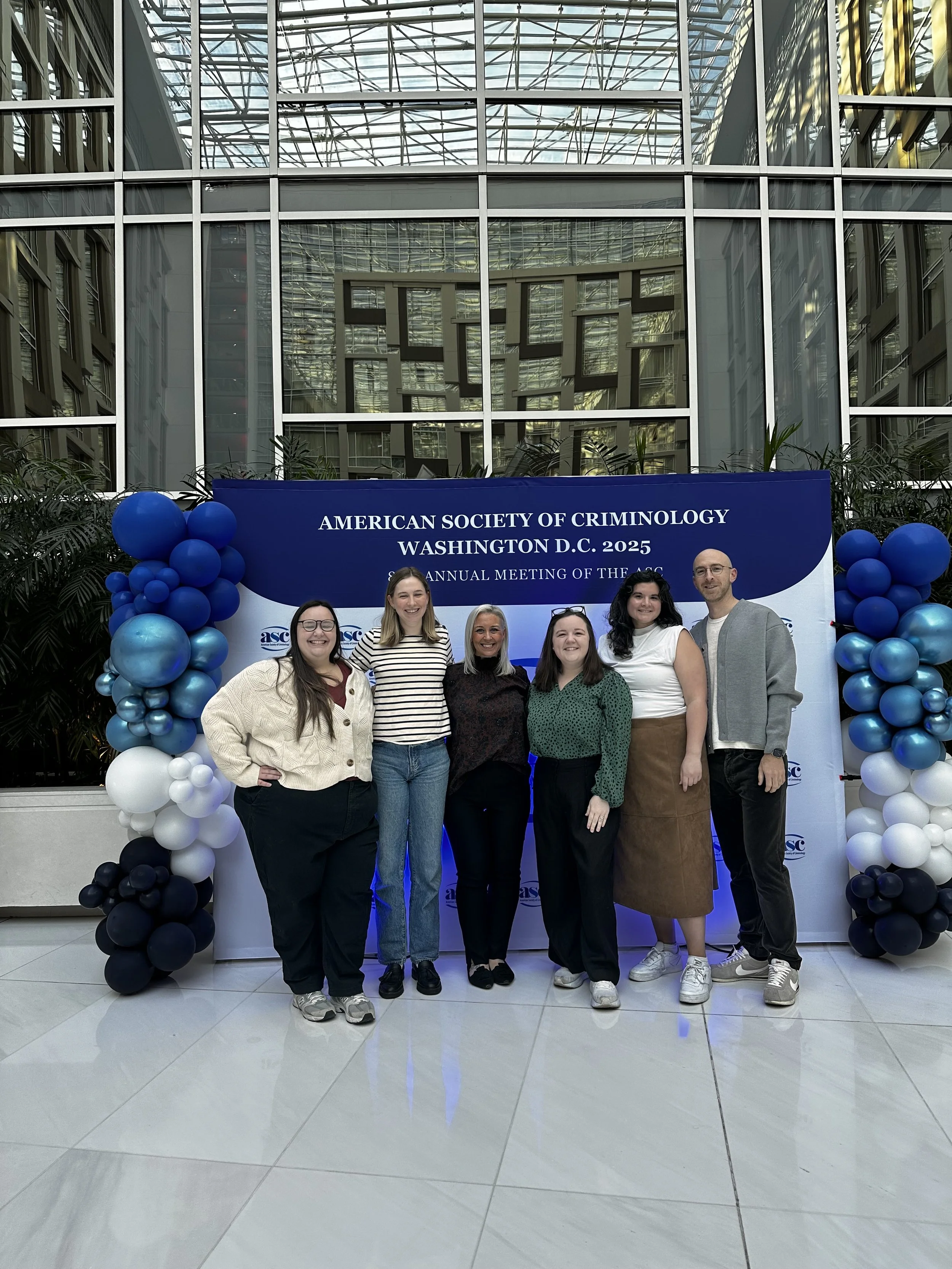
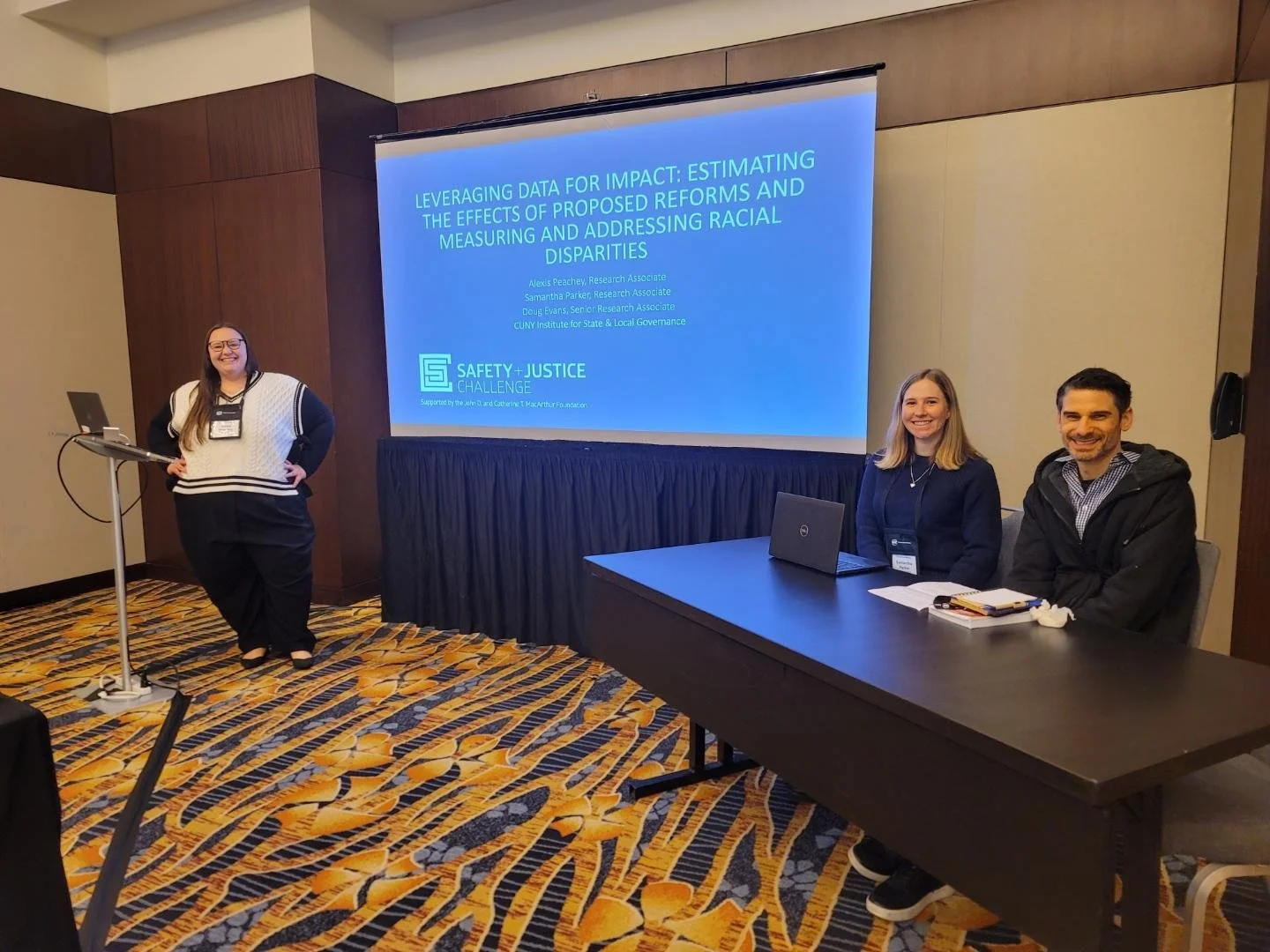
ICYMI: ISLG was about town(s) this month! Staff traveled to Washington, DC for the American Society of Criminology (ASC) conference, to Seattle for the American Public Policy Analysis and Management (APPAM) conference, and to the Microsoft AI Hackathon in Austin.

Advancing Justice
November was Restorative Justice Month. We spoke with educators, youth center staff, and restorative justice experts about how RJ gives young folks a framework for listening, learning, and accountability.
Restorative justice (RJ) is a method of addressing harm that centers accountability; it’s a form of mediated communication that engages both the person who caused harm as well as care and restitution to the person harmed by it.
It can also be done proactively, preventing harm from arising in the first place by bringing people together, strengthening community relationships, and giving the tools to communicate and resolve conflict.
While some may associate restorative justice with punitive or court-based programs, many partners in the Community-Based Restorative Justice Initiative (CBRJ)—a partnership between CUNY ISLG and the NYC Mayor’s Office of Criminal Justice to strengthen RJ’s use in NYC—are using it as a framework for youth services, from elementary to high school and afterschool programming. These programs emphasize better communication, accountability, and a deepening sense of community, bringing both kids and adults together to create a safer city.
Read more on our blog by Senior Communications Associate Carla Sinclair and Senior Policy Associate Nathalie Lebrón.
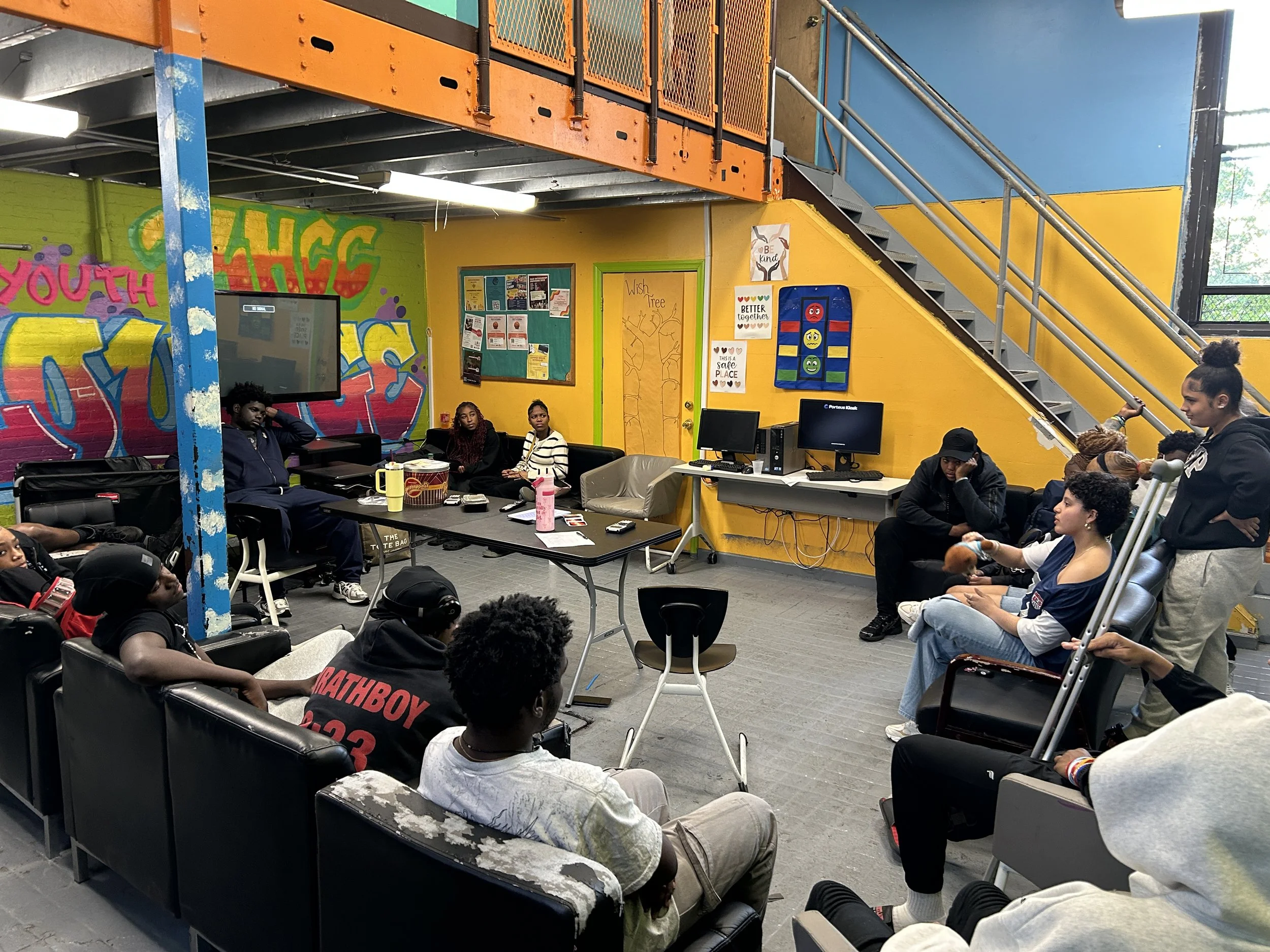
“The fact is that our youth need to be able to express themselves, and the community needs leaders to help them learn how to express themselves.
That’s where restorative justice comes in.”- Javon Treherne, KHCC Restorative Justice Supervisor
A Case Study on Pivoting toward Impact in Fulton County, Georgia
CUNY ISLG’s partnership with Atlanta and Fulton County shows that systems change rarely follows a straight line, but collaboration and flexibility can keep progress moving.
In 2023, CUNY ISLG began a project with local stakeholders that originally centered strengthening data capacity and providing foundational support to launch a Center for Diversion Services (CDS) in Fulton County, Georgia. But when administrative delays and low utilization rates became a reality for the new CDS, CUNY ISLG and stakeholders shifted to address other pressing system needs.
The project has led to meaningful progress in Fulton County in three key areas:
Building institutional capacity
Delivering technical tools
Laying groundwork for the future
Despite the challenges that the CDS has faced, this project has led to meaningful progress toward a robust data infrastructure, increased capacity, and long-term sustainability in Fulton County that will support their criminal legal system reform efforts into the future.
Learn more about how ISLG navigated these pivots on our blog from Research Associate Samantha Parker.
Filling the Research Gap of How 911 Call-Takers and Dispatch Decisions Impact Outcomes

Public safety communications personnel (PSCP), including 911 call takers and law enforcement dispatchers, are key players in facilitating alternative pathways to jail, though often go unrecognized. PSCPs are typically the first point of contact for the public and may influence public safety outcomes, shape citizens’ perceptions of procedural justice, and help determine whether mental health services or police respond to an incident.
Despite being gatekeepers of the criminal legal system, little research has been dedicated to understanding how the choices of PSCPs shape the subsequent actions and decisions of other legal system actors.
To address this knowledge gap in the field, CUNY ISLG funded Arizona State University and the University of Missouri-St. Louis through the Safety and Justice Challenge to conduct a mixed methods study with the partnership of three SJC jurisdictions.
Promoting Opportunity
Raising wages for human services workers as a strategic policy intervention with far-reaching benefits for communities and the broader economy.
New York is at an inflection point, and the affordability crisis is at the center of it. The majority of renters in New York City spend more than a third of their income on rent. Healthcare premiums for many are set to skyrocket in 2026. Average childcare costs have increased 43 percent since just 2019. The senior population is getting ever bigger, and the cost of caring for them is outpacing inflation.
Both newly elected and incumbent policymakers at the New York City and State levels have promised to tackle issues that impact New Yorkers’ budgets through new policies and programs, such as building more affordable housing and offering families universal childcare, which are generally wildly popular with voters
The debate surrounding these programs is often on who’s going to pay for it. But another critical question is, who is going to get paid for it—as in, who will staff the childcare workforce that must inevitably grow to meet demand? Who will fill highly needed home health care positions as the population continues to age?
The debate surrounding these programs is often on who’s going to pay for it. But another critical question is, who is going to get paid for it?
The human service sector is facing high turnover and vacancy rates. New strategies are needed to incentivize new pathways into the sector and to retain a highly trained workforce. There needs to be an intentional recruitment plan to hire human services workers, as well as a plan to pay them a living wage so that this expanding workforce doesn’t fall into the same affordability traps policymakers are looking to fix.
A new return-on-investment (ROI) analysis from CUNY ISLG shows boosting wages would both fix existing wage gaps and have positive impacts on communities, local businesses, and the overall economy. Dig into it here.
Optimizing Government & Institutions
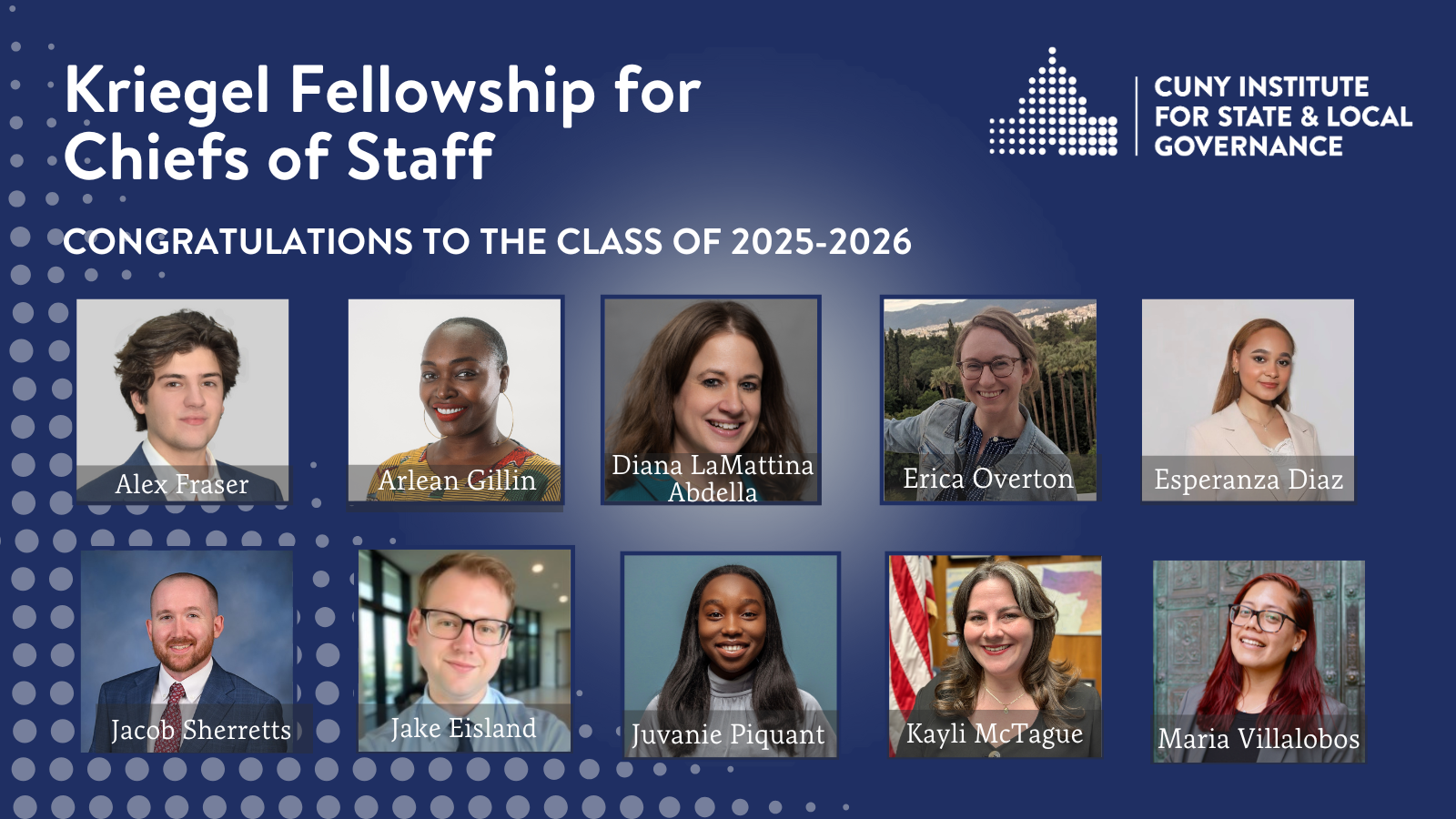
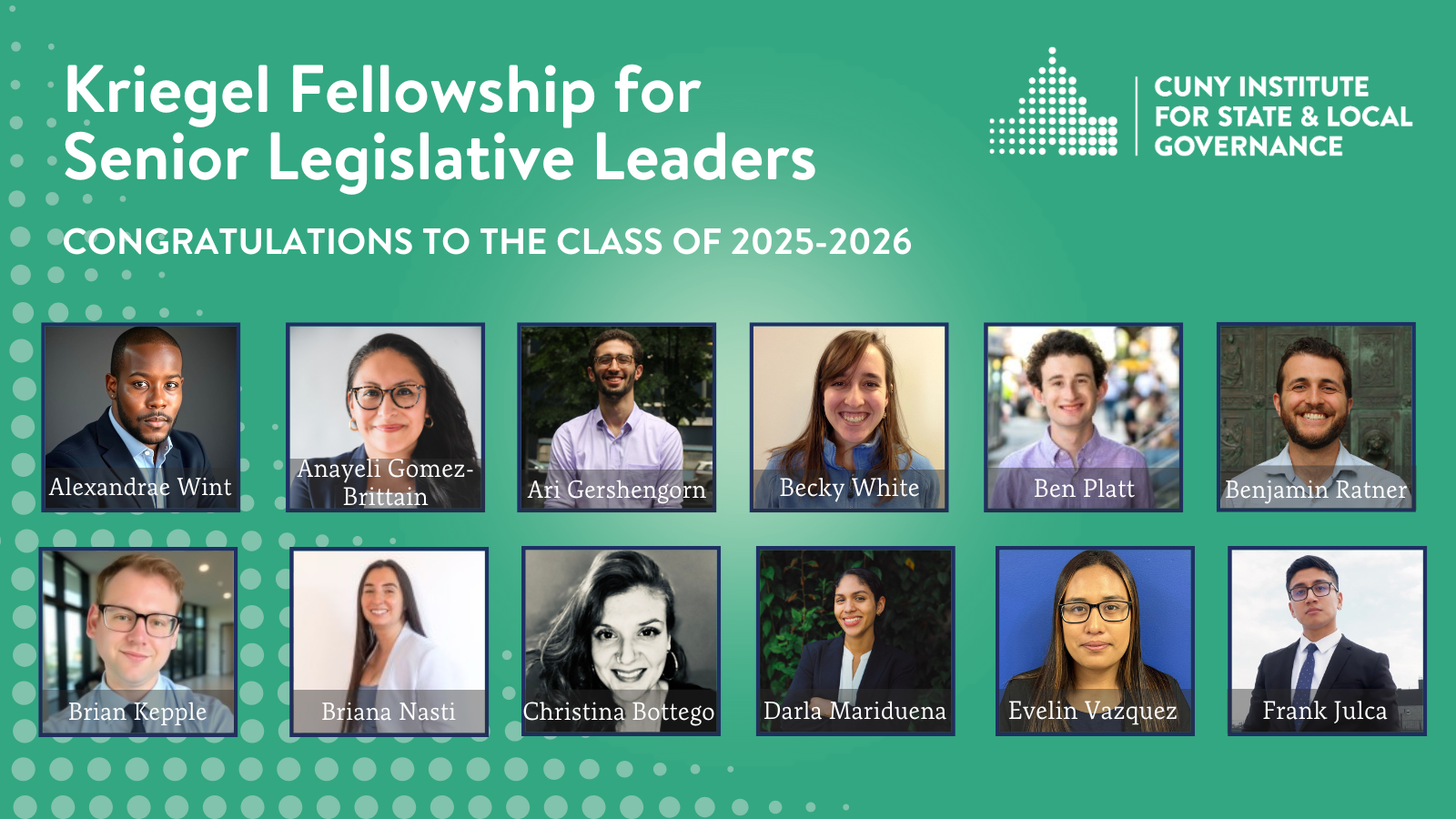
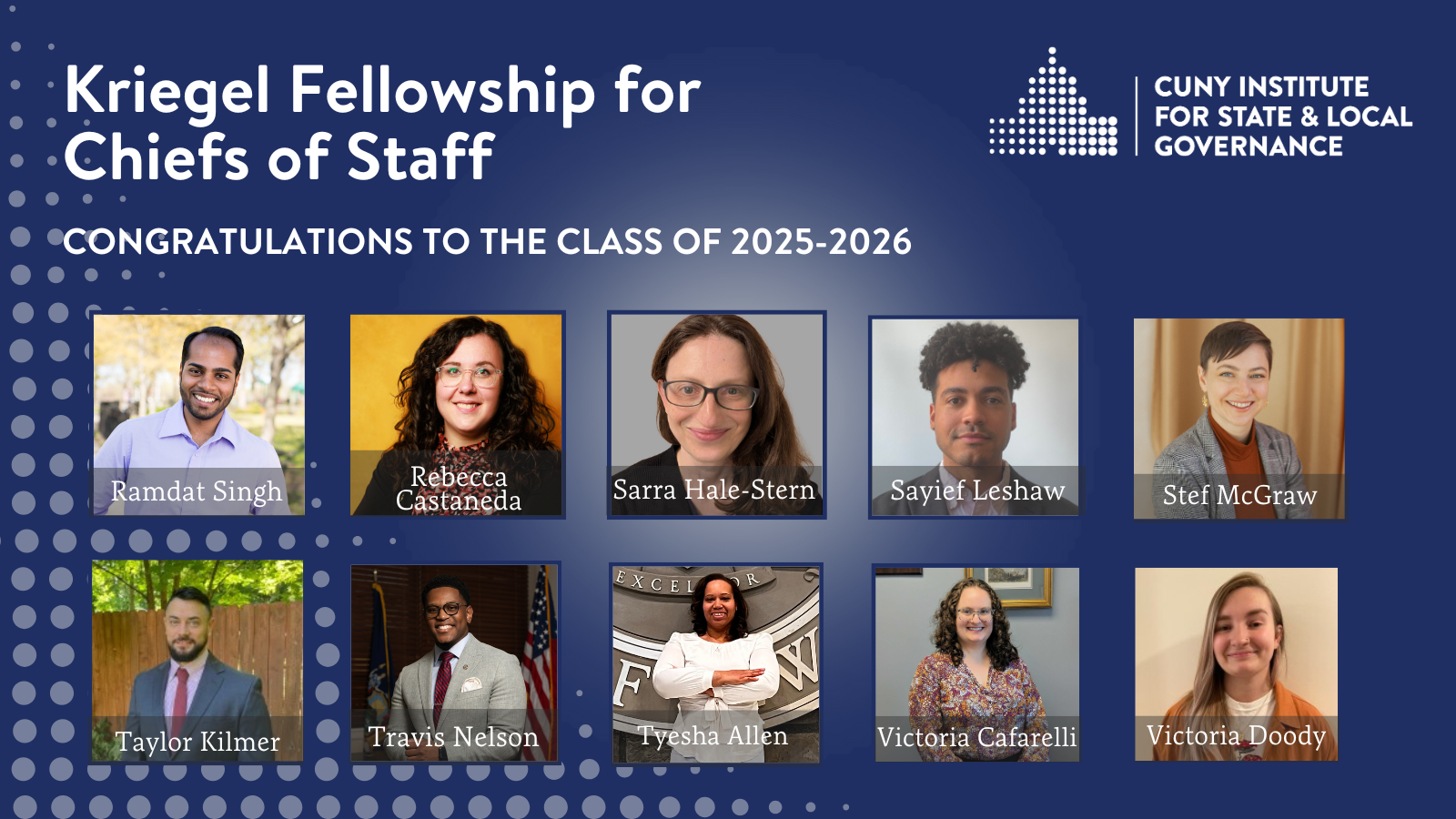
Expanded Kriegel Fellowship 2025-2026 Cohort Creates Tailored Professional Development for State and Local Government Chiefs of Staff, Senior Office Leaders
To run smoothly, an elected official’s office has a multidisciplinary team of staffers working behind the scenes. They’re serving constituents, conducting outreach, drafting legislation, responding to reporters, and much more.
CUNY ISLG’s Kriegel Fellowship for Public Service Leaders is a professional development resource designed to give staffers from New York City Council, State Assembly, State Senate, District Attorney, Borough President, and other governmental offices a space to hone their knowledge, skills, and network to thrive in these roles and effectively support their policymakers and constituencies.
Since its launch in 2019, the Kriegel Fellowship has grown from its initial focus on chiefs of staff to include deputy chiefs of staff, legislative and policy directors, and other senior office staff.
Now, for the first time, the 2025-2026 cohort will have two sections: one for chiefs of staff and one for senior staff (e.g., directors within offices). Creating separate spaces for these cohorts creates a more tailored learning and networking experience for Fellows, who often have overlapping but different priorities and responsibilities in supporting their elected official.
Congrats to the new cohort! Learn more about them on our blog.
“Working with these rising public service leaders is an honor.
Each of the Fellows brings a unique perspective and distinct skills to the table.”- Siobhán Carney, CUNY ISLG Policy Director.

Stay in touch - sign up for our newsletter to get all the latest updates.