
RECAP: Building a Legacy of Research for Action
By Carla Sinclair, Communications Project Director
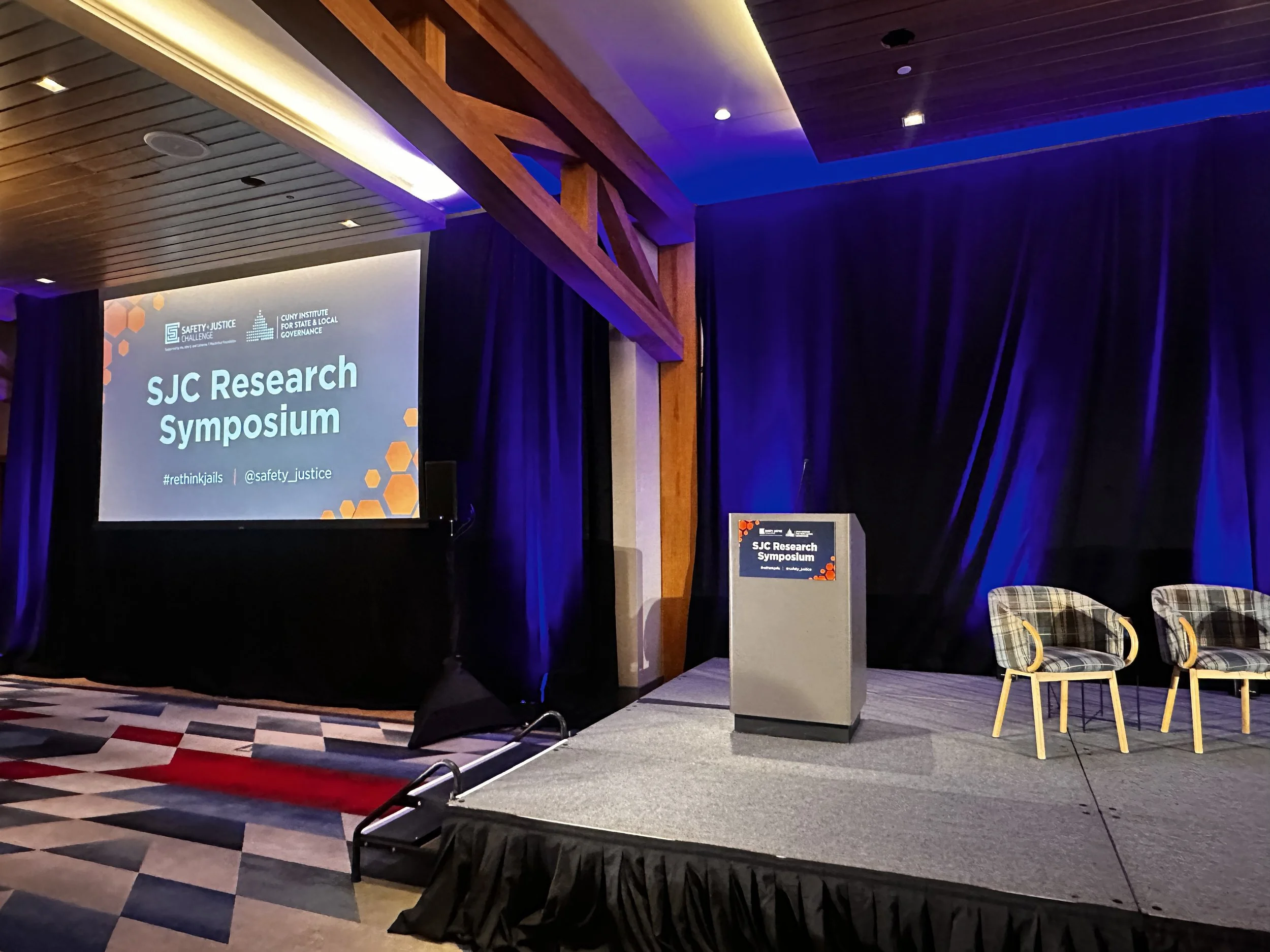
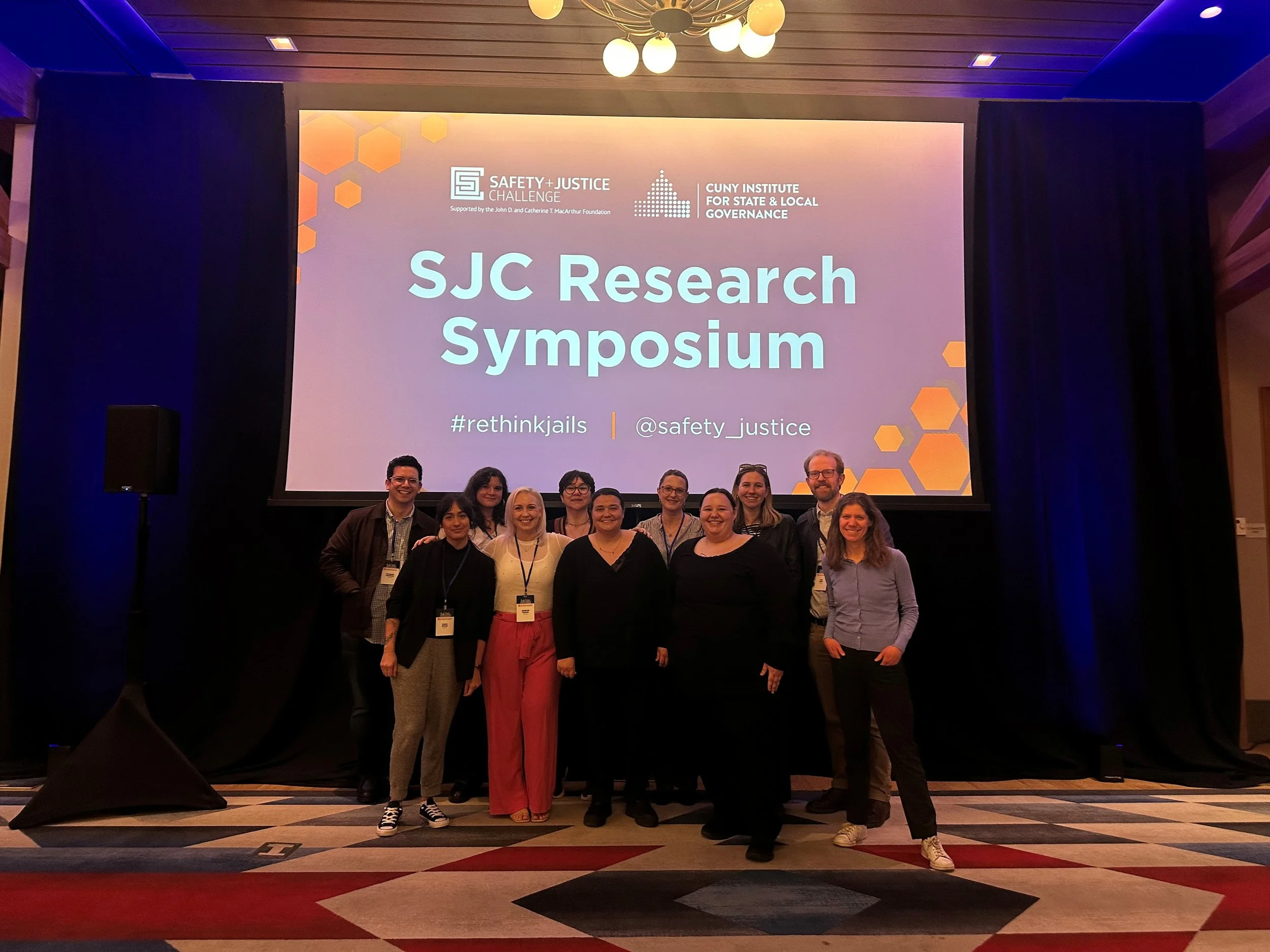
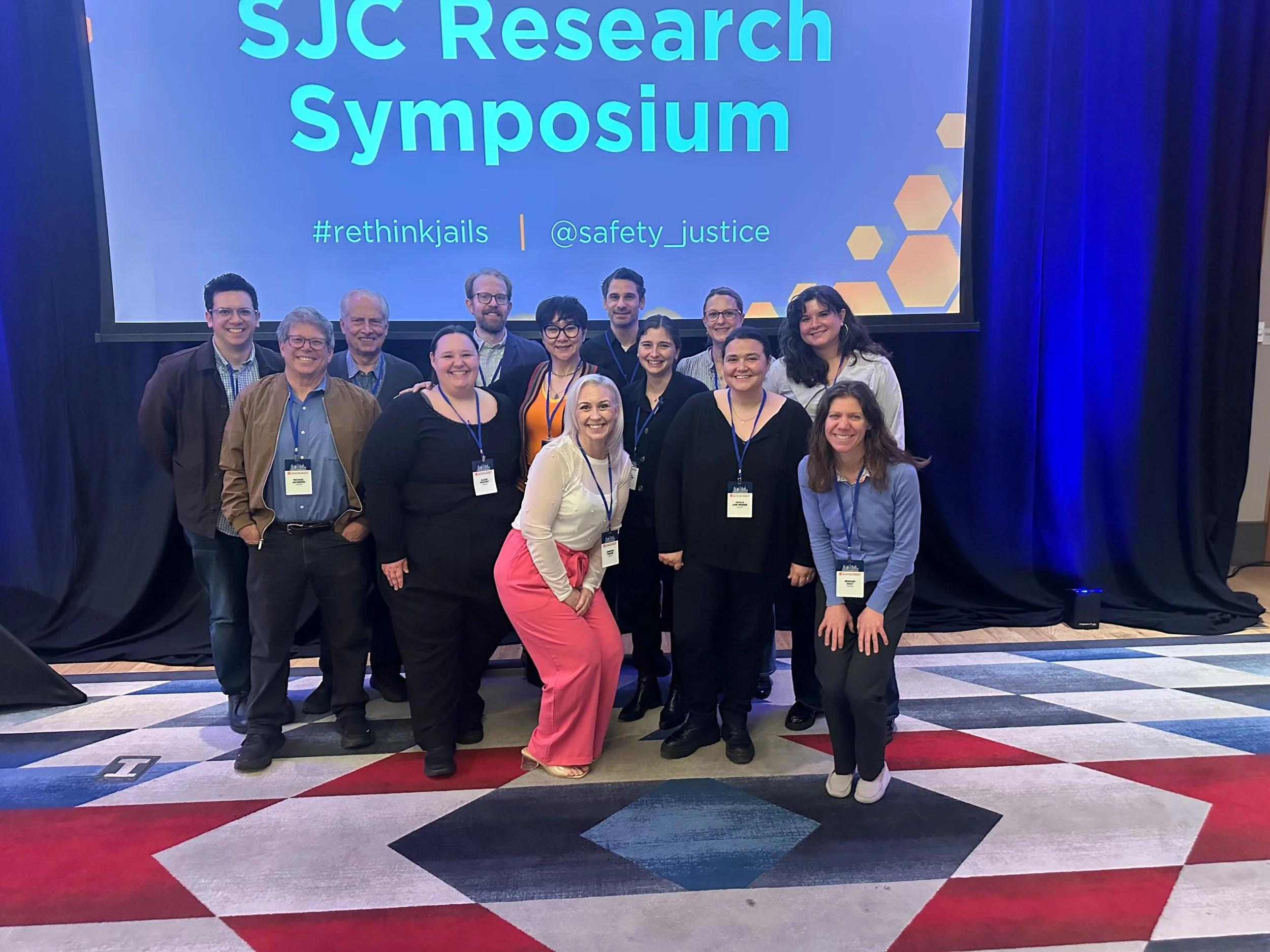
Researchers, policy experts, law enforcement, jail officials, court partners, community advocates, and many more convened in Nashville in early March to share and discuss the policy and practice implications of 10 years of Safety and Justice Challenge research at the initiative’s final Research Symposium.
“We have a decade of evidence. We have tested models. We have measurable results. We have built infrastructure, partnerships, and a culture of data-informed decision-making that did not exist at this scale before.”
As the opening remarks by CUNY ISLG Deputy Research Director Jennifer Ferone note, the Safety and Justice Challenge’s (SJC’s) 2026 Research Symposium marked the 10th and final year of the nationwide initiative. Launched in 2015 by the John D. and Catherine T. MacArthur Foundation to change the way that America thinks about and uses jails, the SJC combined comprehensive data analysis, community insights, and a systems-change mentality to help more than 50 participating cities and counties develop holistic strategies that safely reduced jail populations—by 18,000 people, across sites.
“It’s important to pause and recognize what this network has accomplished,” said Stephanie Platz, managing director of programs at the MacArthur Foundation. “When SJC launched in 2014, jails were not central to the national reform dialogue. By 2026, thanks in significant part to the SJC, there is growing national recognition of the harms of jail overuse and the importance of limiting detention to when it is truly necessary.”
“By 2026, thanks in significant part to the SJC, there is growing national recognition of the harms of jail overuse and the importance of limiting detention to when it is truly necessary.”
- Stephanie Platz, the MacArthur Foundation
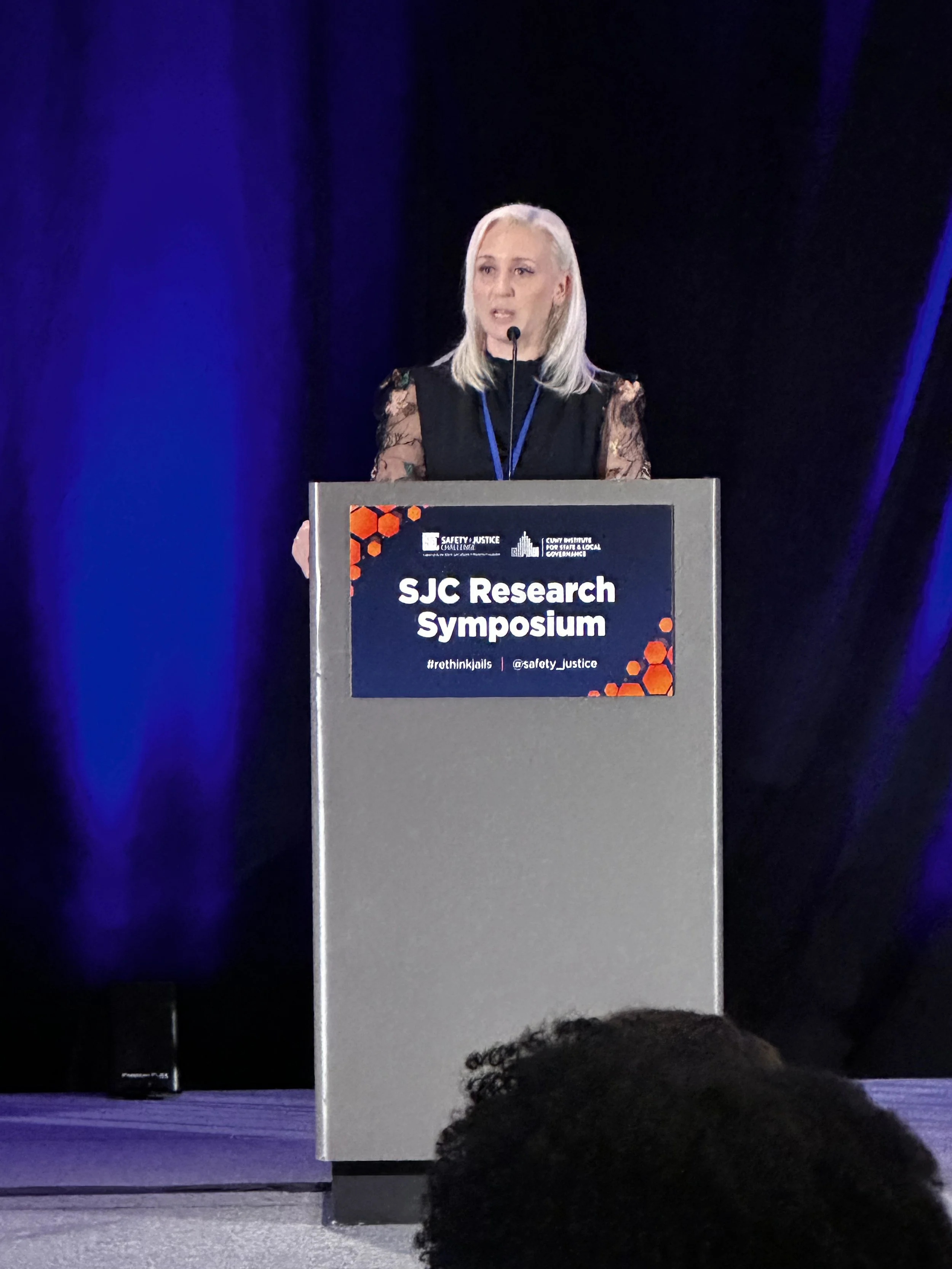
Researchers, judges, law enforcement, jail officials, attorneys, community advocates, funders, and many more convened in Nashville in early March for the Symposium, which was an opportunity to both celebrate achievements and look toward the future. Over the two days, participants reflected on the meaningful efforts and results of participating cities and counties, and dug into the expansive knowledge of what worked, what didn’t, and what should come next as the MacArthur Foundation’s substantial investment comes to an end. The event was hosted by CUNY ISLG, in its role as the primary data and analytic partner for the initiative and lead of the Research Consortium, where much of the SJC’s action-oriented research has been generated.
“We see this as an inflection point,” Ferone surmised. “As an opportunity to carry forward what we’ve learned, build on what works, and continue innovating in pursuit of safer, more just communities.”
A Lasting Impact
Data has been integral to many of the SJC’s successes. Over the past decade, the work that criminal legal partners did to build their capacity to collect, manage, and analyze data enabled them to unpack local criminal legal issues and design and implement strategies to address them, reduce unnecessary jail incarceration, and advance equity.
The data capacity built by sites—including systemwide data submitted annually to a CUNY ISLG repository—also served as a critical foundation for SJC research partners to generate action-oriented knowledge and learnings and to assess progress across the network. With such a trove of data, the work of these cities and counties can be used to inform work far into the future and beyond the life of the SJC.
With such a trove of data, the work of these cities and counties can be used to inform work far into the future and beyond the life of the SJC.
“We have an abundance of knowledge and insight to share about how to safely reduce jail populations, keep people out of jail who don’t need to be there, and advance equitable decisions—both in terms of specific strategies that are effective and in terms of how to plan and implement policies and practices that will be most impactful locally,” explained Reagan Daly, CUNY ISLG’s Research Director. “We want the SJC legacy to reflect that.”
This legacy will include a new archive of the unique longitudinal data collected during the initiative, making this data available to a wider research audience and the building block of strategies going forward. A new website, currently in development by ISLG and SJC partners, will house the many research, policy, and practice publications in a dynamic library that amplifies the lessons for future audiences.
For a deeper look at the current portfolio of SJC research and analysis—which includes more than 100 publications holding hundreds of findings on critical criminal legal system policy and practice questions—see the Research, Policy, and Practice Insight Hub.
Snapshots from the Symposium
Turning Cycles into Progress: The Role of Research in Justice Evolution
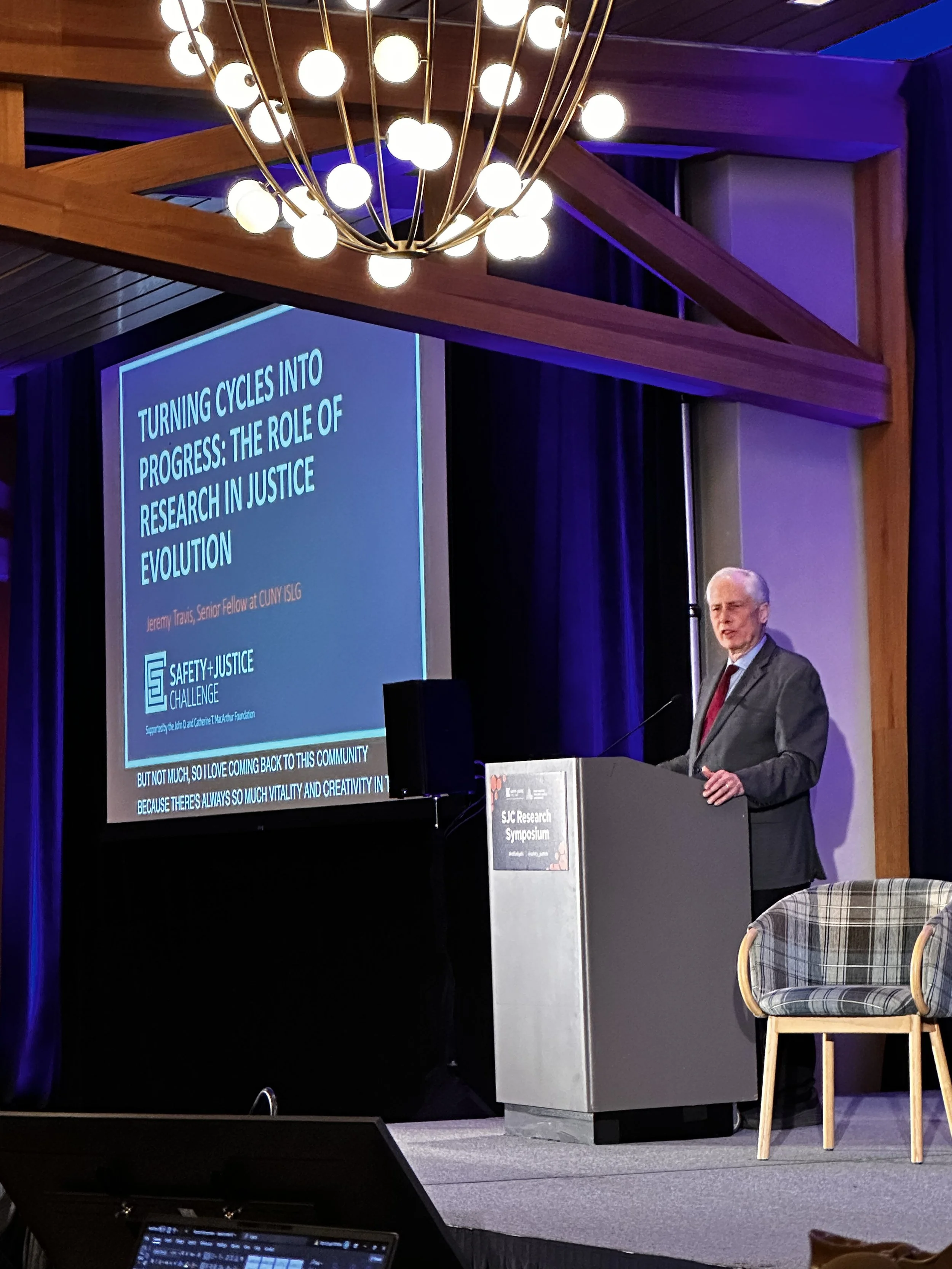
The innovative policy and practice strategies advanced under the SJC did not occur in a vacuum. In the United States, criminal legal reform has been built brick by brick over decades of research, legislation, and public sentiment. CUNY ISLG Senior Fellow Jeremy Travis, a nationally renowned expert in criminal legal policy, delivered in his keynote address both a history lesson and a look into what the future can hold if we continue to use data and evidence as our guide.
“We should never lose sight of the age-old debates about the injustices of money bail, the dangers of preventive detention, and the harms that flow from even the shortest stint in jail,” Travis said. “But precisely because you—and the larger SJC network—have deep experience addressing these issues, you are prepared to ask a broader set of questions about the needs of the people coming into our courts.”
“Because of your involvement in the Safety and Justice Challenge, you are prepared to lead in the creation and realization of this new vision of justice. Now is the time to get to work.”
Read Travis’ full remarks here.
“Because of your involvement in the Safety and Justice Challenge, you are prepared to lead in the creation and realization of this new vision of justice. Now is the time to get to work.”
- Jeremy Travis, CUNY ISLG
Shaping the Next Era of Criminal Justice Policy, Practice, and Research
How can researchers and practitioners come together to ensure these data- and community-driven practices continue amidst changing, and often challenging, landscapes? That question was deliberated by a panel of criminal legal experts, including former National Institutes of Justice directors and criminal legal scholars Drs. Nancy Rodriguez, University of Texas, and Nancy La Vigne, Rutgers School of Criminal Justice; Prairie View A&M University professor Dr. Everette Penn; jail reduction expert Virginia Ryan; criminal legal policy leader Nicolle Barton; and Jocelyn Fontaine, Executive Director of the Black and Brown Collective for Community Solutions to Gun Violence.
The panelists discussed the importance of implementation fidelity, empowering those impacted by the legal system to build solutions, and tapping into research capacity at local colleges and universities because “innovation happens at the local level. Things that became a national agenda, came from a local entity.”
Efficiency, Equity, and Due Process: Rethinking Case Processing
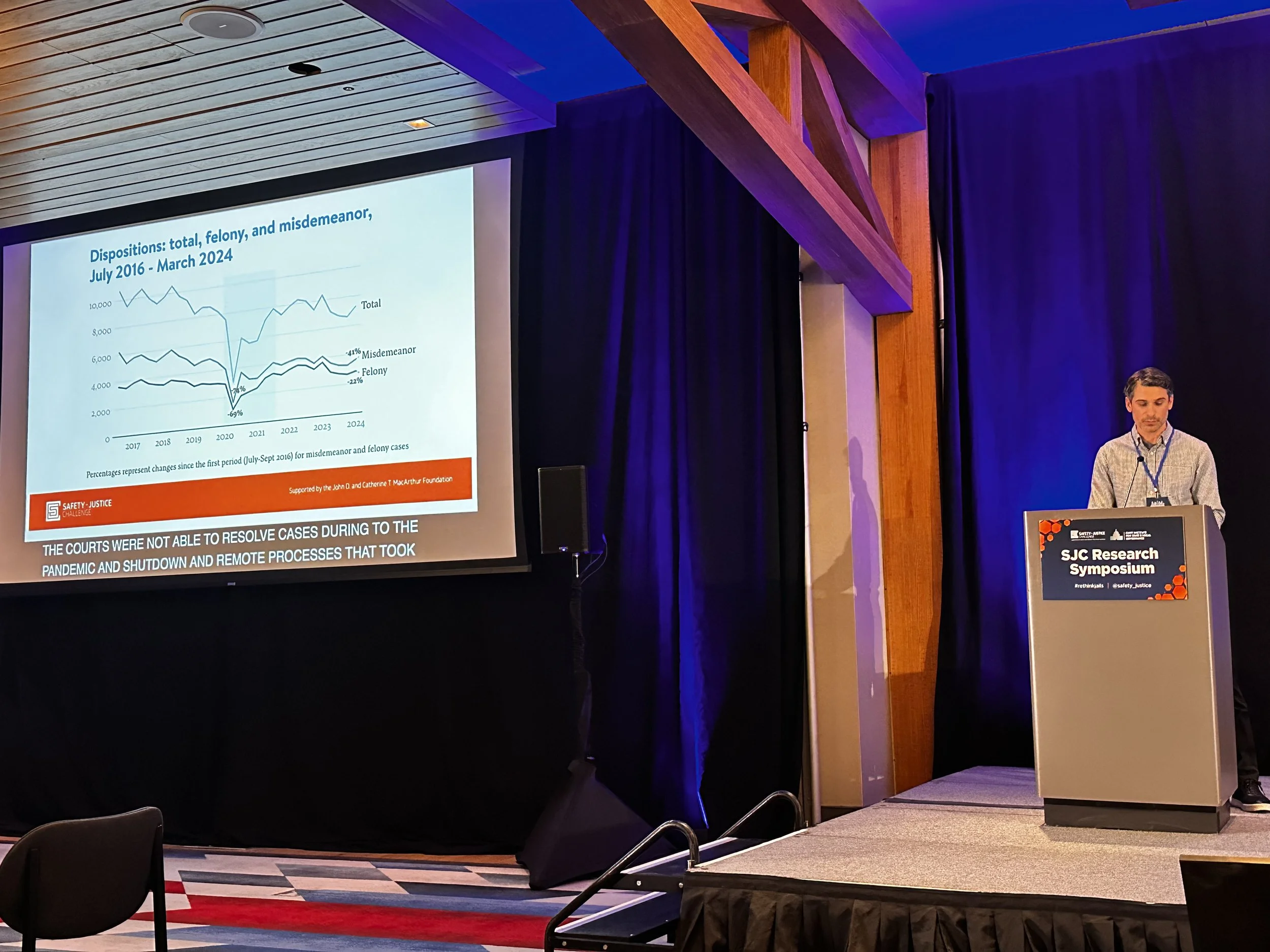
Safely lowering jail populations has a lot to do with preventing incarceration in the first place. But what happens after jail booking? Case processing times are a major factor driving how long people stay in jail, and they should be a top priority for practitioners to address on the ground, taking into consideration due process, the range of operational and procedural factors that can create delays, and how courtroom relationships come into play.
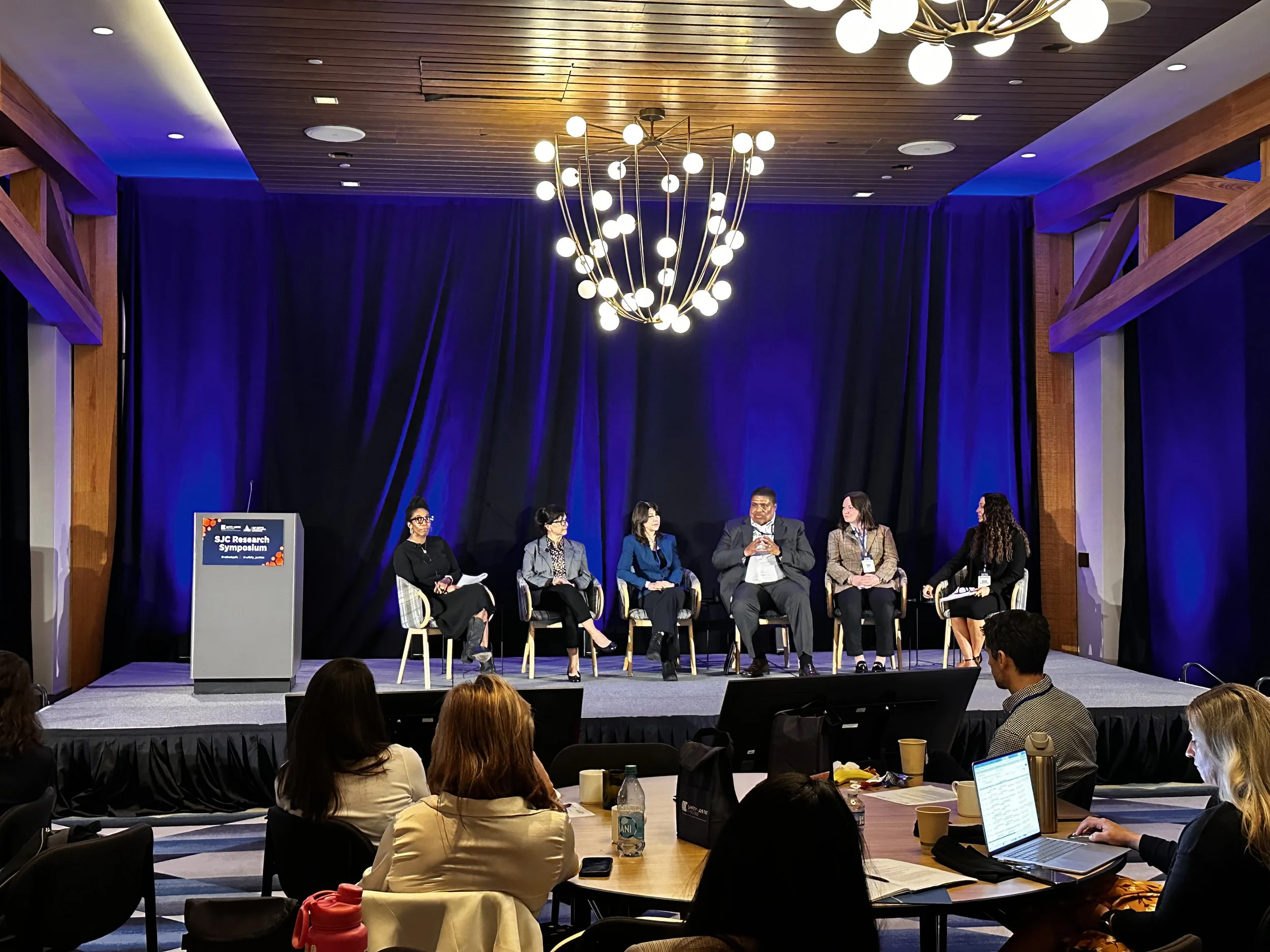
Presentations from researchers Elaine Borakove from the Justice Management Institute, Lily Robin of Urban Institute, Don Stemen of Loyola University, and Doug Evans of CUNY ISLG preceded a panel discussion featuring Harris County Judge Toria Finch, Hennepin County Attorney Mary Moriarty, Cook County Public Defender Sharone Mitchell, and Charleston County Research Manager Ashleigh Wojslawowicz.
For a deeper dive into ISLG’s analysis of case processing times in SJC jurisdictions and beyond, see The Pace of Processing Justice.
Correcting the Course: Racial Equity and Women in Incarceration
While many cities, counties, and states have been successful in reducing their jail populations safely, some areas have emerged as ripe for continued focus. Two panels examined populations and dynamics that demand sustained, targeted attention.
The first, facilitated by Nida Abbasi of the MacArthur Foundation, explored how jurisdictions can move beyond aspirational equity goals toward concrete, operationalized strategies for reducing racial and ethnic disparities in pretrial systems. Cecilia Low-Weiner and Brian Lovins presented research findings, while panelists Tia Strozier of the Center for Justice Innovation and the Pretrial Justice Institute’s Kevin Beckford and Guisela Marroquín pushed the field to develop criminal legal practices with a holistic, historical lens.
The second panel, facilitated by NeAngela Dixon of the MacArthur Foundation, addressed a growing trend: the steady rise of women entering jails following COVID-19. Presenters Bryn Hill, of ISLG, and Lenore Lebron, of the Center for Justice Innovation, drew on recent research to map the common pathways that bring women to jail, while panelists Stephanie Akhter of the Council on Criminal Justice, Cheryl Wilkins of Columbia University's Center for Justice, and Deanne Benos of the Women's Justice Institute contextualized the data into strategies practitioners can use to disrupt the surge. Together, the panels underscored that progress in reducing jail populations must be intentional, nuanced, and attentive to the distinct experiences of those most at risk of being left behind by policy and practice efforts.
Artificial Intelligence and the Justice System: Challenges and Opportunities
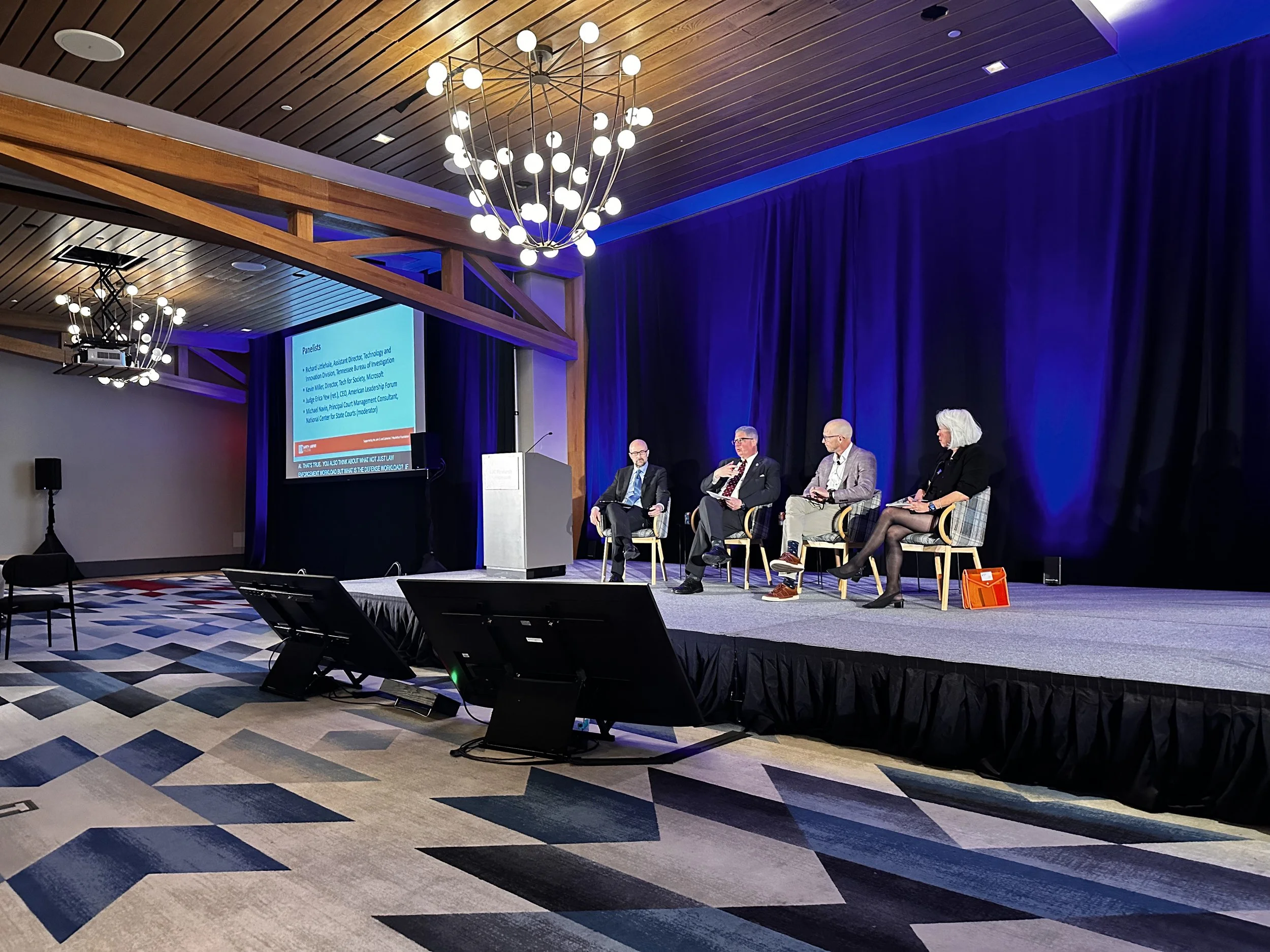
As artificial intelligence (AI) rapidly reshapes how justice is delivered, studied, and funded, criminal justice systems must consider how to harness powerful emerging technologies without sacrificing equity, ethics, or accountability.
A plenary facilitated by Michael Navin of the National Center for State Courts brought together voices from across practice, research, policy, and philanthropy to wrestle with these questions. Judge Erica Yew (ret.) of Santa Clara County offered a practitioner's perspective on AI's growing role in courtrooms, while Kevin Miller of Microsoft spoke to the technological landscape and how quickly it is shaping new policies and procedures. Richard Littlehale of the Tennessee Bureau of Investigation discussed how his units are safely, securely, and intentionally defining its use in investigations and implications for law enforcement. Together, the panelists illuminated both the promise and concerns of AI adoption in justice systems, underscoring that responsible implementation requires intentional safeguards.
At the End, Going Forward
Many other panels addressed topics from case management to public defense to the role of communications. And while this convening marked the last gathering of the initial SJC investment, one thing was clear from all that was debated, discussed, and deliberated: the research and lessons learned can and will be an invaluable tool to researchers, practitioners, and policymakers going forward.
Below, find all the resources related to and referenced in the 2026 SJC Research Symposium presentations and plenaries.
-
General Reading and Foundational Research
“Measuring Progress: Jail Trends in SJC Sites,” Safety + Justice Challenge, accessed May 7, 2026, https://safetyandjusticechallenge.org/measuring-progress-jail-trends-in-sjc-sites/#jail-population-changes
“Ten Years of Advancing Safety and Justice: A Research, Policy, and Practice Insight Hub,”CUNY Institute for State & Local Governance, accessed May 7, 2026, https://islg.cuny.edu/resources/sjc-research-policy-practice-hub
Plenary Sessions
Opening Presentation
Daly, Reagan and Patrick Griffin, “A Lasting Impact: Ten Years of Advancing Safety and Justice,” 2026 Safety + Justice Challenge Research Symposium Opening Session, May 11, 2026, https://islgcunyedu.app.box.com/file/2219927728107
Keynote
Jeremy Travis, “Seizing the Moment: The Next Chapter of Bail Reform,” Keynote presentation, the 2026 Safety + Justice Challenge Research Symposium, March 11, 2026, https://static1.squarespace.com/static/5fcea962a1b4d771ad256fcc/t/69cbead50e49b722e008872a/1774971605966/Seizing+the+Moment+SJC+Symposium+Keynote+by+Jeremy+Travis.pdf
Women’s Pathways
Women’s Justice: By the Numbers (Council on Criminal Justice, July 2024, updated September 2025), https://counciloncj.org/womens-justice-by-the-numbers/
Case Processing
Evans, Douglas, and Rebecca Tublitz, The Pace of Processing Justice (CUNY Institute for State & Local Governance, 2026), https://islg.cuny.edu/pace-case-processing-justice
Kotlaja, Marijana, Understanding the Impact of Racial and Ethnic Disparities from Arrest to Sentencing (Justice System Partners, 2026), https://islg.cuny.edu/resources/jsp-cumulative-disparities
AI
“Principles for the Use of AI in Criminal Justice,” Council on Criminal Justice, published October 2025, accessed May 7, 2026, https://counciloncj.org/principles-for-the-use-of-ai-in-criminal-justice/
“AI in state courts,” National Center for State Courts, accessed May 7, 2026, https://www.ncsc.org/resources-courts/ai-state-courts
“AI sandbox,” National Center for State Courts, accessed May 7, 2026, https://www.ncsc.org/resources-courts/ai-sandbox
Workshops
Public Safety
Butcher, Fred, Amanda Cissner, and Elise Jensen, The Impact of Jail Reduction Strategies on Community Safety (Center for Justice Innovation, 2026), https://islg.cuny.edu/resources/cji-impact-community-safety
Martinez, Brandon, Otgonjaral Okhidoi, Rebecca Tublitz, and Emily West, The Changing Use of Jails in Safety and Justice Challenge Counties (CUNY Institute for State & Local Governance, 2025) https://islg.cuny.edu/resources/use-of-jails-brief
The Role of Communications Personnel
Schafar, Joseph, Lee Slocum, Beth Huebner, Konstadina Spanoudakis, Teairstayn Jones, and Isabella Castillo, Gatekeeping Justice: the Role of Communications Personnel in Shaping Public Safety (Safety + Justice Challenge, 2025), https://islg.cuny.edu/resources/gatekeeping-justice-pscp
Public Defense
Magnuson, Shannon, Lore Joplin, Jen Lerch, and Kimberly Richards, Changing the Initial Appearance Process in Three Sites (Justice System Partners, 2025), https://islg.cuny.edu/resources/public-defense-strategies-due-process
Jail Reduction in Practice
“Toledo Municipal Court Announces Study Of Cutting-Edge Diversion Program,” City of Toledo, published February 12, 2025, accessed May 7, 2026, https://toledo.oh.gov/news/2025/02/12/toledo-municipal-court-announces-study-of-cutting-edge-diversion-program
Photos by various CUNY ISLG staff.