
CASE STUDY
Building Fiscal Sustainability
in State and City Government
LOCATION
National and International
ACTIVE
2021-present
ISLG is partnering with states and cities across the United States and internationally to strengthen budget management, improve organizational performance, and build the capacity needed for long-term financial sustainability.
Challenge:
Governments are facing increasing fiscal and operational pressures. Rising costs, aging infrastructure, workforce challenges, uncertainty in intergovernmental support, and growing demands for public services are placing strain on government resources.
Many local governments are faced with difficult decisions about how to allocate limited resources, maintain essential services, and plan for long-term financial sustainability. These challenges are often compounded by economic uncertainty, evolving policy requirements, and the complexity of managing large organizations and public assets.
As a result, local government leaders are seeking ways to better understand their fiscal condition, anticipate future risks, and ensure that public resources are being used effectively to meet community needs while keeping budgets balanced.
Approach:
CUNY ISLG works alongside government leaders and their front-line staff to develop practical solutions to complex fiscal and operational challenges. Our approach combines data analysis, stakeholder engagement, and process diagnostics to help organizations better understand their current conditions and identify opportunities for improvement.
Recognizing that every government operates within a unique political and organizational environment, we tailor our work to local needs while drawing on lessons learned from a wide range of jurisdictions. Projects may include examination of revenue, expenditure, and other solutions to fiscal stress; fiscal and operational assessments, budget process reviews; long-term financial planning; performance management; organizational analysis; and strategic planning efforts.
A key part of determining this path is understanding the unique local circumstances, including financial and operational characteristics, trends and comparisons with other jurisdictions, and how budget processes function in practice. With this context, we can work alongside government staff to identify best practices and areas for improvement and, subsequently, develop a clear, practical roadmap for implementation. Recommendations are prioritized to balance immediate opportunities for improvement with longer-term initiatives that may require additional planning, resources, or organizational change.
CUNY ISLG often remains engaged throughout implementation, providing guidance and support as governments put new processes and practices into place. This work is informed by the expertise of our multidisciplinary staff, including professionals with decades of experience leading state and local budget offices, managing public finances, and overseeing government operations. Their practical experience ensures that recommendations are grounded in the realities of public sector management and can produce real results.
Progress:
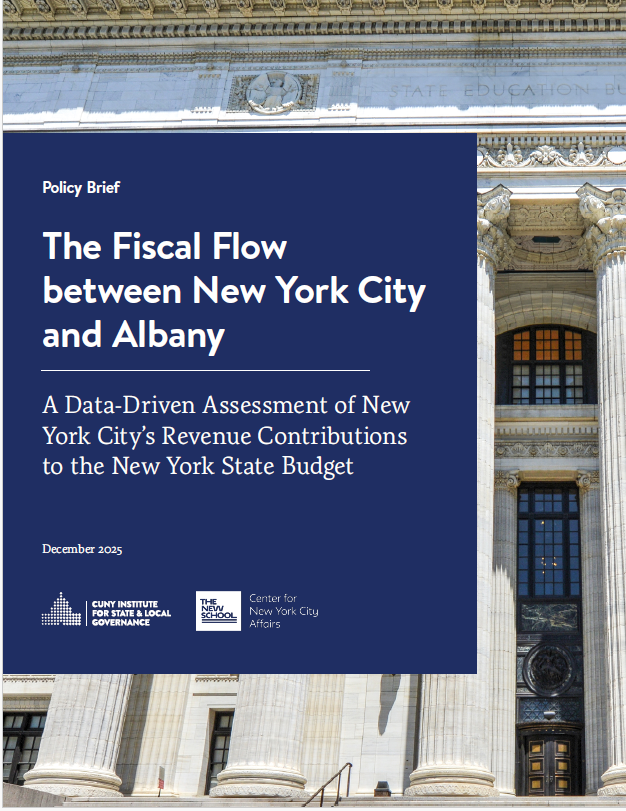
CUNY ISLG has partnered with local governments of varying sizes and structures across the United States and internationally to address complex fiscal and management challenges. Our work has included detailed fiscal assessments featuring revenue and expenditure analyses, peer city comparisons, and evaluations of strategies to strengthen financial resilience, enhance revenues, and improve operational efficiency. This has included an analysis on the “fiscal flow” of tax dollars and what is returned in services between New York City and State.
One area of focus has been vacant property tax policy. This work is highlighted in How Cities and States Can Use Vacant Property Taxes to Spur Housing Development, which examines a range of policy options available to state and local governments seeking to address housing shortages and encourage redevelopment.
ISLG has also worked with governments to map and evaluate key budget and management processes, helping organizations identify bottlenecks, clarify roles and responsibilities, and strengthen coordination across departments. It is also engaged in designing fiscal stability evaluation tools to help governments understand strengths and weaknesses in their fiscal systems and develop plans for improvement. These efforts have focused on both budget development and budget monitoring and helping governments build more effective systems for maintaining fiscal stability, planning, decision-making, and accountability.
For more information, contact Nick Kilby at nick.kilby@islg.cuny.edu