Institute Intelligence, January 2026: Revisiting Discovery Reform, Local Data Answers Crime Questions
By Carla Sinclair, Communications Project Director and Alisa Orlowsky, Communications Associate

2026 is off to an intense start. Once-in-a-decade winter weather is upon much of the United States. People in cities are taking to the streets in protest. Municipal and state governments are beginning to chart their budgets to address the fever pitch of affordability issues. Now more than ever, government leaders need the knowledge, data, and community perspectives to meet the moment.
In New York State and across the country, we've kicked off the new year by starting and continuing work giving these leaders--from legislators to agency heads to community-based organization staff--the tools they need. We're laying it out for you in January's Institute Intelligence.
Want to stay in touch? Follow us on Bluesky, LinkedIn, and Facebook for the latest on our research, policy, events, and funding announcements.
While Gone from the Headlines, New York Still Needs to Address Discovery Reform: A Joint Op-Ed with Data Collaborative for Justice
While New York’s groundbreaking bail reform law has been a flashpoint of debate for years, it was instead the obscure topic of “discovery” that became the singular sticking point in last year’s New York State budget negotiations.
This year, Governor Kathy Hochul’s State of the State affirmed her commitment to public safety generally. But discovery, specifically, has faded from focus. The data says there’s still work to do, though that work has less to do with new legal fixes and more to do with strengthening implementation on the ground. This is especially true when looking at prosecutors' compliance with discovery timelines and speedy trial dismissals.
Building on our three-year study on how the reforms were put into practice, we joined forces with fellow CUNY institution the Data Collaborative for Justice—who examined the hard data on implementation—to outline the data, policies, and practices for policymakers, prosecutors, defenders, and all the public to insist on better discovery processes.
Save the Date: Strategies for a New Era of Policing and Public Safety in NYC

As Mayor Zohran Mamdani’s administration rethinks policing in New York City, this panel convenes leading scholars and practitioners to examine what cutting-edge research suggests about improving public safety through police-community interactions. These experts discuss what can be done regarding non-police responses to mental health emergencies, pedestrian stops, procedural justice, substance use crises, and more, when leading with innovation.
Moderated by CUNY ISLG Senior Fellow Jeremy Travis, the discussion at the CUNY Graduate Center will feature Kathleen Doherty, research project director at CUNY ISLG; Brandon del Pozo, former NYPD precinct commander and Burlington, Vermont, chief of police; Ayesha Delany-Brumsey, director, Office of Behavioral Health (Community Based Services) at NYC Health + Hospitals; and Tracey Meares, Walton Hale Hamilton Professor of Law and founding director of the Justice Collaboratory, Yale Law School.
Register to join in person or online on Wednesday, March 4, at 6:30 pm.
Looking at local data from counties in Louisiana and Ohio to see if reforms led to violence spikes: They didn’t.
The impact of criminal legal reforms on community safety is a topic of much debate. Critics often suggest they are to blame for the high rates of violent crime observed across the country in the period immediately following the COVID-19 pandemic. While all crime—and violent crime specifically—has decreased in the following years, concerns continue to shape national conversations around the role of criminal legal systems.
Local jail data can provide answers. As part of the Safety and Justice Challenge (SJC) Research Consortium, which is managed by CUNY ISLG, New Orleans, Louisiana, and Lucas County, Ohio, implemented tailored strategies to safely reduce jail populations. These strategies included implementing a validated risk assessment (the Public Safety Assessment [PSA]), diversion programs, pretrial detention alternatives, and expanded treatment options. The Center for Justice Innovation examined whether implementation of the PSA managed to reduce jail populations without sacrificing community safety.
Understanding the Fiscal Flows when Drafting the State Budget
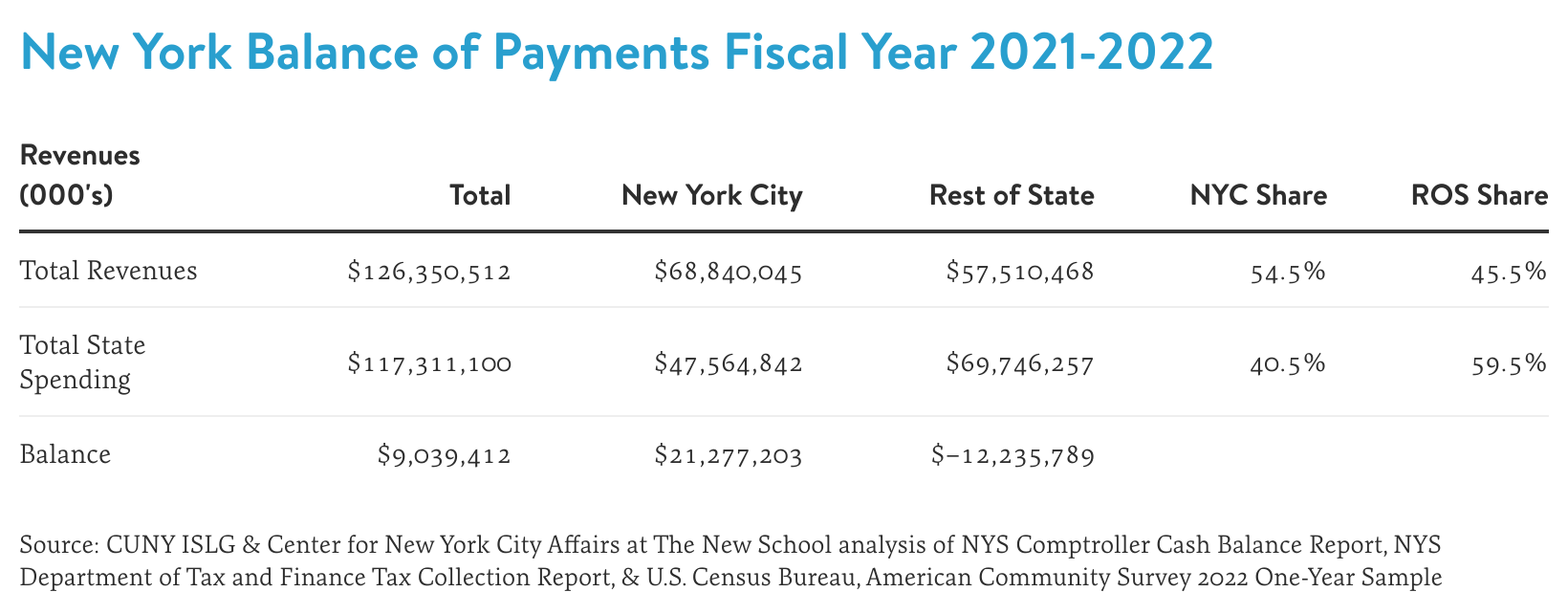
Budget season is upon us. The budget, as much a policy document as it is a financial one, gives policymakers and everyday New Yorkers alike insight into what priorities the Governor's Office, State Assembly, State Senate, and local governments across the state will chart in the year ahead.
When staking out these priorities, it's critical that policymakers have up-to-date numbers on how much taxpayers—especially in its most populous, economy-driving regions—are contributing to state expenditures, and how much they're receiving back in services.
Our brief measures this "fiscal flow" of revenue and spending between New York City and its capitol for the first time in a decade.
ICYMI: CUNY ISLG’s First Impact Review
State and local governments face complex, interconnected, and politically charged challenges that require more than quick fixes. To sustain ongoing good governance, they’ll have to look toward tailored diagnoses, trusted partnerships, pragmatic innovation, and a willingness to change the conversation about what the public sector can achieve.
CUNY ISLG’s 2025 Impact Review offers a snapshot of how we approach this work. Over the past year, we partnered with government leaders, community-based organizations, researchers, philanthropists, and advocates across New York and North America to address challenges as they show up in practice. Together, we worked to strengthen systems shaping community safety, fiscal policy, human services, and public trust—grounding solutions in data, community knowledge, and operational reality.
The Review looks at a selection of the work we’ve done through four key strategic interventions:
Analyzing and diagnosing challenges;
Building partnerships and infrastructure;
Designing and innovating solutions; and
Changing public dialogue.
Explore what we achieved and how we approached the work in our web report.
Stay in touch - sign up for our newsletter to get all the latest updates.