
A look at the work we've done in the past year to design and implement public sector solutions grounded in data, community knowledge, and operational reality.
The challenges facing state and local governments today are complex, deeply interconnected, and politically charged. They demand more than quick fixes or armchair analyses: the way toward good governance is in tailored diagnoses, trusted partnerships, pragmatic innovation, and a willingness to change the conversation about what the public sector can achieve.
The way toward good governance is in tailored diagnoses, trusted partnerships, pragmatic innovation, and a willingness to change the conversation about what the public sector can achieve.This 2025 Impact Review gives some insight into how CUNY ISLG approaches that work. Over the past year, our team has partnered with government leaders, community-based organizations, researchers, philanthropists, and community advocates here in New York and across North America to understand and address problems as they actually show up in practice, not just on paper. We have worked to improve the systems that shape community safety, fiscal policy, human services, and trust in state and local governments, working alongside partners to design solutions grounded in data, community knowledge, and operational reality.
None of this work happens in isolation. It is the product of experience, collaboration, persistence, and a shared belief that better outcomes are possible when research, policy, and public purpose are aligned.
This report captures not just some of what we produced in 2025, but how we worked—and why these approaches matter.
The Review looks at a selection of the work we’ve done through four key strategic interventions:
Analyzing and diagnosing challenges;
Building partnerships and infrastructure;
Designing and innovating solutions; and
Changing public dialogue.

We rely on expertise, not abstract theories, to truly understand the complex challenges facing government and all of the individuals it serves.
A novel study using body-worn camera footage
to assess the constitutionality of police stops.

staff highlight: Kathleen Doherty, Research Project Director
This research project is novel, staking out a new approach to systemically reviewing, evaluating, and synthesizing BWC footage to strengthen police accountability. This required a unique approach to management and academic rigor, which was led by Research Project Director Kathleen Doherty.
From 2021 to 2025, Kathleen built systems for and facilitated the work of this interdisciplinary team of more than 40 internal and external contributors and partners to conduct the study, from graduate students reviewing and coding the BWC footage to retired New York State judges screening and discussing the constitutionality of incidents.
“This project made us redefine how researchers can evaluate and learn from body-worn camera footage. By conducting the first systematic, data-driven approach to reviewing these encounters, our team demonstrated what methodological research and interdisciplinary collaboration can make possible,” Kathleen said. “This model will hopefully not only strengthen police accountability here in New York, but offer a blueprint that agencies across the country can adapt to improve transparency and public trust.”
Defining and addressing New York’s
human service sector wage crisis
Childcare, healthcare, elder care, mental healthcare—these and other human service sector jobs provide fundamental services for communities across New York State, often contracted by state and local governments to do so. But a poorly kept secret in New York State is that the people providing these services are often experience the same financial and wellbeing strains as the people they serve.
CUNY ISLG researchers and policy experts wanted to measure the breadth of the sector in New York State, the gap between its average pay and a livable wage, and the impact that a raise would have on the sector and the state as a whole.
Understanding the flow of taxes
and services between New York City
and the rest of the state
Measuring the changing use of jails
in Safety and Justice Challenge counties
And over nearly a decade of this work, research has established that people released pretrial were no more likely to return to jail than those released before the SJC, including for violent crime—demonstrating that data-driven and cross-agency collaborative planning efforts can lead to positive outcomes for individuals while keeping communities safe.
Data-driven and cross-agency collaborative planning efforts can lead to positive outcomes for individuals while keeping communities safe.ISLG’s latest analysis of the data looks at the changing use of jails in select SJC sites. The main findings show that by the end of the SJC:
- Fewer people were booked for lower-level and administrative charges.
- More people were released while their cases were pending.
- People who were booked into jail on felony charges stayed for shorter periods of time, as sites expanded pretrial release options, reduced administrative or case processing delays, and accelerated case resolution.
- Racial and ethnic disparities persisted despite other successes.
The Gender-Based Violence Project:
Bringing Women to the Table
In New York City and other communities across the country, government agencies and nonprofit institutions are tasked with supporting survivors of gender-based violence who have had contact with the legal system. However, many survivors, including those who are women and gender non-conforming, face widespread barriers to accessing important services.
The Gender-Based Violence (GBV) Project was created to tackle this issue, as well as shed light on the ways that service organizations are already successfully supporting survivors. To do so with real-world insights, The GBV Project is driven by a Working Group of ISLG staff and consultants with lived experience in the fields of gender-based violence and criminal justice.
Our blog highlights the Working Group that leads this important project and captures their thoughts on why it’s important that women and people with lived experience are at the table to shape initiatives that support survivors.
“A lot of people don't really know what happens to survivors that are struggling in the systems and entrapped. So to be a person with lived experience, with first-hand knowledge, you're going to give a raw picture of what exactly happens to women in these systems, and how domestic violence is constantly overlooked. I want to be a voice for those women in prison, those women suffering in silence that sometimes can't speak up.”
Our work builds the capacity of partners to implement research, policy, and operations insights themselves—whether it means building new infrastructure where none exists or forging partnerships towards impact.
Launching the Prosecutorial Data
Collaborative to Give Prosecutors the Tools
to Make Fair, Efficient Community
Safety Decisions Driven by Data
Expanding Leadership, Networking,
and Policy Expertise Opportunities
for State and Local Legislative Staff
CUNY ISLG’s Kriegel Fellowship for Public Service Leaders is a professional development resource designed for staffers from New York City Council, State Assembly and Senate, District Attorney, Borough President, and other governmental offices. Every two weeks, Fellows meet with each other and a cadre of policy subject matter experts to hone their knowledge, skills, and network, supporting them as they thrive in their roles and effectively support their policymakers and constituencies. These sessions cover three broad areas: Leadership & Management, Constituent Engagement and Management, and NYC Policy Priorities.
Every two weeks, Fellows meet with each other and a cadre of policy subject matter experts to hone their knowledge, skills, and network, supporting them as they thrive in their roles and effectively support their policymakers and constituencies.Due to growing demand, this year we launched our largest class yet, with 44 Fellows from offices representing Democratic and Republican districts in New York City, Buffalo, Syracuse, Albany, and Long Island. Also for the first time, the 2025-2026 cohort will have two sections: one for chiefs of staff and one for senior staff (e.g., directors within offices). Creating separate spaces for these cohorts creates a more tailored learning and networking experience for Fellows, who often have overlapping but different priorities and responsibilities in supporting their elected official.
Wonder what it’s like to work in a legislative office? Curious what it means to be a chief of staff? Interested what being a Kriegel Fellow brings to the table?
“It’s so important to have a community of staffers from across legislative bodies, not just the Council, because you don't have many opportunities to see folks from the State bodies. Here, there's really an opportunity here to get to know each other. Everyone's seated on the same level. It gives us more opportunities to really engage with each other and just hear each other out on how we got here, what we're looking for, and where we want to go next.” Brandon Jordan, Deputy Chief of Staff, NYC Council District 5This year, we spoke with three members of the 2024-2025 cohort (who celebrated their graduation in April 2025) about their roads to public service, what they’ve learned in the Fellowship, and what they wished people knew about working in legislative offices.
See our conversations with Brandon, Anna, and Samori on our blog
Inaugural Civic Engagement Fellowship
Partners CUNY Students with
Bronx Community Organizations to
Spark Voter Education and Engagement

When people get involved in the civic process, it means their elected officials and the policies they prioritize can reflect their community’s needs. The Civic Engagement Fellowship (CEF), launched in summer 2025, aims to tap into the next generation of leaders to make sure that happens.
The CEF is a partnership between CUNY ISLG and the New York City Campaign Finance Board (NYCCFB) that aims to boost voter engagement in the South Bronx, doing so by embedding CUNY student Fellows in Bronx-serving community-based organizations for two years. As a Fellow, participants will work with staff to co-design strategies that build the power of local communities and increase knowledge, transparency, and participation in the democratic process.
The Fellowship represents an investment in both NYC’s future leaders and its local electoral spaces; it is designed to build the power of local communities and increase knowledge, transparency, and participation in the democratic process.

Staff highlight: Patrick Hart, Policy Program Director
While coalescing into one initiative, the CEF is really serving two different (but both critically important) purposes: developing rising leaders from CUNY schools, and giving resources to the community-based organizations working to engage, educate, and empower New Yorkers.
Policy Program Director Patrick Hart has led a number of initiatives that connect public institutions with community-based organizations, working to bring all partners together to produce impactful, data-driven, and sustainable services. But the CEF marks a new endeavor that links CUNY ISLG’s student pipeline with these organizations.
“CUNY students have always been the beating heart of New York City and at the vanguard of community-led change. Connecting these students with community-based nonprofit partners taps into this power to generate civic engagement and participation,” Patrick said.
Reflections from the First Year
of the Community-Based
Restorative Justice Program
Restorative justice (RJ) is a method of addressing harm that centers accountability; it’s a form of mediated communication that engages both the person who caused harm as well as care and restitution to the person harmed by it. It can also be done proactively, preventing harm from arising in the first place by bringing people together, strengthening community relationships, and giving the tools to communicate and resolve conflict.
As part of the plan to safely shift New York City away from reliance on jails and toward a more equitable system, CUNY ISLG has been working with the Mayor’s Office of Criminal Justice (MOCJ) since 2024 to create the Community-Based Restorative Justice Initiative (CBRJ). This three-year initiative selected 16 unique community-based organizations to strengthen and grow restorative justice practices within their services.
The CBRJ program invested in these organizations to build their operational, strategic, and programmatic capacity as well as strengthen and grow both their use of restorative justice and their organizations overall. To do so, organizations participate in training and technical assistance (TTA) that focuses on data collection, nonprofit leadership, and sustainability with CUNY ISLG staff and expert consultants.
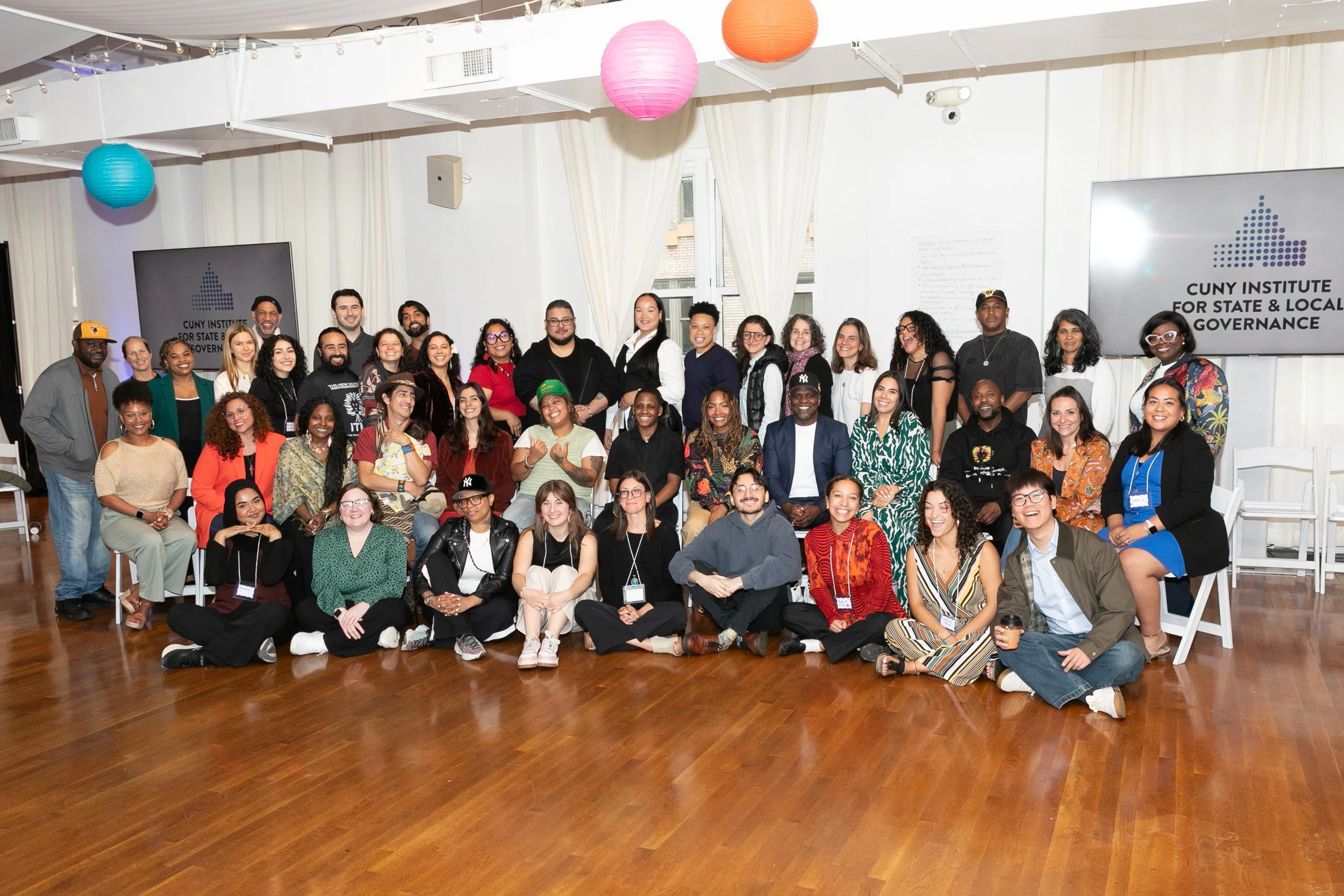
The CBRJ program invested in these organizations to build their operational, strategic, and programmatic capacity as well as strengthen and grow both their use of restorative justice and their organizations overall.In summer 2025, we convened these grantees along with other field experts, leaders, and philanthropists for a celebration of the past 12 months of work across youth and young adult services, community safety, mental health, and more. A yearbook was created to document and acknowledge a year’s worth of incredible work from the 16 Community-Based Restorative Justice program grantees.
Staff highlight: Rhokeisha Ford, Policy Program Director
The CBRJ represents a major investment into developing capacity of small and grassroots organizations that have historically faced barriers to accessing public funding, as well as supporting specific neighborhoods disproportionately impacted by a lack of resources and high incarceration rates.
Policy Program Director Rhokeisha Ford, who leads the CBRJ, said the success of the initiative is proof that this kind of investment pays off long term for both safety and service sustainability.
“The past year is a remarkable testament to the strength and spirit of our communities. In the face of mounting challenges, these organizations have responded with care, creativity, and unshakable commitment. They have not only addressed harm and fostered healing but have also shown how restorative justice can be a powerful tool for building public safety, one grounded in relationships, accountability, and community trust,” she said.
“By centering the needs of those impacted and creating pathways for dialogue and repair, these efforts can reduce cycles of harm and strengthen the social fabric that makes neighborhoods safer and more resilient.”


Through deep analysis, we design and test solutions that are rigorous, responsive to local context, and data-driven—informed by on-the-ground experience
Grassroots organizations often draw on their unique insights and close community relationships to identify challenges and design strategies to address them. But their often small, nimble sizes have historically made it difficult to be competitive in complex funding processes and, relatedly, build up their internal capacity to grow, measure, and showcase their impact.
The Grassroots Policy Incubator (GPI) was created to fix that. Launched in April 2025, the Incubator offered up to $40,000 to grassroots organizations to participate in a seven-month incubation process, with the goal of developing an approach or recommendation that addressed a specific, identified policy gap or challenge in a NYC community. This important project was funded by the NYC Mayor’s Office for Economic Opportunity (NYC Opportunity)
The Incubator was designed to prioritize grantee needs by allowing a flexible approach for organizations in developing their ideas. To accomplish this, grantees received tailored capacity-building support from ISLG and consultants to address broader needs—such as in data collection and analysis, fundraising, or communications—related to their chosen policy gap.
“This process was about working with grantees, asking them what they needed and helping them get there, not telling them what they had to do with little flexibility. And the result was an incredibly high return on investment. It’s amazing what each of these organizations could accomplish once they’re given funding and the right tools,” said Evan Goldstein, Senior Policy Associate.
The selected organizations—The Flossy Organization, Survivors Justice Project, and Immigrant Children Advocates’ Relief Effort (ICARE)—represented distinct yet important services
“As a small grassroots project, having both the technical assistance and the know-how to take what we've learned and translate it into policy and into presentation can really further the work and makes a difference,” said Judith Clark, Director at the Survivors Justice Project.
For the following seven months, ISLG staff and the GPI grantees met one-on-one and as a learning community to analyze their policy gaps and approaches to address them. All three organizations reported deep appreciation for GPI and the opportunity it gave them for low-barrier financial and consulting support focused on empowering and building their organizations.
Investing in Grassroots Organizations
with Tailored Capacity-Building
Since its inception in 2015, the Safety and Justice Challenge (SJC) has redefined how data and analysis can be used to transform criminal legal systems. It has informed the full cycle of policy and practice work in more than 50 cities and counties, including unpacking who is in jail and why; designing and putting into action locally responsive solutions; and assessing impacts of these efforts, adjusting when needed.
The use of data in the SJC is not limited to advancing efforts in individual sites. Data and trends gleaned across participating jurisdictions serve as a resource for researchers, policymakers, government partners, and others seeking knowledge on what works.
As the SJC’s primary data and analytic partner, CUNY ISLG has led the collection, management, and analysis of data across individual cities and counties, and the initiative as a whole. Through this work, in 2019, we launched a Research Consortium to support this broader SJC knowledge development goal. Specifically, the Consortium was launched to advance rigorous action research work in priority topic areas that are core to the SJC mission. In addition to research that comes out of the Consortium, CUNY ISLG and other SJC partners regularly produce a range of additional analytic work.
By the end of this year, the inventory of SJC research publications will include nearly 100 publications, holding hundreds of findings on critical criminal legal system policy and practice questions. In December 2025, we unveiled the Research, Policy, and Practice Insight Hub, a digital home for synthesized learnings from SJC partners to identify key takeaways, themes, and gaps in knowledge to date in each of the six priority areas. Planning for the final SJC Research Symposium, which will celebrate and highlight the work, is underway for spring 2026.
Learning from 10 Years of
Advancing Safety and Justice across the Country

SJC Research Agenda Priorities
Effective Strategies
Assess implementation and impacts of specific programs and policies to build a body of evidence for strategies that can and should be replicated to safely reduce jail populations
Racial & Ethnic Disparities
Gain insight into what is needed to effectively reduce jail populations and racial and ethnic disparities in tandem
Public Safety
Assess the public safety implications of jail reduction efforts within and across SJC cities and counties
Case Processing
Better understand case processing flow, how it affects jail populations, and the ways in which jurisdictions have addressed case processing delays to reduce jail populations
COVID-19
Understand how jail reduction policies and practices implemented during the pandemic affected jail populations and other pretrial outcomes, and where they are opportunities to sustain these measures
Decision-Making
Develop a better understanding of the factors that drive decision-making in the criminal legal system, particularly at its front end (e.g., policing and prosecution)
For the past decade, the Criminal Justice Investment Initiative (CJII)—a partnership between the Manhattan District Attorney’s Office and CUNY ISLG—has used strategic investments to successfully support, develop, expand, and/or evaluate more than 50 innovative community programs serving more than 34,000 people across New York City. These have ranged from mental health and youth services to efforts to streamline coordination across agencies to connecting with underserved communities.
CUNY ISLG has served as both a strategic partner and grant manager for the dozens of organizations involved in CJII. This year, we’ve released two reports from what we’ve learned across the initiative. The Building Safer Communities series synthesizes what we learned about the key drivers of implementation and impact, including how to:
• Cut down organizational siloes,
• Create trauma-informed programs that work for both participants and staff,
• Design tailored strategies to reach individuals and communities that have been systematically excluded from public services, and
• How services can support folks rejoining the community from detention or incarceration.
A Decade of Strategic Investments
into Manhattan’s Neighborhoods

But even in places with many social service providers like New York City, systemic inequality and a wide array of barriers mean New Yorkers may struggle to connect to the resources that could help them thrive. Using examples from CJII and other programs and research, A Blueprint for Social Service Navigation in NYC and Beyond outlines how service navigation plays a key role making sure communities get connected to the care they deserve.
Staff highlight: Jennifer Ferone, Deputy Research Director
CUNY ISLG’s role in the Safety and Justice Challenge is multifaceted. Associates liaise with sites across the country, from South Dakota to Florida, to troubleshoot day-to-day data problems and build internal capacity. Analysts clean, sort, and store data, which can cover anything from daily bookings into jails to racial disparities in annual trends. Staff solicit, manage, and publish studies done in conjunction with research partners, including Research Consortium members, and site collaborators.
Deputy Research Director Jennifer Ferone oversees the Research Consortium, a group of prequalified research organizations that use data collected as part of the SJC. They answer key analytic questions of critical importance to the larger criminal legal field about what is working with respect to pretrial justice, jail reform, and reducing racial and ethnic disparities. In addition to developing and managing this research work in furtherance of SJC goals, the Consortium team at CUNY ISLG takes a 10,000 ft view of the of the emerging policy and practice findings from this work and synthesizes it into resources that can be used as a foundation for reform for years to come. With the initial investment in the SJC coming to a close, it’s more important than ever to focus on how these individual studies inform the larger trends that, taken together, can create a more data-driven, efficient, and equitable criminal legal system.
“Over the initiative, SJC cities and counties have generated a depth of evidence that few national reform initiatives can match,” she said. “Our role has been to bring coherence to that body of work, to lift up what individual jurisdictions have learned and translate it into insights that can guide policy and practice well beyond the life of the initiative. As we enter this next chapter, the Research Consortium’s focus is on ensuring that these lessons continue to inform a more data-driven, efficient, and equitable criminal legal system for years to come.”
Giving State and Local
Policymakers Tax Policy Tools to
Spur Housing Development
The shortage of affordable housing is a top policy concern for governments nationwide. According to the Bipartisan Policy Center, “nearly 3 in 4 adults feel lack of affordable homes is a significant U.S. problem.” But incentivizing the creation of affordable housing is a complex goal for local governments to realize.
One innovative method that policymakers can use to incentivize the creation of more housing is strategic property tax policies that target vacant or underutilized properties, which can both encourage owners to create housing and fund affordable housing initiatives.
CUNY ISLG budget strategists have worked with policymakers and agencies across the country to better understand and use this toolbox, solving the unique challenges that affect each jurisdiction.CUNY ISLG budget strategists have worked with policymakers and agencies across the country to better understand and use this toolbox, solving the unique challenges that affect each jurisdiction. In this brief, they lay out these programs, and examine case studies that illustrate how cities have implemented them in practice.

When it comes to real solutions for complex problems, we cut through the noise and intervene with grounded data when public conversations demand insights to drive progress.
Rethinking RFPs and Grant
Management for Real-World Impact
Through our work this year (as highlighted in this review), we’ve had the opportunity to partner with state and local governments seeking to make a real impact with the initiatives they fund, and community organizations with the relationships and experience to make it happen.
But these nonprofit, community-based organizations often operate with a small staff, and without the dedicated time or resources to invest into grant applications, fundraising, staffing, data collection, and other types of capacity that organizations often need to operate successfully. Many rely on short-term grants, making it difficult to maintain programs over time.
We have managed request-for-proposal (RFP) development, solicitation, selection, and contracting for dozens of initiatives. From this experience working with grassroots grantees to produce successful programs, we’ve begun to rethink the RFP and grantmaking process. What barriers make these processes unnecessarily prohibitive, and what could be broken down without compromising program quality? How can we get the policy conversation to involve grassroots organizations, bringing these community-based changemakers’ ideas to policymakers, funders, and other people with the resources to make them happen?
From this experience working with grassroots grantees to produce successful programs, we’ve begun to rethink the RFP and grantmaking process. What barriers make these processes unnecessarily prohibitive, and what could be broken down without compromising program quality?On our blog, staff that have managed millions of dollars’ worth of grant contracts give insight into what taking an intentional, inclusive approach to funding community-based organization can look like.
The Data Has It:
There’s No Link between
Jail Population Reductions and Violent Crime

Staff highlight: Nathalie Lebrón, Senior Policy Associate
Senior Policy Associate Nathalie Lebrón was one of the lead writers for both the 2024 report and 2025 update blog. Her contributions to ISLG’s broader work with city government focus on advancing racial equity and expanding restorative justice initiatives.
As a Latina macro social worker, Nathalie was motivated to enter the helping professions after observing BIPOC social workers and community leaders effectively advocate for their communities and deliver essential services to those in need. While contributing to research on BIPOC representation in the helping professions, Nathalie acknowledged the power of representation in guiding her own career path and sees this work as complementary to that:
“Seeing yourself reflected in positions of influence can spark possibility,” Nathalie said. “This is one of the many reasons representation matters: we want young people and individuals with lived experience to recognize that a career in the helping professions is not only within reach, but that they, too, can help their communities and inspire others to follow in their footsteps.”
Now More than Ever,
Diversifying the Mental Health Workforce
Benefits Us All
It’s no secret that our health care systems often do not fulfill their purpose. Mental health treatment—with challenges regarding access, quality, cultural competency, among others—is a prime example. While this affects people of every race, ethnicity, education level, income, and area code, like in many other systems, Black, Indigenous, and People of Color (BIPOC) communities face the biggest challenges to receiving meaningful services.
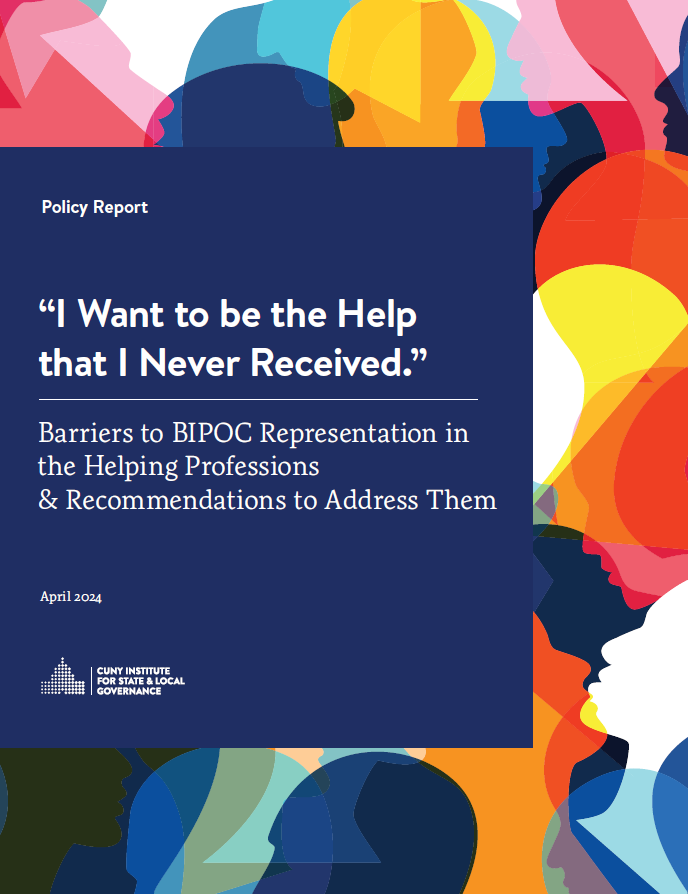
Following the release of our 2024 report “I Want to Be the Help I Never Received”: Barriers to BIPOC Representation in the Helping Professions & Recommendations to Address Them, this blog released in summer 2025 offers an updated look on the topic and outlines why culturally responsive care is critical to the safety and well-being of individuals, families, and communities as a whole.
Much has changed since the release of the 2024 report; ongoing federal funding cuts in the nonprofit and health care sector are impacting staff and services. These changes will have significant implications for education, social service, and healthcare for everyone, but disproportionately more so for BIPOC communities.
Now more than ever, our mental health and supportive service networks need proper resourcing. Learn more about what funders and decision makers can do to address these growing concerns in our latest update on the blog.
project credits
Writing: Carla Sinclair, Senior Communications Associate; Alisa Orlowsky, Communications Associate
Advisement: Michael Jacobson, Executive Director; Siobhán Carney, Policy Director; Reagan Daly, Research Director
Editing: Alison Diéguez; Policy Program Director; Kathleen Doherty, Research Project Director; Jennifer Ferone, Deputy Research Director; Rhokeisha Ford, Policy Program Director; Evan Goldstein, Senior Policy Associate; Miriam Goodman, Senior Policy Associate; Mia Greco, Policy Associate; Patrick Hart, Policy Program Director; Nick Kilby, Senor Policy Associate; Nathalie Lebrón, Senior Policy Associate; Neal Palmer, Research Project Director; Stephanie Rosoff; Associate Research Director; Diana Spahia, Senior Research Associate; Taylor Swabb, Policy Program Director; Emily West, Senior Research Associate
Web Development and Communication Design: Carla Sinclair, Senior Communications Associate
Data Visualization: Annie Chen, Senior Data Scientist; Emily West, Senior Research Associate; Brandon Martinez, Research Associate; Otgonjargal Okhidoi, Research Associate, Cecilia Low-Weiner, Senior Research Associate
Web Design Template: Design for Progress and Thought Driven Development