
Institute Intelligence, March 2026: A legacy of reform data, NYC Justice Training Institute
By Carla Sinclair, Communications Project Director

The end of March marks a few beginnings: of spring, of budget season, and, for us at CUNY ISLG, new projects in New York and nationally.
The next few weeks will undoubtedly see people flocking to outdoor dining, New York policymakers ramping up budget—and tax—debates, and continuing conversations about affordability, safety, and opportunity. Read on to see how we’re adding to the dialogue with expert insights, new data, and tailored resources.
Want to stay in touch? Follow us on Bluesky, LinkedIn, and Facebook for the latest on our research, policy, events, and funding announcements.
Building a Legacy of Research for Action at the 2026 Safety and Justice Challenge Research Symposium
“We have a decade of evidence. We have tested models. We have measurable results. We have built infrastructure, partnerships, and a culture of data-informed decision-making that did not exist at this scale before.”
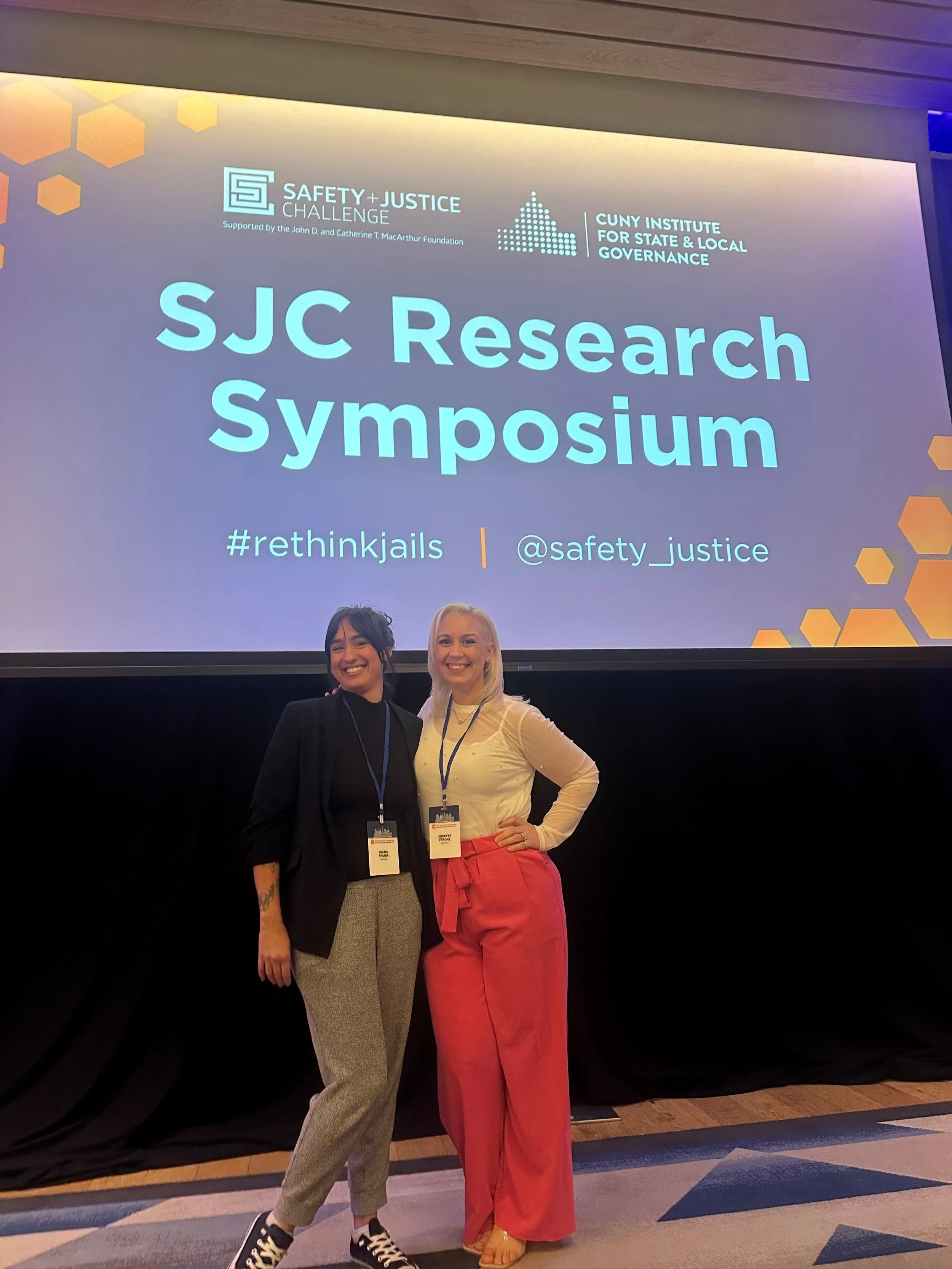
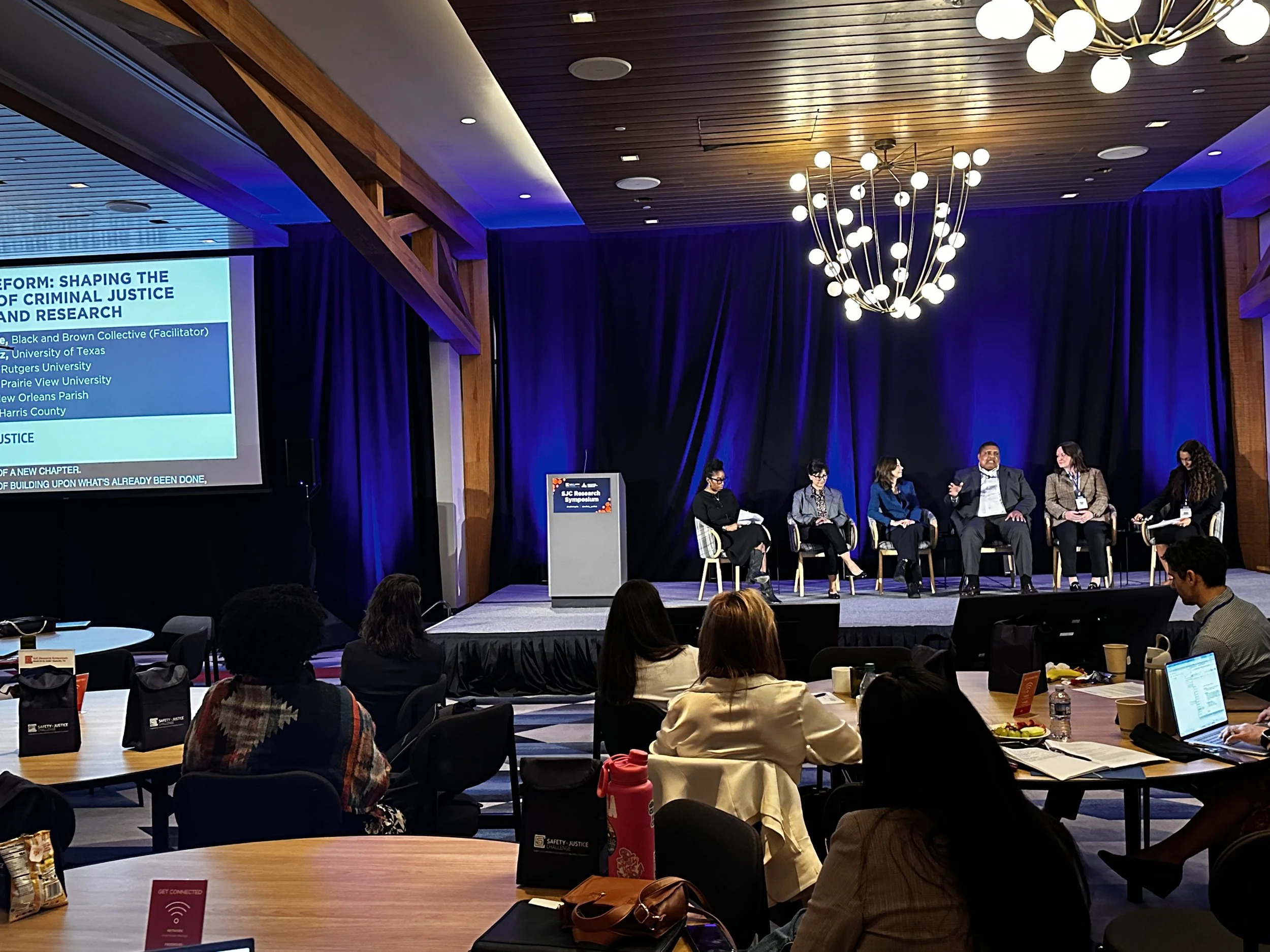
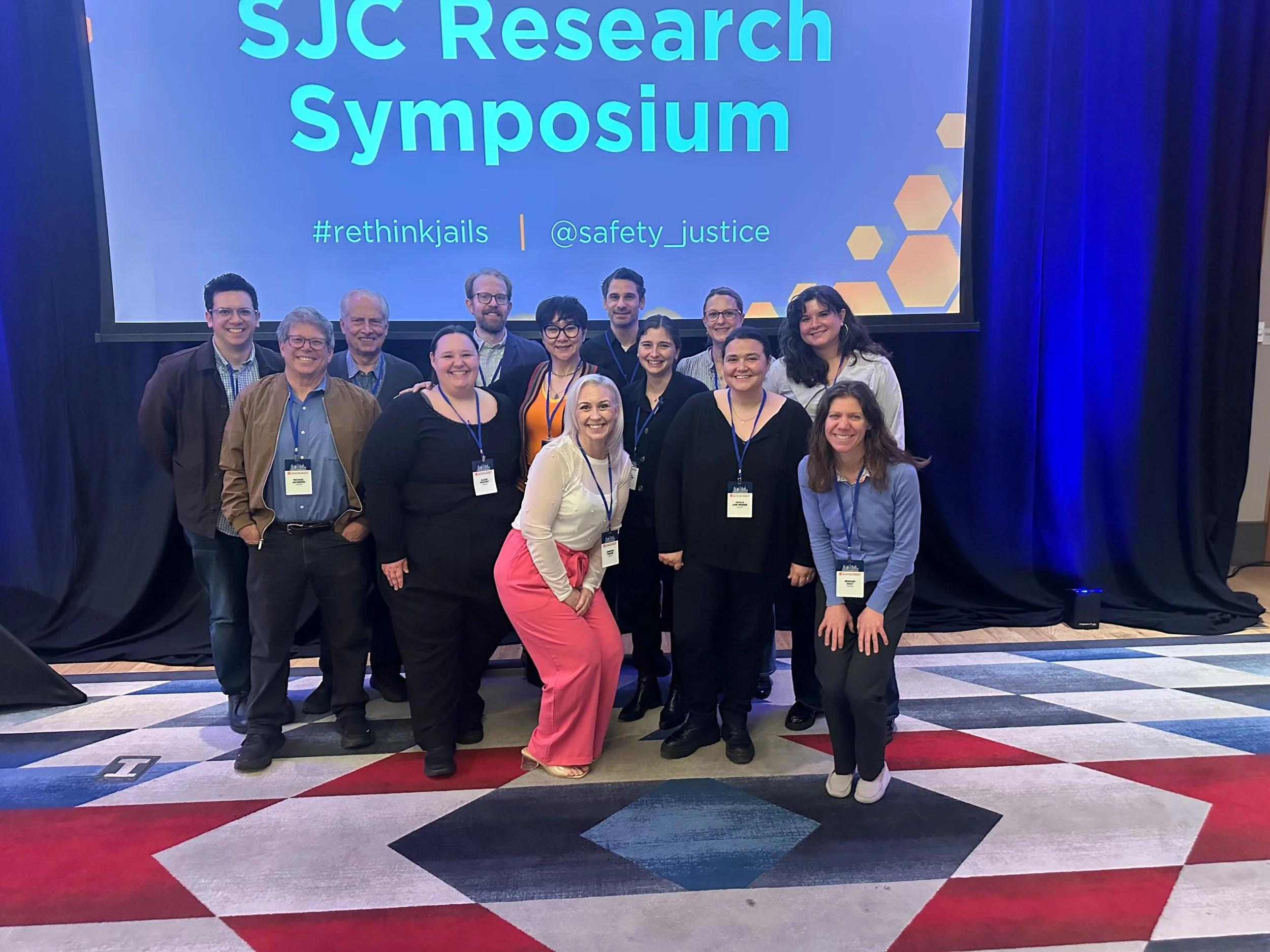
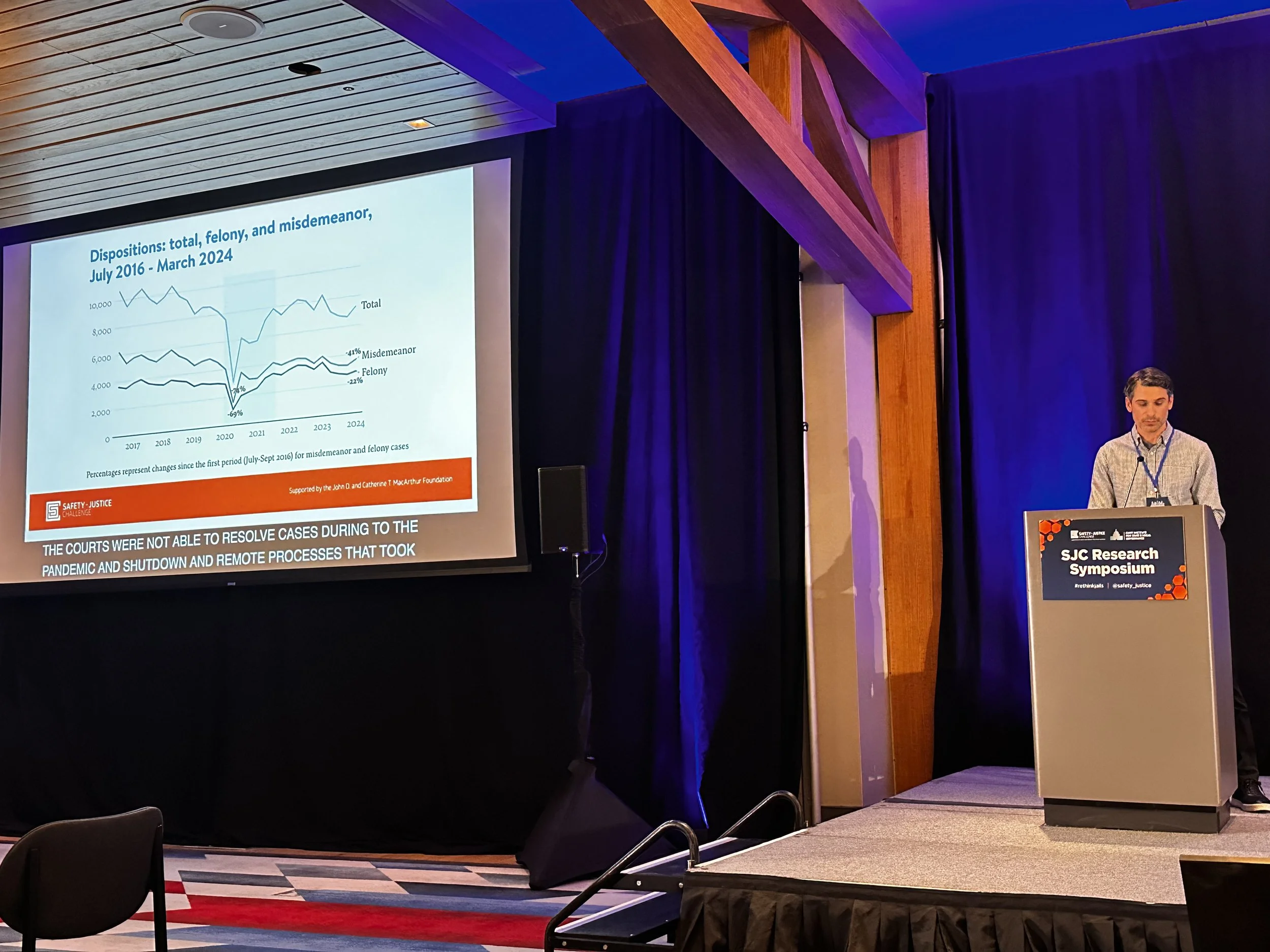
Researchers, judges, law enforcement, jail officials, attorneys, community advocates, funders, and many more convened in Nashville earlier this month for the final Safety and Justice Challenge Research Symposium. The SJC combined comprehensive data analysis, community insights, and a systems-change mentality to help more than 50 participating cities and counties develop holistic strategies that safely reduced jail populations—by 18,000 people, across sites.
Over the two days, participants reflected on the meaningful efforts and results of participating cities and counties, and dug into the expansive knowledge of what worked, what didn’t, and what is coming next as the MacArthur Foundation’s substantial investment comes to an end.
RSVP: Who Cares for New York? Wages, Human Service Workers, and the Affordability
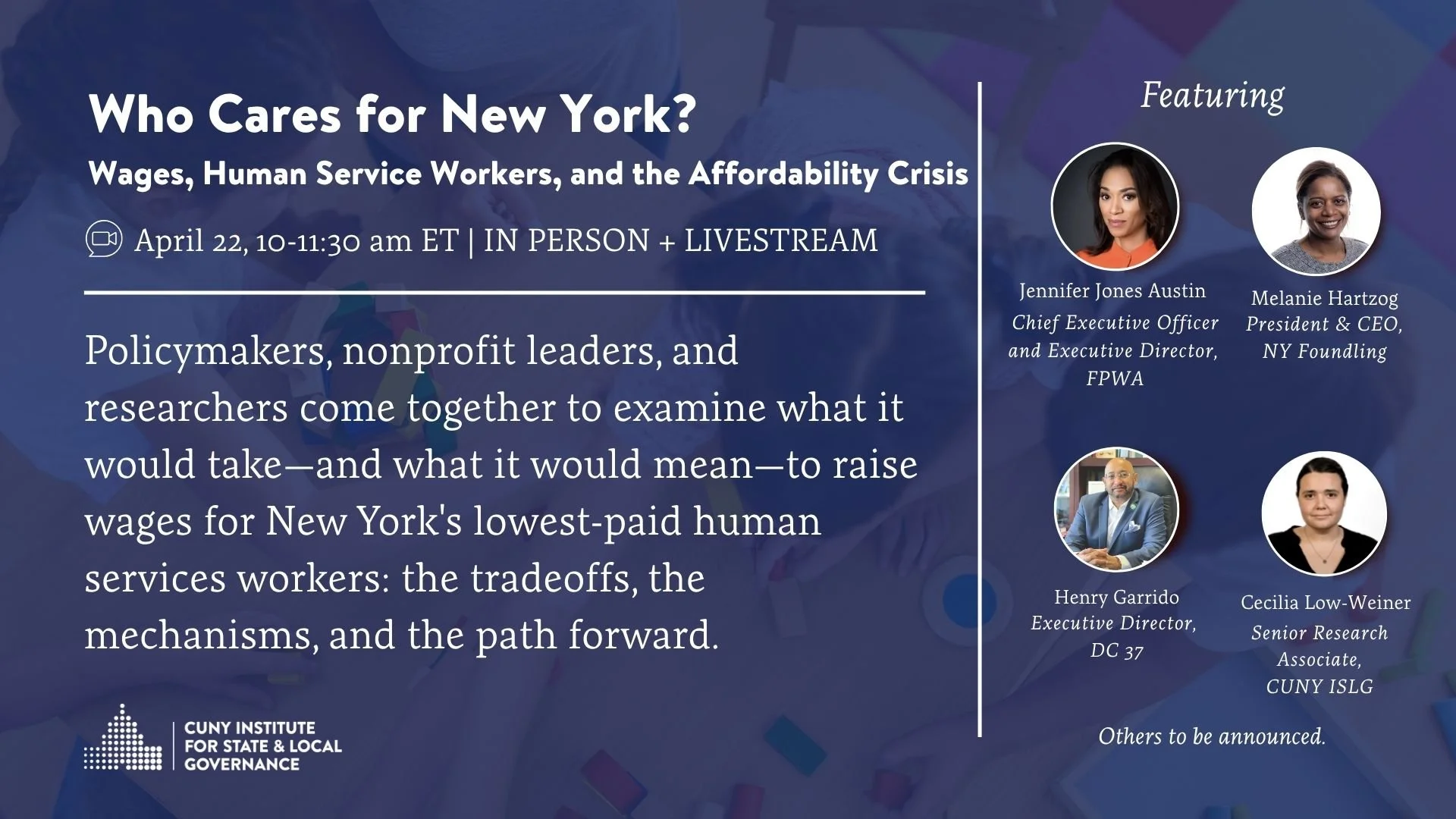
Our recent analysis found that the vast majority of New York’s human services workforce—the people caring for our children, our elderly, our sick—earn $20,000 below the cost of living, exacerbating the affordability crisis for those who support our communities. Raising the wage floor for these workers could lower the statewide poverty rate, stimulate local economies, and strengthen the services that New Yorkers rely on most.
This April, we’re hosting a panel to bring together policymakers, nonprofit leaders, and researchers to examine what it would take — and what it would mean — for New York policymakers to raise wages for New York's lowest-paid human services workers: the tradeoffs, the mechanisms, and the path forward.
Join us on April 22nd from 10-11:30 am in person at the CUNY Graduate Center (with breakfast starting at 9!) or via livestream.
Tracking Real-Life Cases, Data Shows Reforms Reduced Jail Populations without Spiking Crime
Cities, counties, and states of all sizes and political stripes have spent decades trying to develop solutions to crime. Since 2015, the Safety and Justice Challenge (SJC) has used research, data, and input from government and community partners to develop these solutions, with the goal of safely reducing the unnecessary use of jail—without increasing violent crime.
Using site-level data collected from cities and counties as part of the Safety and Justice Challenge, CUNY ISLG has conducted regular analyses on whether people released to the community during their trial instead of being held in jail were rebooked for a new criminal offense.
These analyses consistently find that vast majority of people released pretrial—whether before, during, or after the peak of COVID-19—were not rebooked for a crime, violent or otherwise. This means there is no apparent correlation between declines in jail incarceration and increases in violent crime through COVID-19 and after. In addition to this initiative-wide view, research partners, such as the Center for Justice Innovation (CJI), have looked at specific jurisdictions to assess the impact of their unique strategies, providing a look at the effectiveness and safety of these reforms that sees both the forest and the trees.
WATCH: Strategies for a New Era of Policing & Public Safety in NYC
Constitutionality. Mental health. Accountability. Dignity. Earlier this month, we convened national experts on policing to discuss how to usher in a new era of safety and trust in police-community interactions, in New York and beyond.
In case you missed it, we wrote a recap on our blog: read it and watch the full discussion featuring ISLG Research Project Director Kathleen Doherty; Brandon del Pozo, assistant professor at Brown University and former police chief; Ayesha Delany-Brumsey, clinical psychologist and director at NYC Health + Hospitals; and Tracey Meares, professor at Yale Law School and nationally recognized expert on procedural justice and police legitimacy, moderated by ISLG Senior Fellow and national criminal legal expert Jeremy Travis.
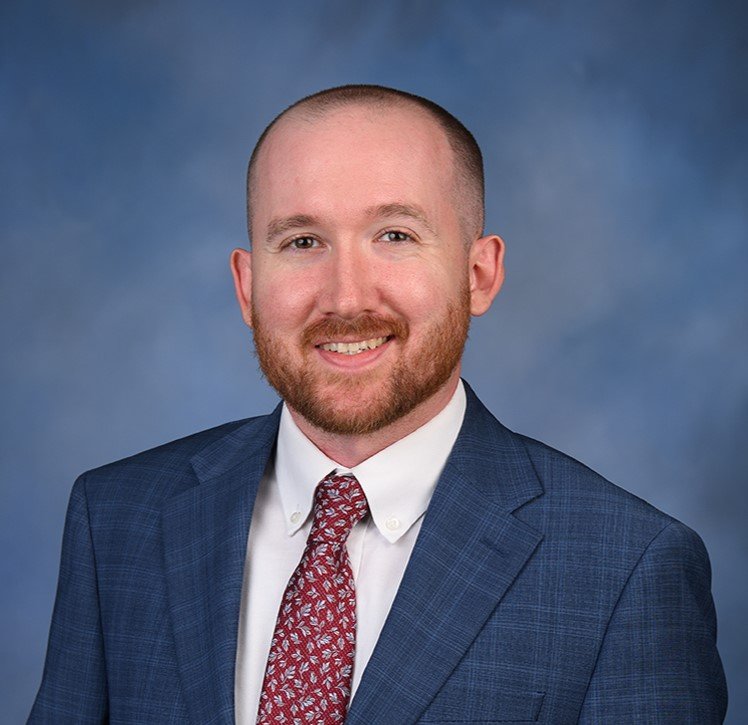
“Nobody gives you a handbook and says, “this is how you should be chief of staff for this office.”
Each district has different needs and different personalities. But every office is ultimately accountable to the voters.”
Q&A with NYS Assembly Chief of Staff Jacob Sherretts
From intern to legislative director to now chief of staff, Jacob Sherretts has worn many hats in state government. Now working with NYS Assemblymember and Speaker Pro Tempore Pamela Hunter in Syracuse, he described his role as "a focal point, because everybody else on the team is specializing. The chief of staff is the one that needs to bring that all together and make sure it's heading in the right direction."
As a Kreigel Fellow, he’s been working alongside his peers in state and local government to put it all into context. See the full conversation about getting involved in the legislative process, how different offices approach challenges, and why having a network is the most valuable tool.
Launching the NYC Justice Training Institute
Every year, thousands of people return back to their New York City communities from incarceration. Thousands more facing trial are diverted into alternative-to-incarceration (ATI) programs or served through court-mandated programs. Behind each story of a smooth, successful reentry is a network of community organizations providing a web of services, from reentry and employment to housing, mental health, substance use, and more.
The new Justice Training Institute (JTI) is a first-of-its-kind resource hub for these critical organizations who serve people with a wide range of needs through ATI, reentry, and reentry housing programs. Launched today in partnership between the NYC Mayor’s Office of Criminal Justice (MOCJ) and the CUNY Institute for State & Local (ISLG), the JTI will be a one-stop-shop for trainings, with a calendar of upcoming sessions as well as opportunities for organizations to access on-demand, tailored training and technical assistance (TTA).
In the South Bronx, CUNY Student Fellows Bring the Civic Conversation to Communities
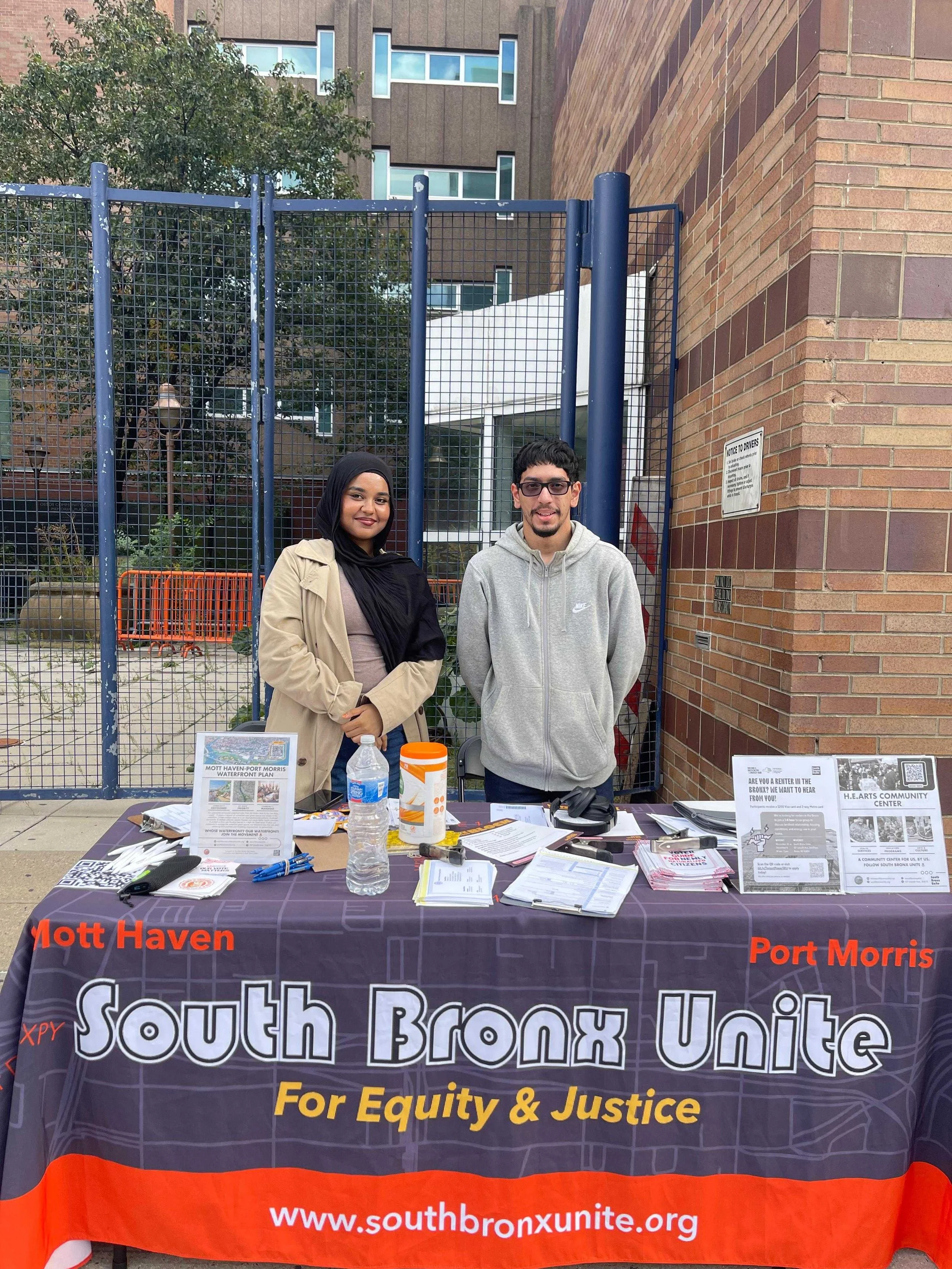
“I learned of practicing civic engagement in a variety of ways, not only through voter registration and voter education, but through discourse, through community care, delivering direct services, and creating an environment where we all come together to engage in community, work together to build a safer, inclusive city for all.”
Over 300 voters registered. Nearly 200 community events hosted. More than 21,000 community members brought into the conversation. That’s what the 14 Civic Engagement Fellows have accomplished in the six months since the first cohort of the Fellowship has kicked off.
The Civic Engagement Fellowship has embedded CUNY seniors into community-based organizations to support innovative voter engagement and civic education initiatives. Since the program’s launch in summer 2025, the Fellows have had a measurable impact.
Stay in touch - sign up for our newsletter to get all the latest updates.