By Carla Sinclair, Communications Project Director, Kevin Dugan, Senior Communications Associate, and Molly Dektar, Senior Communications Associate

October marks a big change in season. Children and their parents settle into the swing of school—and now, for many in New York City, 2-k—for the year. Election-year politicians and their supporters kick campaigns into overdrive as the elections draw nigh. And, of course, the leaves start to turn (which you can now track through an array of data viz-savvy public parks.)
Other than the leaves, many of these changes beget more questions for our leaders and institutions. NYC's 2-k pilot rollout has already been expanded by 10,000 more seats for next year; today, we joined forces with the Rockefeller Institute of Government to discuss what further expansion into universal child care might mean. Watch that here. And with public buy-in and political will playing a major role in determining such a program’s political future, it's important to make sure everyone knows they can get involved in next week's elections. We spoke with young civic leaders bringing that conversation to the South Bronx—read more on that below.
That's not all. Read on for our latest funding announcement for the second cohort of the Community-Based Restorative Justice Initiative, our digital report breaking down the New York City and State budget processes, and to meet our latest cohort of Kriegel Fellows.
Want to stay in touch? Follow us on Bluesky, LinkedIn, and Facebook for the latest on our research, policy, events, and funding announcements.
Inside the New York City and State Budget Processes
The New York City and State budgets are more than just spending plans. They represent leadership priorities, lay out day-to-day costs, determine revenue sources, and act as the planning document for every action taken by the City and State governments.
CUNY ISLG’s new series, Inside the New York Budget Process, details how New York State’s and City’s budgets are created—formally and informally—every year. The development of these budgets is a year-round process, with planning starting as soon as the current year’s budget is approved. The reports, spearheaded by Senior Fellow Janet Penksa, PhD, former Secretary to the New York State Assembly Ways and Means Committee, include a wealth of visualizations that detangle these opaque processes with an unprecedented level of detail.

Read the first two reports in the series.
A third guide, covering how the two budgets interact, will be released in the coming weeks.
[Watch] Universal Child Care for New York: Impacts and Next Steps
Universal child care (UCC) is becoming a political reality in New York. This October, NYC Mayor Mamdani announced 10,000 more seats in the City's 2-k program, which followed a joint announcement earlier this year from the mayor and Governor Hochul piloting the program in New York City and across the state. But what does this mean in practice?
We released Universal Child Care Pays Off: Government Investment in Child Care Would Bring Billions to New York’s Families and Economy last month to dig into the socioeconomic impacts UCC might have on New York. We found that families could save up to $8.3b a year on child care, savings which could compound with other factors—including increased labor force participation and higher productivity for employers—to conservatively net $3b (after the cost of administering the program) to the state's economy.
Today, we joined forces with the Rockefeller Institute of Government at SUNY to review our return-on-investment analysis along with their work studying the workforce considerations. Watch the webinar below.
“Voter Outreach Isn’t Just About Handing Someone a Registration Form”
Last Saturday, early voting opened in New York. Voters are now casting their ballots for state and federal offices, including governor, attorney general, members of Congress, state comptroller, state legislators, and more.
In the Bronx, where voter registration is the lowest in New York City, a fellowship program from the NYC Campaign Finance Board and CUNY ISLG aims to sustain the area's upward trajectory. We spoke to Civic Engagement Fellows Angelina Tizzano and Cecilia Castellon, and their host site managers Andrew So of South Bronx United and Mariel Charles of New Settlement, to hear their personal reflections from a busy season of civic engagement work.
[RFP] Seeking the Second Cohort of the Community-Based Restorative Justice Initiative
The Community-Based Restorative Justice Initiative (CBRJ) is taking applications for a new three-year funding opportunity to expand the use of restorative justice in New York City. The CBRJ is an ongoing partnership between CUNY ISLG and the NYC Mayor’s Office of Criminal Justice launched in 2023, and the first phase of support for community-based organizations started in 2024.
This phase of the initiative will support three categories of funding for organizations to apply for: Programming, Fellowship, and Training and Technical Assistance. Each of these categories will focus on approaches that promote community well-being, address the underlying conditions that contribute to harm, and contribute to increased public safety.
Learn more about the funding and apply by December 16.
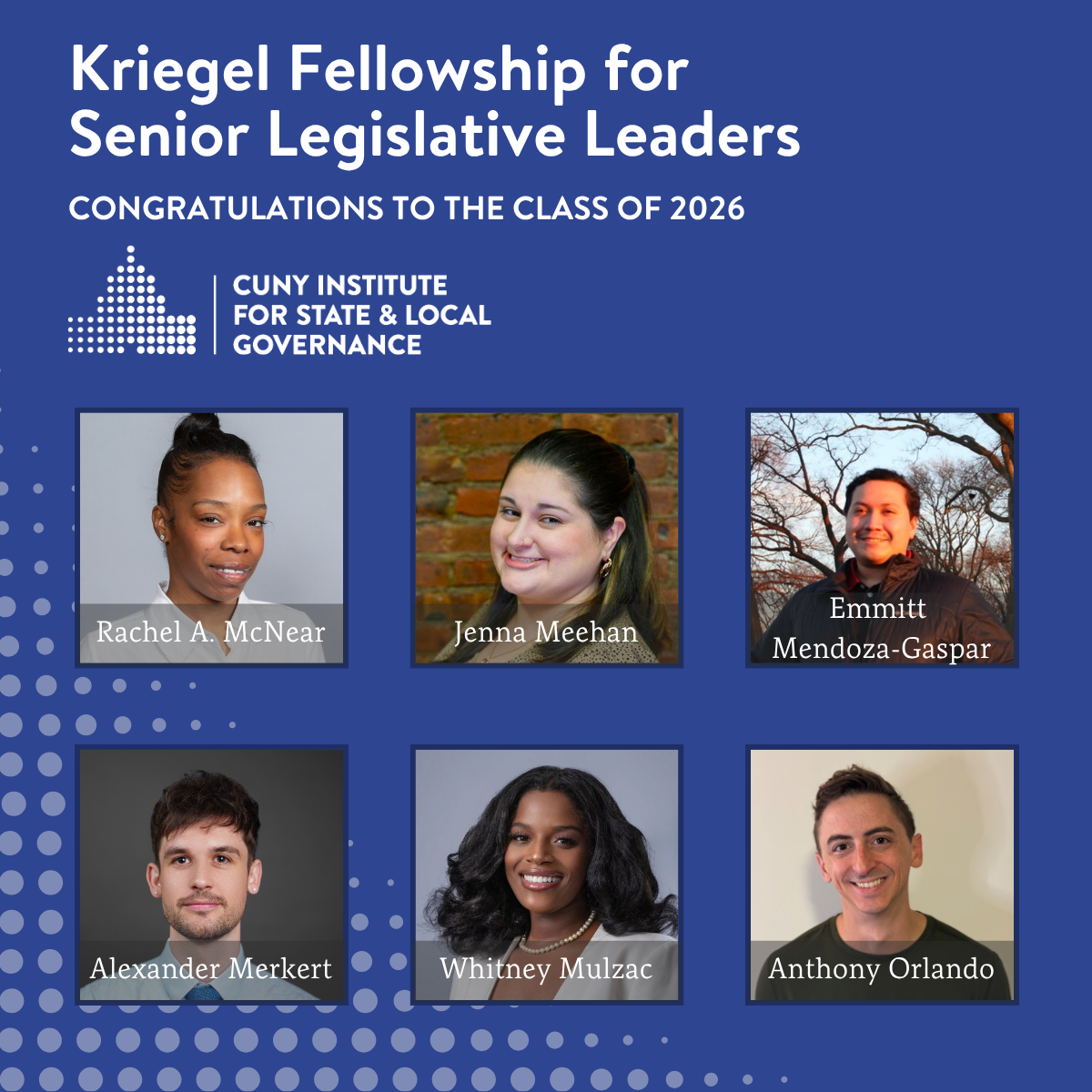
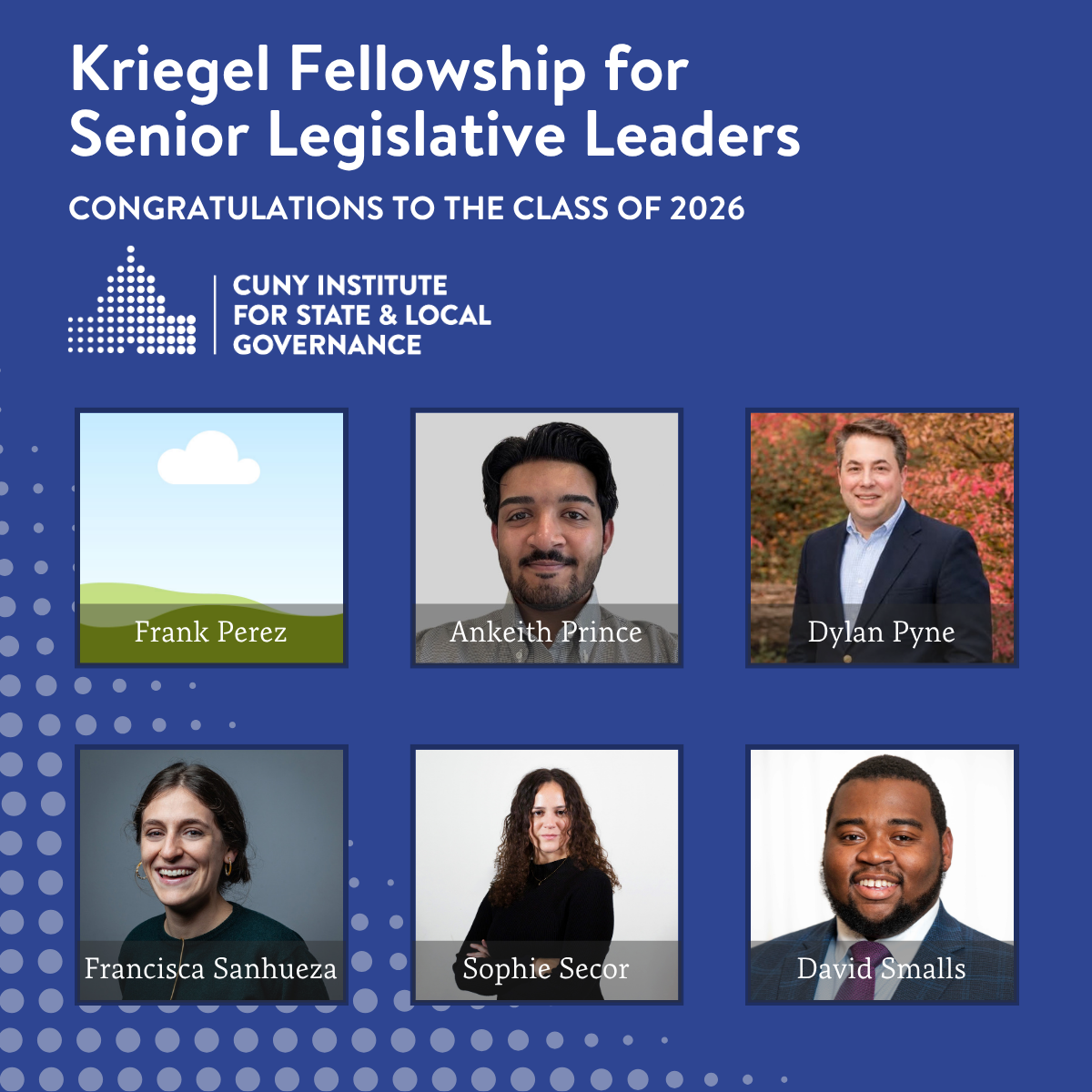
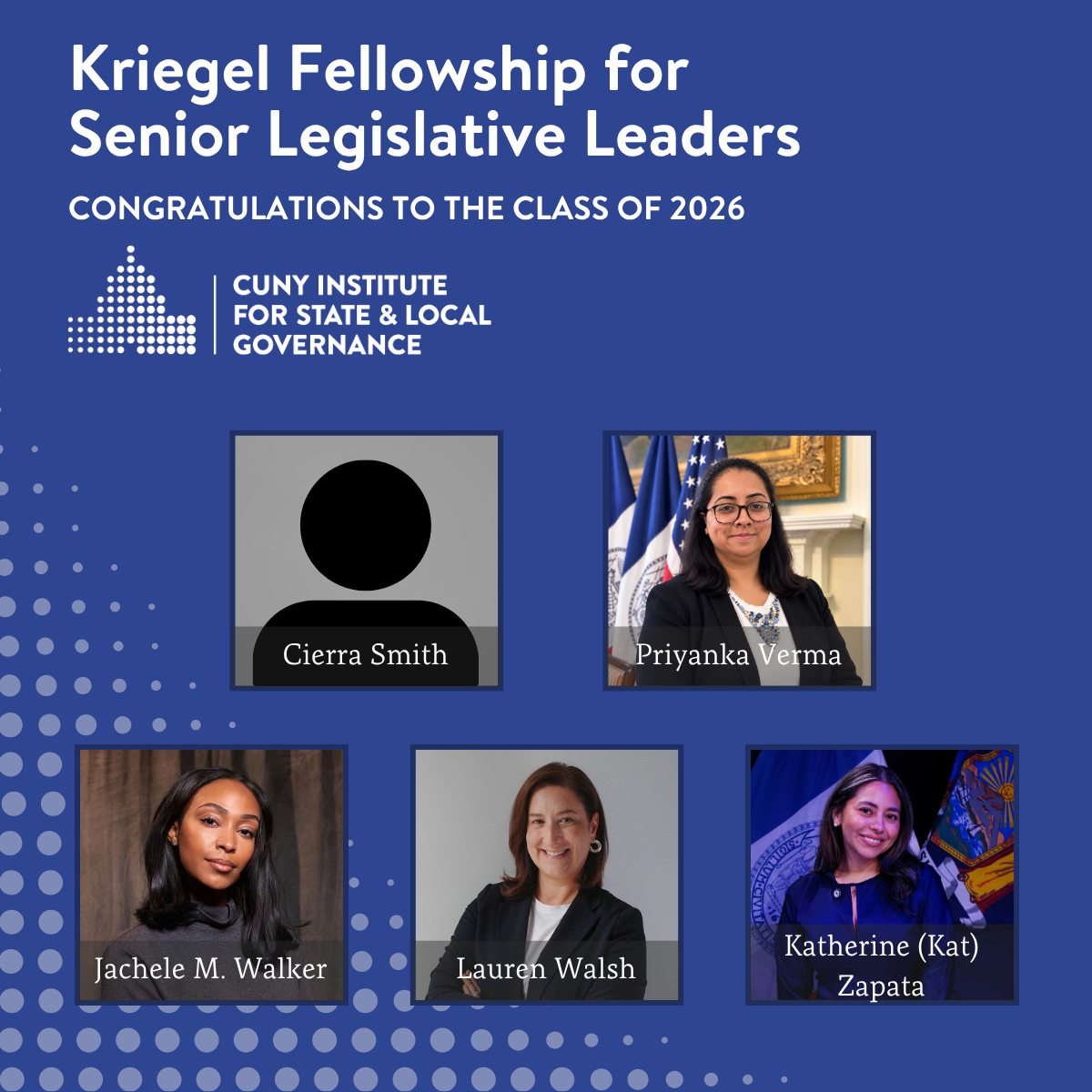
Introducing the Sixth Cohort of the Kriegel Fellowship for Public Service Leaders
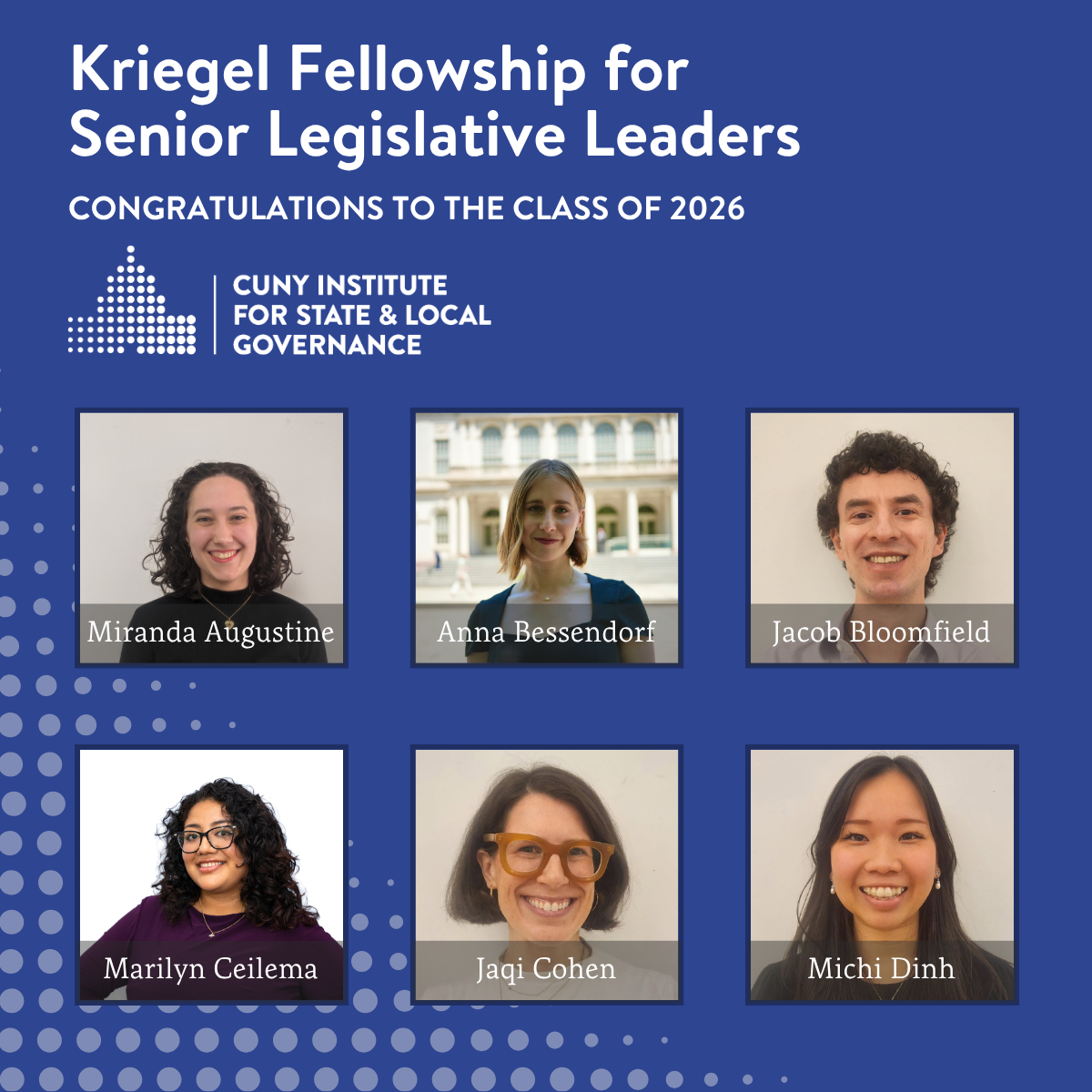
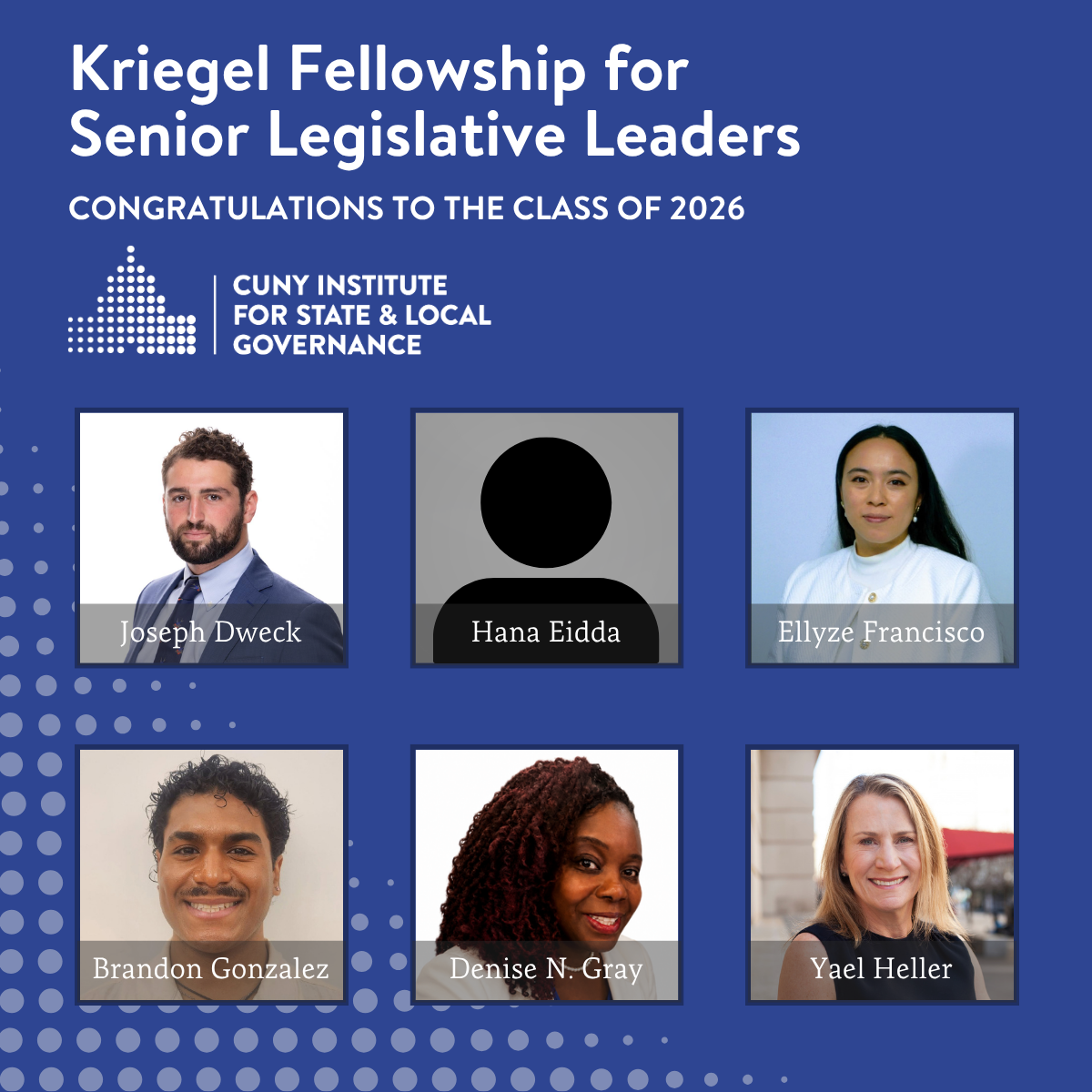
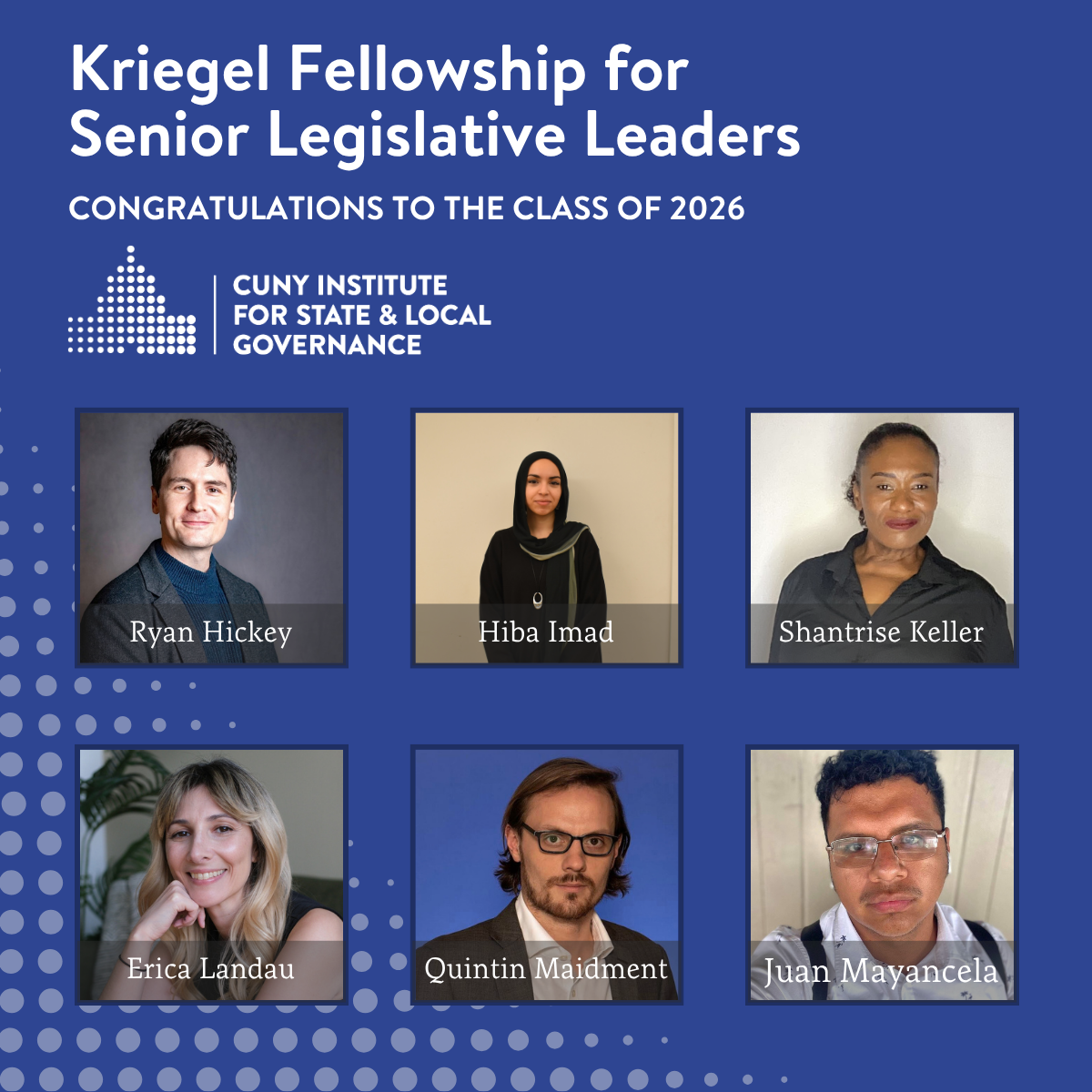
CUNY ISLG is proud to announce the 35 leaders from legislative and executive-level offices participating in the sixth cohort of the Kriegel Fellowship for Public Service Leaders.
Being in a leadership position for an elected official’s office requires many different skills. One must be adept at communicating the official’s vision, understanding the needs of their constituents, and have a wide depth of knowledge about the inner workings of the office while also managing the team that makes the hard work of governing possible.
New webinars from the NYC Justice Training Institute
JTI Webinar Archive
The NYC Justice Training Institute, a partnership of CUNY ISLG and MOCJ, has launched a library of the educational webinars hosted through the JTI. This webinar series equips MOCJ-funded providers, organizations in NYC and across the country, and the public with practical skills rooted in evidence-informed practices to improve service engagement, care coordination, and reduce gaps in services.
Click here to access the JTI webinar archive
Overview of MOCJ Programs and Initiatives
Wednesday, November 4 from 1 pm-2 pm ET
MOCJ develops and implements innovative programs that improve lives, public safety, and fairness in the justice system. In this webinar, MOCJ staff detail the different ways MOCJ works to support individuals in contact with the criminal justice system and how to prevent deeper system involvement.
Click here to register for this webinar
Approaches to Working with People with Lived Experience
Wednesday, November 10 from 12 pm-1 pm ET
This webinar will explore how professionals and organizations can build mutually beneficial partnerships with people who bring lived experience with the criminal legal system, and will examine the role of trust, power, communication, boundaries, and meaningful inclusion in developing effective working relationships.
Stay in touch — sign up for our newsletter to get all the latest updates.