BLOG
Institute Intelligence
Insights, case studies, news, and updates from ISLG’s good governance research and action.
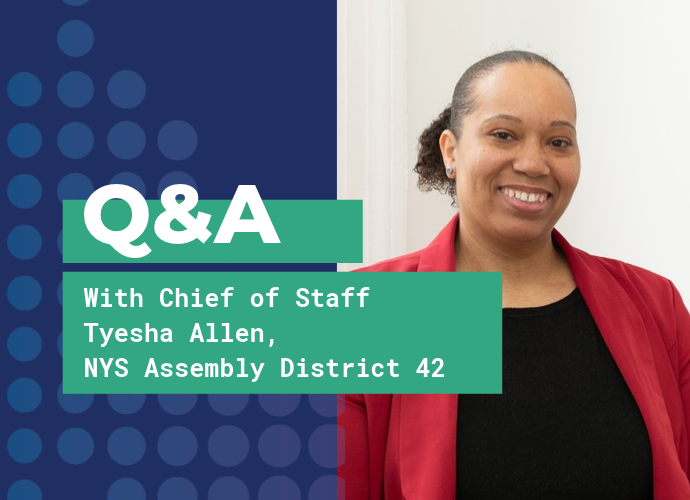
"On a day-to-day basis, that's basically what the job entails: actively making sure that these things are in place and that people actually receive the benefits of it. It's just not something that is being said, it's just not something that's on pen and paper, it's just not in black and white, it's something that is actually being reciprocated and received in the community.”
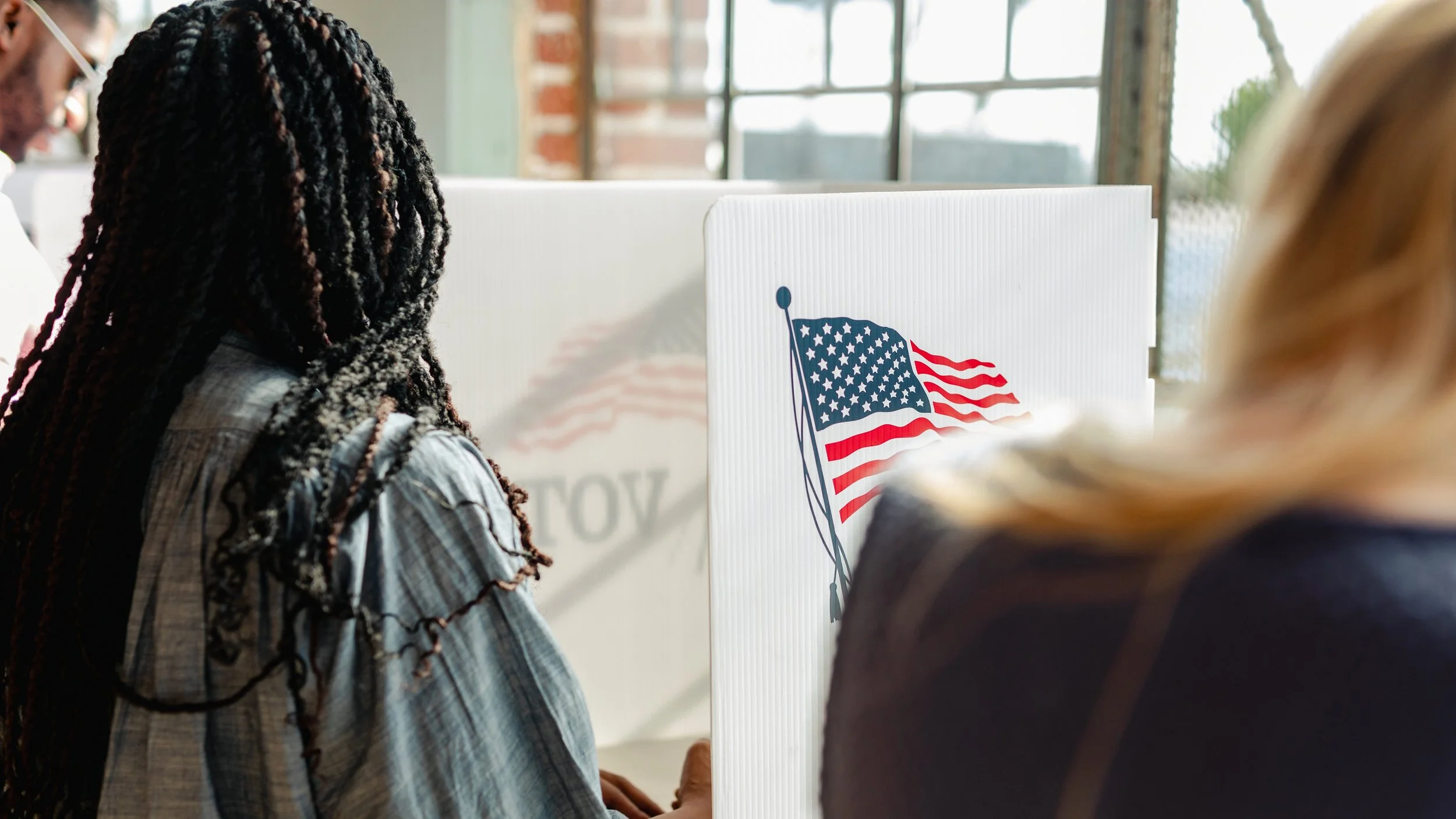
This election day, voters in New York City and around the state had the opportunity to vote directly on statutory changes focused on sectors including funding for housing, zoning reforms, voting access, and criminal legal policy. In this blog, we examine these initiatives and how voters responded.

With free 2K piloting in New York City and Governor Hochul pledging to expand child care across New York, policymakers and families alike are looking for ways to make it real—and sustainable. Based on what's worked in other states, paid family leave has emerged as a potential part of the equation.
Manhattan District Attorney Alvin L. Bragg, Jr., and the Institute for State & Local Governance at the City University of New York (ISLG), through the Criminal Justice Investment Initiative (CJII), today released a Request for Proposals (RFP) to fund one organization that will support participants in the Manhattan Felony Alternative-to-Incarceration (F-ATI) Court and the Inside Criminal Justice (ICJ) program.


Leading up to New York’s general elections, Civic Engagement Fellows and their host sites share personal reflections on the state of civic engagement in the South Bronx.
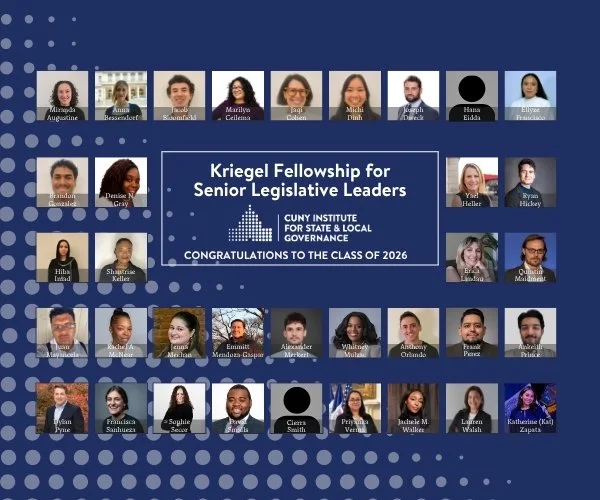
The 2026 cohort of the Kriegel Fellowship welcomes 35 leaders from legislative and executive-level offices from across all five boroughs. For the next few months, they will engage in discussions with policy experts, network, and build the skills to support them in their current roles and their future journeys in public service.

Data and transparency can be a key tool for prosecutors’ offices looking to show policymakers and the public the impact of their work. The City of Toledo Prosecutor’s Office partnered with our Prosecutorial Data Collaborative to do this and has launched a public dashboard.

Over a decade, the Safety and Justice Challenge helped more than 60 cities and counties safely reduce jail use. CUNY ISLG served as data partner and intermediary throughout. Now, with MacArthur, ISLG is supporting the SJC's next phase by building on this legacy through new avenues of work.
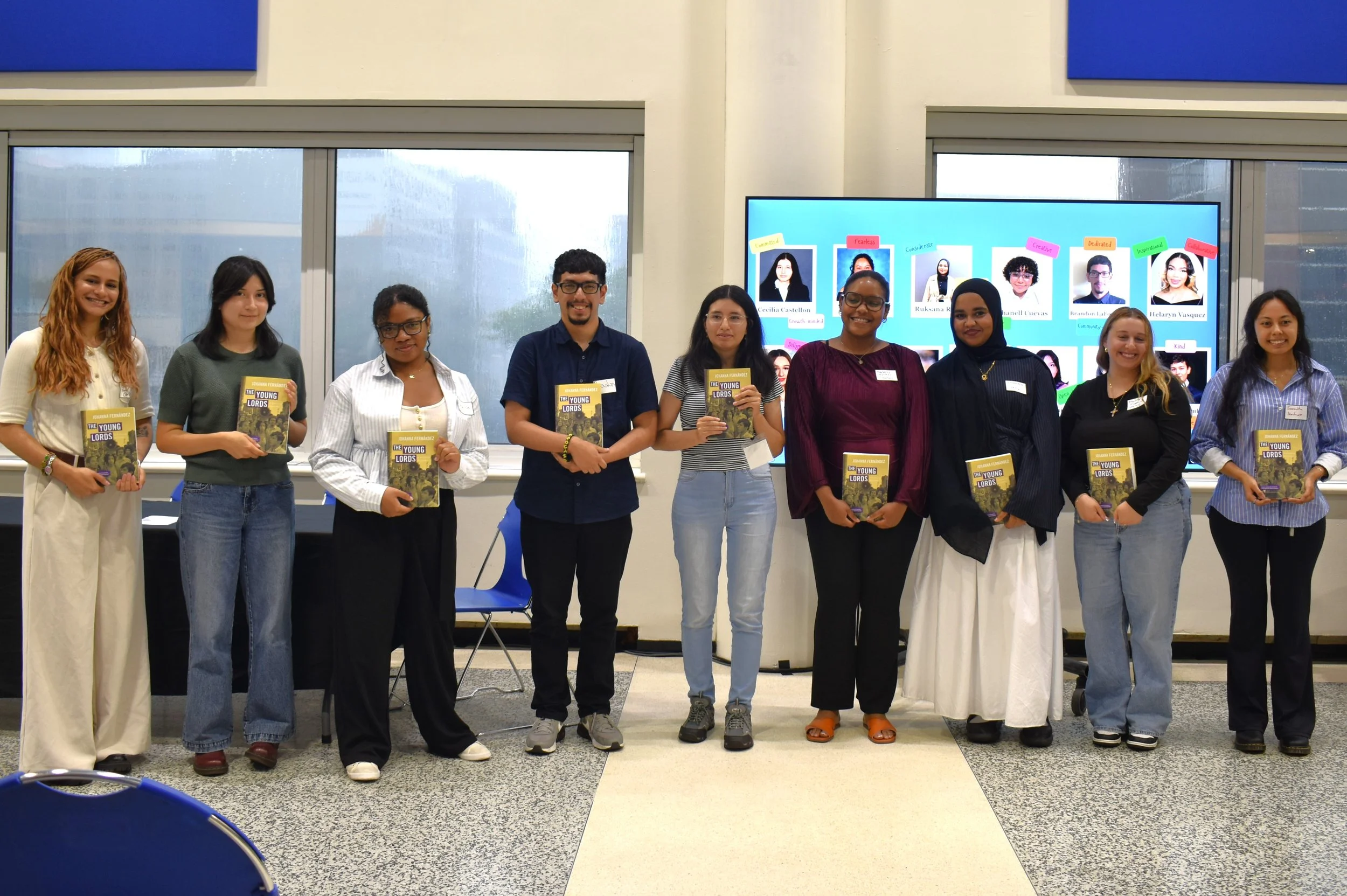
Civic Engagement Fellows and their host organizations came together to both look back at the work done engaging and educating community members in the South Bronx over the first year.

For the first time in 10 years, elected officials in New York City voted to give themselves a raise—an 18.2 percent increase. That number came as a recommendation from the Quadrennial Commission, for which CUNY ISLG conducted an independent analysis of affordability, comparable wages, and other cities to make sure the recommendations were rooted in data, not politics.
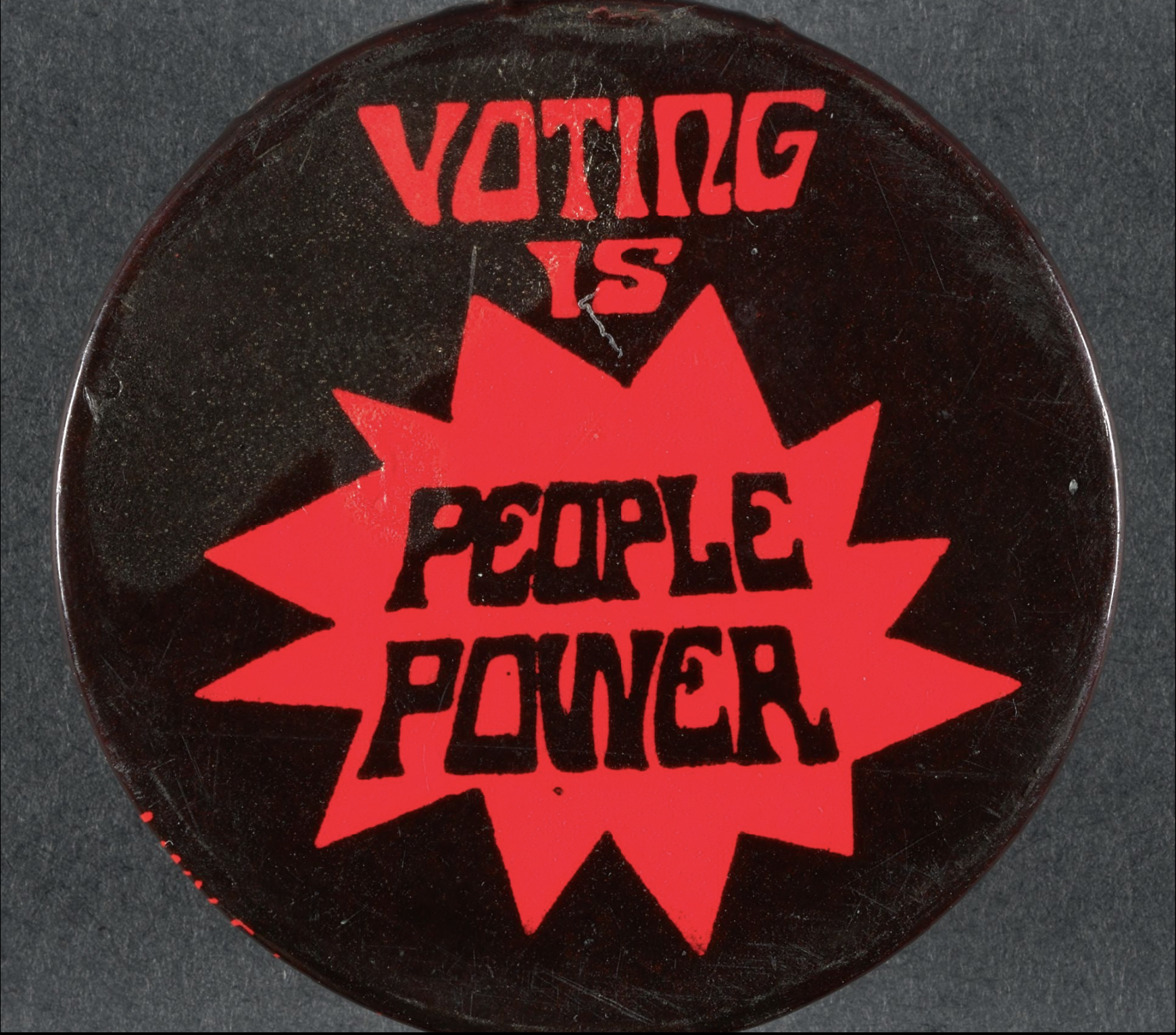
Why do students feel apathetic about voting, and what can be done? This post, by Civic Engagement Fellow Stephanie Frias, is the first in our series “Field Notes: Civic Engagement Fellow Voices on Democracy.”
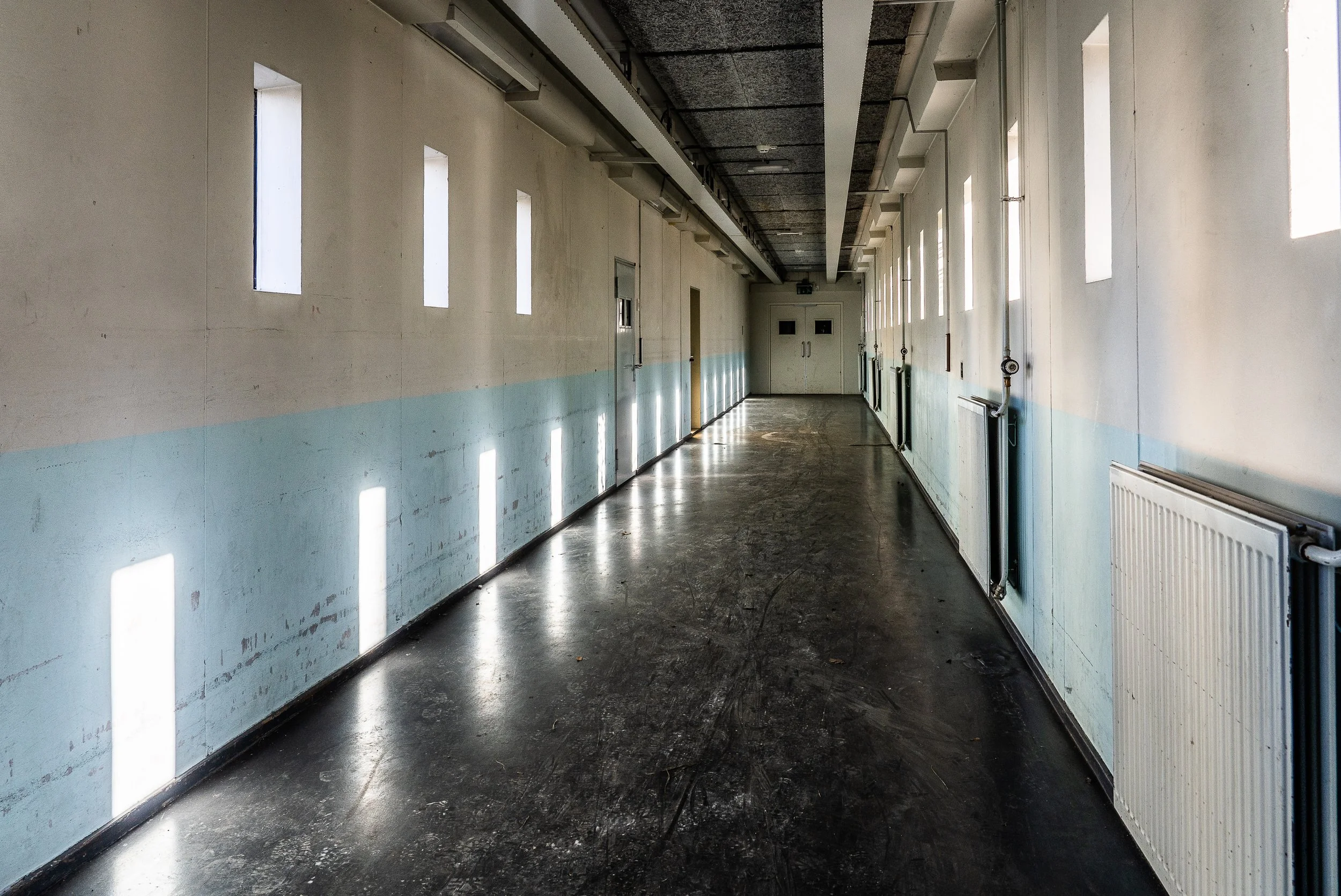
After decades of rapid increase, cities and counties across the country were starting to reduce the numbers of women held in jails. But those numbers have started to climb again. A new analysis from CUNY looks at why women are being booked, how long they’re staying, and how it compares across demographics and to men.

The CUNY system educates hundreds of thousands of New Yorkers a year and serving as a major social economic engine for the city. Managing the budgets of its 26 colleges is, thus, complex. ISLG’s Financial Planning Fellowship for Higher Education gives CUNY college leaders to the tools to balance budgets while advancing academic innovation.

Last year, around 2,000 people entered and were released from NYC’s jails every month. Tens of thousands more were redirected to community programs. The breadth of these systems ask: How do public systems and services ensure responses to crime hold people accountable, without adding to cycles of incarceration? Restorative justice has been used to find these answers.

This request for proposals seeks to fund survivor-led, grassroots organizations that support people impacted by domestic and intimate-partner violence in Manhattan.
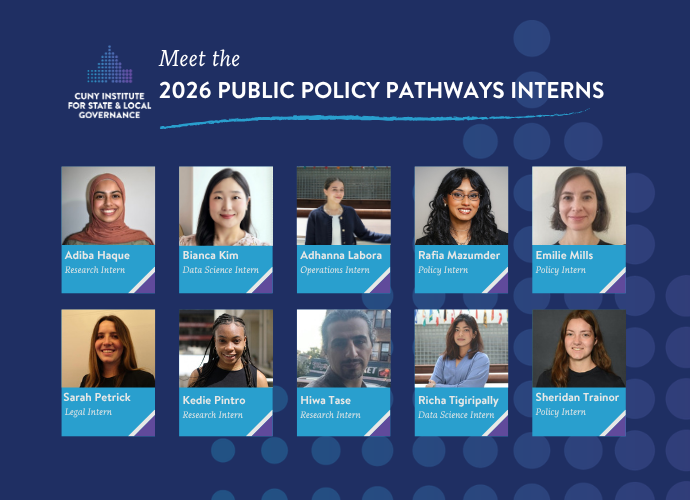
Our Public Policy Pathways Internship gives CUNY students hands-on experience in the public sector, developing career pathways into research, policy, data science, and government operations, as well as professional development. Meet the latest cohort.

Grassroots community organizations are increasingly becoming the lifeline for those facing immigration proceedings, particularly for minors who, unlike Liam, do not have immediate family members with them. In New York City, the Immigrant Children Advocates’ Relief Effort (ICARE) has connected unaccompanied minors with legal representation and other services since 2014.
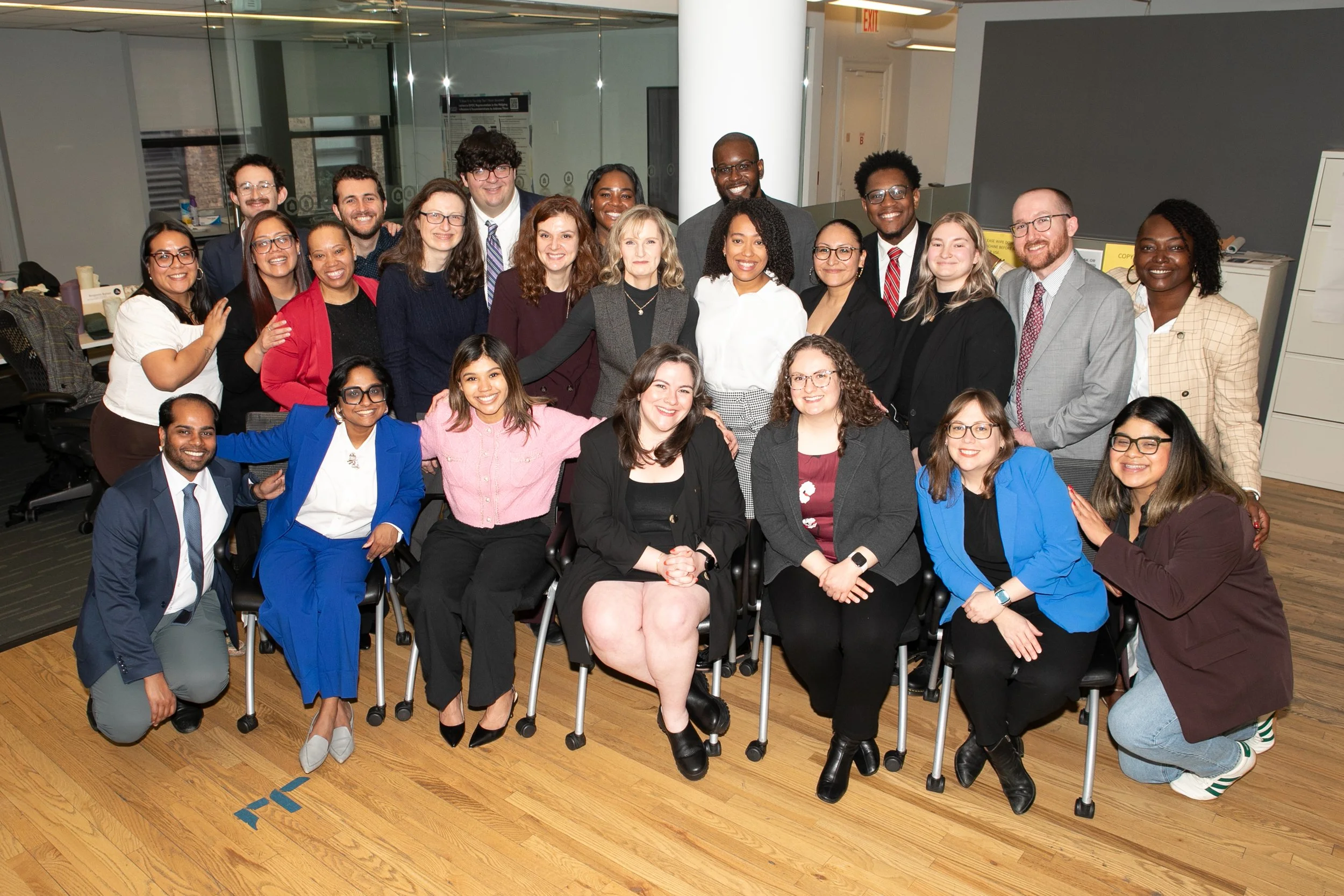
Over the last several months, these chiefs of staff, deputy chiefs, legislative directors, and other office leaders engaged in discussions with policy experts, network, and built the skills to support them in their current roles and their future journeys in public service.
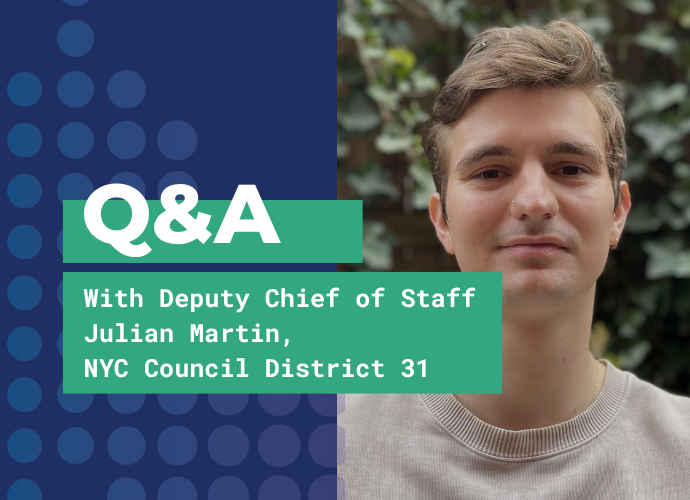
“Though there is still a lot to build, local government has shown to be the level where there is the most trust, and I think the reason for that is a tighter feedback loop between the work that we do and the response we get from the community.”

In theory, AI has incredible potential to help government and nonprofit entities improve the efficiency and quality of services. In practice, it also comes with questions and risks. CUNY ISLG is committed to understanding and using these tools responsibly and effectively, and has joined two initiatives to strengthen our ability to do so.
With the expansion to Flatbush, KCDA and CUNY ISLG are seeking one community organization to administer Project Restore in the neighborhood. The chosen organization will provide participants with strengths-based case management, mentorship, and internship opportunities.
The new digital training portal connects service providers with practical tools to better serve New Yorkers with complex mental and behavioral health needs.